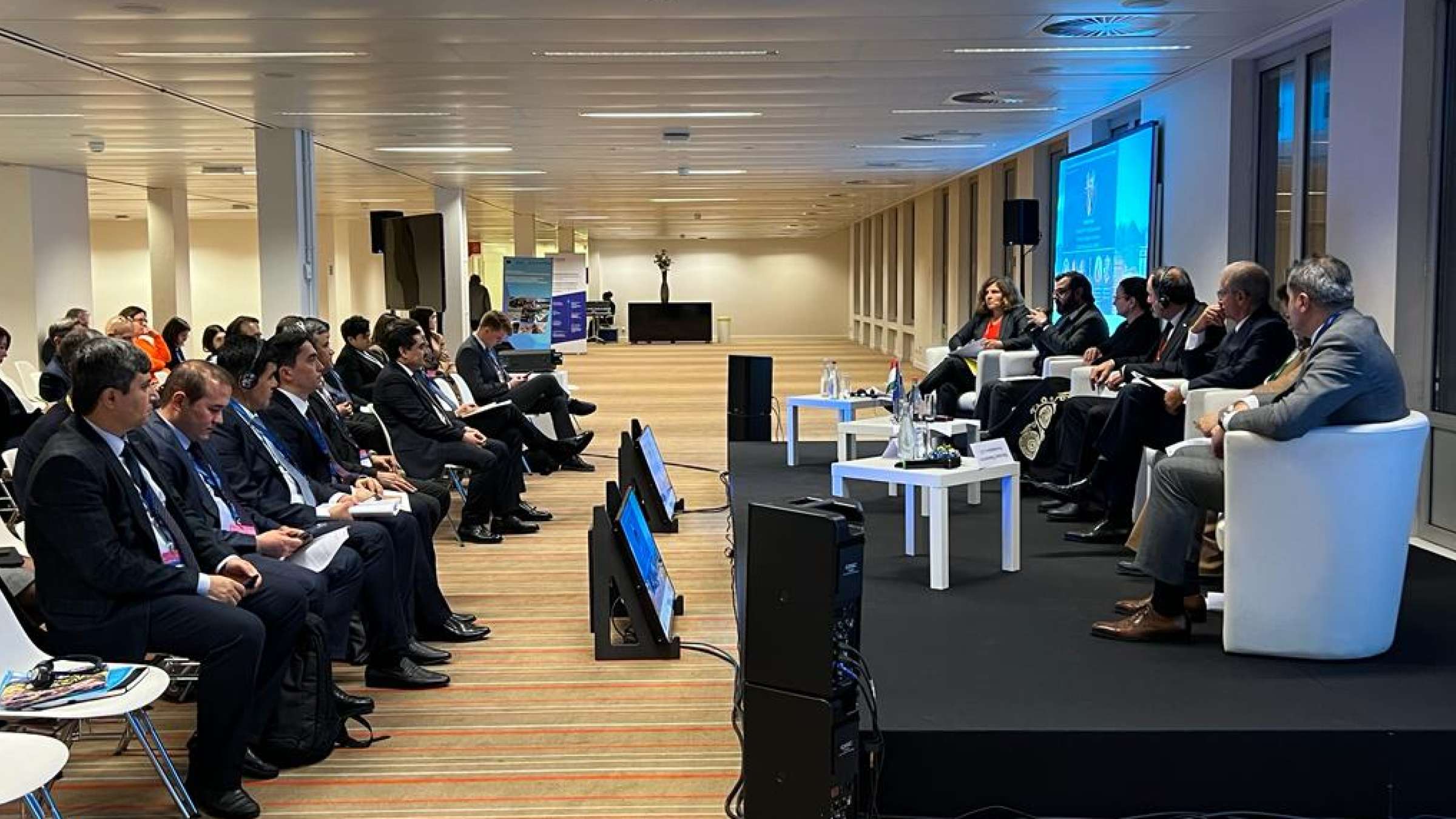
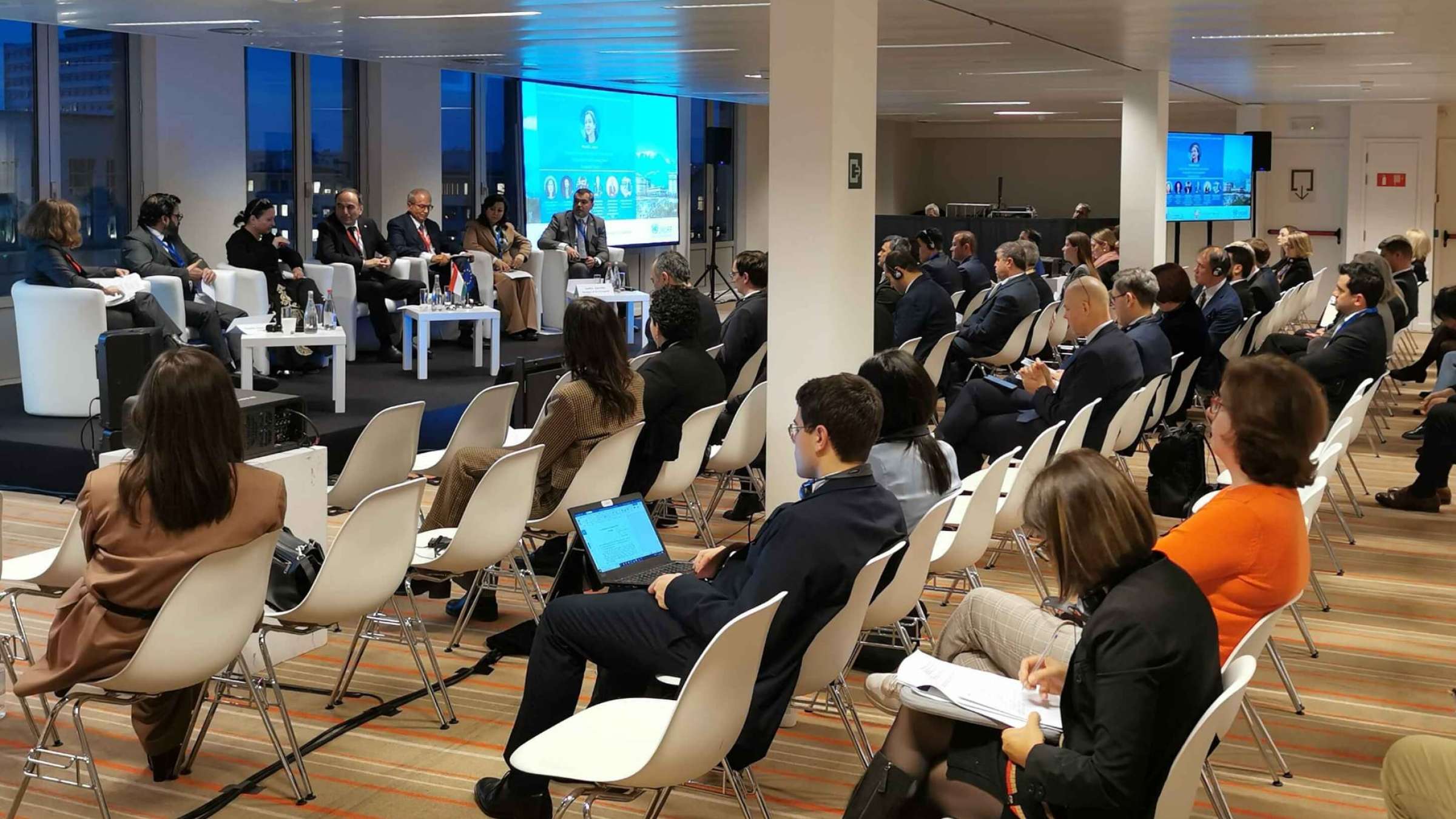
The Government of Tajikistan and the UN Office for Disaster Risk Reduction (UNDRR) collaborated in hosting an event on “Investing in Climate Resilient and Environmentally Sustainable Transport Infrastructure in Tajikistan” at the Investors Forum for EU-Central Asia Transport Connectivity that took place in Brussels on January on 29.
Recognizing the crucial role of the transport sector in sustaining economies, the event explored opportunities and challenges in creating climate-resilient and sustainable transport infrastructure, emphasizing the need for regional cooperation across Europe & Central Asia.
Chaired by Ms. Natalia Alonso Cano, Chief of the UNDRR Regional Office for Europe & Central Asia, the event featured insights from Mr. Azim Ibrohim, Tajikistan's Minister of Transport, and Ms. Marjeta Jager, Deputy Director-General for International Cooperation and Development of the European Union. A further roundtable panel discussion included representatives from UNDRR, the European Parliament, the European Bank for Reconstruction and Development, and the private sector.
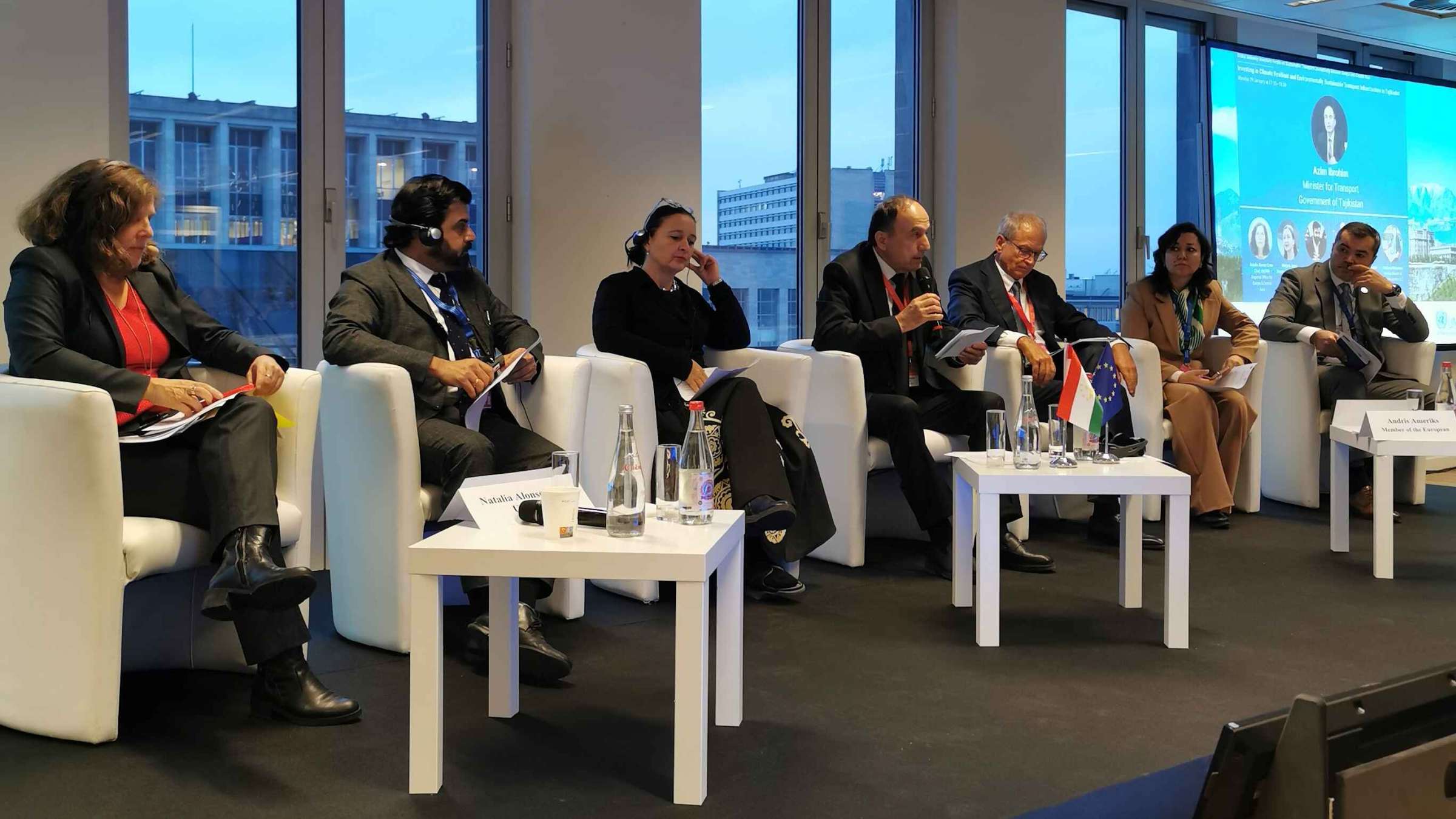
Discussions focused on the need to redesign, modernize, and improve transport infrastructure and its connectivity to build its resilience to climate change and ensure environmental sustainability. The event highlighted the importance of political commitment to sustainable infrastructure, increased awareness of resilient infrastructure principles, and the economic case for investing in resilience.
Tajikistan’s vulnerability to climate change is exacerbated by the increasing intensity and frequency of climate-related disaster events. With 93% of its territory comprised of mountains and 6% covered by glaciers, Tajikistan experiences extreme weather events, glacier melting, and downstream floods. In line with global efforts to combat climate change, Tajikistan has set ambitious targets, intending to produce 100% of its energy from "green energy" sources by 2032 and significantly reduce greenhouse gas emissions by 2037.