Tajikistan increased wheat, rice and potato imports in 2023 despite good harvests reported last year

The relevant agencies say Tajikistan increased rise, wheat, potato and fruit imports in 2023 though production of potatoes, rice and fruits increased in the country last year.  The Food Security Committee under the Government of Tajikistan says Tajikistan last year imported more than 975,000 tons of wheat, which is 48,000 tons more than in 2022.  […]

The relevant agencies say Tajikistan increased rise, wheat, potato and fruit imports in 2023 though production of potatoes, rice and fruits increased in the country last year. 

The Food Security Committee under the Government of Tajikistan says Tajikistan last year imported more than 975,000 tons of wheat, which is 48,000 tons more than in 2022. 

According to data of the Ministry of Agriculture (MoA), Tajik farmers last year produced 861,000 tons of wheat, which is 8.0 percent fewer than in 2022.  

Tajikistan also imported 65,000 tons of wheat flour last year, which is 3,200 tons more than in 2022.  

Rice imports reportedly increased last year by 5,000 tons, reaching more than 33,000 tons. 

Despite a record fruit harvest collected by Tajik farmers last year (about 665,000 tons, which is 30 percent more than in 2022), the fruit imports in 2023 increased by 6,700 tons, reaching more than 44,000 tons.    

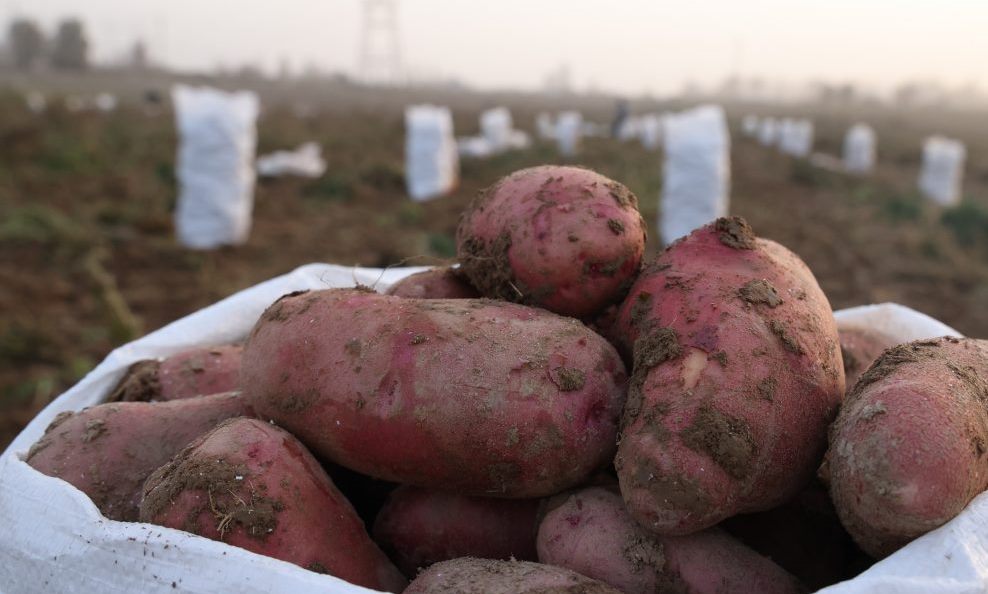
Tajikistan collected a record potato harvest in 2023 – 1.145 million tons, which is 4.6 percent more than in 2022.  However, Tajikistan’s potato imports last year increased by 43,000 tons, reaching 46,000 tons (in 2022, Tajikistan imported only 2,800 tons of potatoes). 

Tajikistan has imported potatoes from Russia, Pakistan and some other countries.  

Specialists note that 2023 is the most productive year for potatoes in the history of independent Tajikistan.  Before that the most productive years for potatoes were 2013, 2020, 2021 and 2022.  During these years, Tajikistan produced more than 1 million tons of potatoes.  

Last year, average potato yields in Tajikistan were about 2.4 tons/ha.  In terms of potato yields, Tajikistan is in the second place among the Central Asian nations, being behind only Uzbekistan, which last year yielded more than 3.5 tons of potatoes from one hectare. 

According to the latest data of the agencies for statistics of Central Asia’s nations, Tajikistan is in the fourth place among the Central Asian nations in terms of potato production.

Join us on social media!

Article translations:

Related Article

Оби зулол
Оби зулол
Tenisi

Most Read

Коммерсбонк Точикистон

Recent Articles

RZD announces the restoration of passenger services between Moscow and Dushanbe

Direct rail services between the capitals of Russia and Tajikistan were suspended in March 2020 due to the COVID-19 pandemic.

#AP30/Stories. “Selam! Heller nichek?” How Tatars live today in Sughd province

On the 30th anniversary of "Asia-Plus," we continue to publish reports that remain relevant even after years. This story was told in 2021, and since then, little has changed in the life of the Tatar community in Tajikistan.

15,000 cameras, drones, and robots: how technology monitors pilgrims in Mecca and Medina

During Hajj 2026, Mecca and Medina were under unprecedented digital control.

Another child in Dushanbe removed from family and sent to boarding school

The Ministry of Internal Affairs reports that the parents did not pay adequate attention to the child.

Emomali Rahmon instructs to address issues in seed production following criticism of the industry

Issues have been noted with certification, seed quality, and the material and technical base of the industry.

Water, climate, and a $130 billion deficit: seven key outcomes of the Water Conference in Dushanbe

At the forum, countries and international organizations discussed new mechanisms for cooperation, investments, and technologies that are essential for addressing the global water crisis.

Eskhata Bank introduces a new generation children’s wallet

"Eshkata Bank" has created a full-fledged digital platform that helps children aged 7 to 16 learn how to manage money.