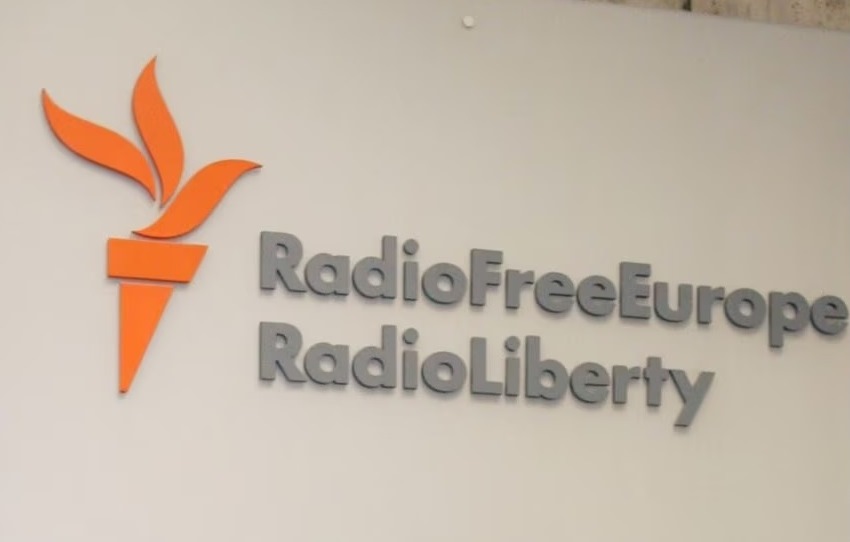
According to a registry maintained by the Ministry of Justice of the Russian Federation, Russia has labeled Radio Free Europe/Radio Liberty (RFE/RL) as an “undesirable organization”, exposing its journalists and others working with the organization, as well as its donors or those who are interviewed by it, to criminal charges.
Russian media reports say RFE/RL appeared in the Justice Ministry’s database of “undesirable” organizations yesterday.
The Moscow Times says this making RFE/RL the latest news organization to be blacklisted in Russia amid a sweeping crackdown on independent journalism that has dramatically intensified since Moscow invaded Ukraine in 2022.
The “undesirable” designation bans RFE/RL's work inside Russia, puts staff members at risk of jail time and criminalizes engagement with the outlet, including sharing its content online.
Organizations labeled “undesirable” must cease all operations inside Russia, and it is illegal for individuals and media outlets in Russia to republish or share their content.
RFE/RL says the latest update of the registry shows the outlet was designated "undesirable," an escalation from its previous designation as a so-called “foreign agent,” as of February 2, with a ruling made to officially add it to the list on February 20. According to the entry, RFE/RL is the 142nd entity to be labeled as such.
RFE/RL President Stephen Capus said the designation is the latest example of how the Russian government views truthful reporting as an existential threat.
“Millions of Russians have relied on us for decades — including record-breaking audiences over the past few days since the death of Aleksei Navalny — and this attempt to stifle us will only make RFE/RL work harder to bring free and independent journalism to the Russian people,” Mr. Capus said in a statement.
The “undesirable organization” law was adopted in 2015 and it is a Kremlin-backed regulation on NGOs and others that receive funding from foreign sources. The label has reportedly been applied to dozens of foreign groups since Moscow began using the classification and effectively bans an organization outright.
According to the Committee to Protect Journalists (CPJ), Russian authorities have labeled dozens of media organizations “undesirable” since 2021.
RFE/RL is a private, nonprofit American media corporation funded by a grant from the U.S. Congress through the United States Agency for Global Media. RFE/RL operates in 27 languages in 23 countries — mainly for audiences in countries where media freedom is limited.