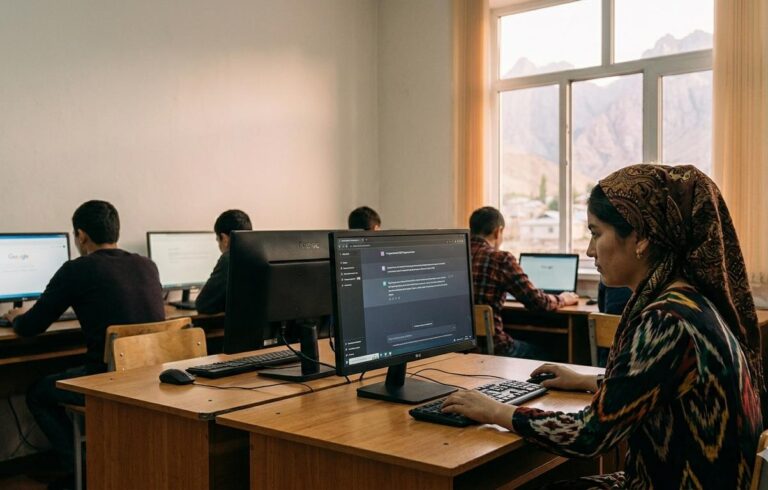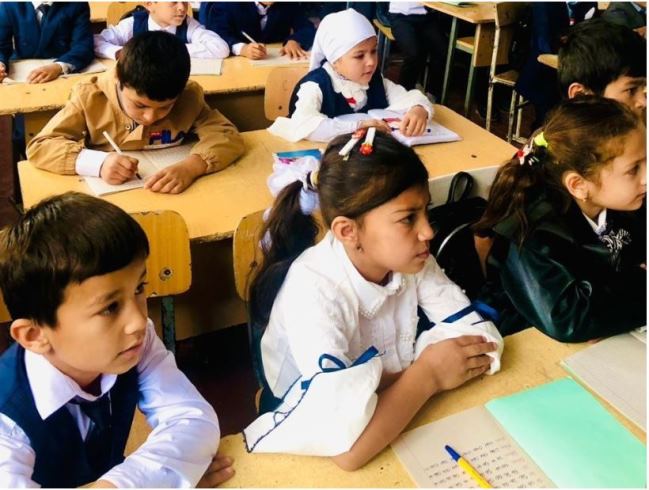
Like some other Central Asian countries, Tajikistan faces an acute shortage of teachers, schools, and textbooks.
Tajikistan's population has skyrocketed to more than 10 million people in recent years and 2.2 million schoolchildren reported for school on September 1 last year.
The country’s education system is reportedly some 4,000 teachers short of the total needed.
Recall, the Deputy Minister of Education and Science, Ziyodullo Abdulzoda, told reporters in Dushanbe on August 1 last year that schools in Tajikistan are continuing to experience an acute shortage of teachers of chemistry, physics and mathematics.
According to him, Tajikistan now has 3,434 teaching vacancies.
This problem has worsened rapidly in just the last few years. In 2021, officials said the teacher shortfall was 1,124.
Abdulzoda said a special commission had been set up at the Ministry of Education and Sciences (MoES) to tackle the problem of shortage of high school teachers in the country. “4,347 people have already been competitively selected and after appropriate procedures they will be sent to work with schools,” Abdulzoda noted.
Meanwhile, experts have expressed concern about recruiting young graduates to teach in schools. “When a university graduate comes to school to complete an internship and does not even understand the curriculum of an elementary school, then what can he or she teach to schoolchildren as a teacher?" Muhammadsodiq Abdurazzoqov, an expert on education in Tajikistan, said in an interview with Radio Liberty in August last year.
Some experts warn that the shortage of teachers in Tajikistan is largely influenced by emigration. Many teachers have left the country seeking better employment opportunities and many specialists do not want to work with schools because of low monthly wages in the education sector.
According to the Agency for Statistics under the President of Tajikistan, an average salary for educators in 2023 was a little more than 1,600 somonis (US$150). There are few jobs that pay less.
The teaching profession has become almost entirely female. According to data from a MoES, 126,354 teachers work with 3,967 highs schools in Tajikistan last year; 81,822 of them are women.
Thousands of teachers in Tajikistan have been forced to migrate because of low salaries. Tajik teachers leaving for Russia seeking better employment opportunities mainly work as street cleaners or delivery workers.