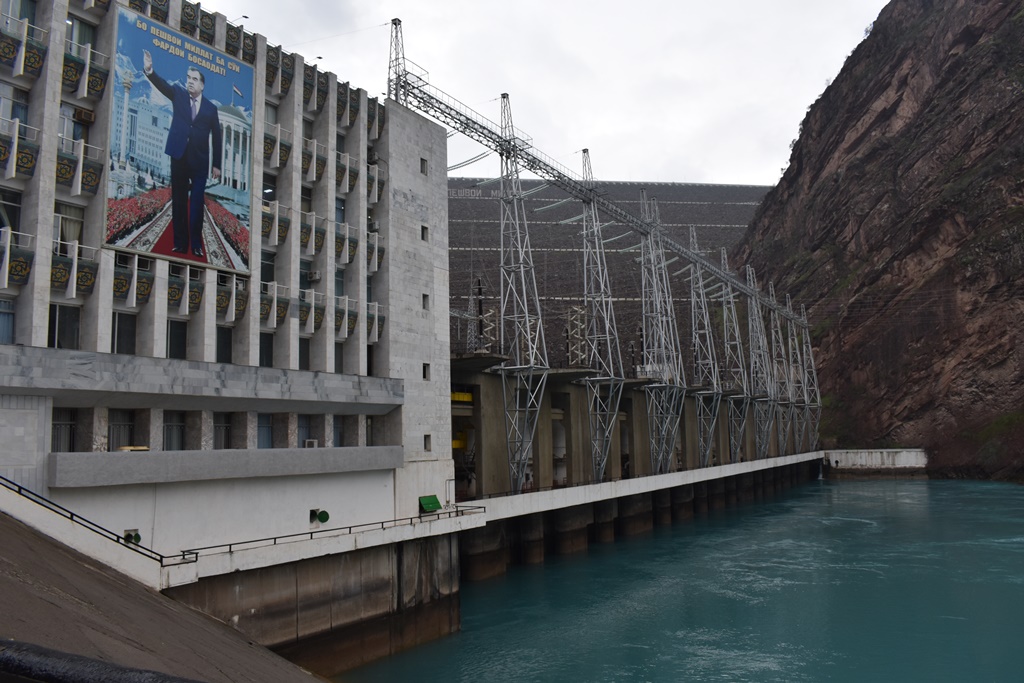
The water level in the reservoir powering the Nurek hydropower plant has risen considerably over the past fortnight.
On Monday April 15, the water level in the Nurek reservoir reportedly reached the mark of 858.44 meters, which is 80 centimeters higher compared to early April.
On April 3, the water level in the Nurek reservoir was at 857.64 meters, which was 5.07 meters lower compared to same date of last year. It had just remained only 64 centimeters to the critical point, after which the use of the reservoir water is strictly prohibited.
The headwater mark (the upper reaches) of the Nurek reservoir is at 910 meters above the sea level, while the critical point is at 587 meters.
Energy specialist note that the increase in the water level in the Nurek reservoir was facilitated by a gradual increase in air temperature in recent weeks.
The data on the current water inflow in the Vakhsh River cannot yet be obtained, but on April 3, the water inflow in the Vakhsh River that feed into the Nurek reservoir was only 295 cubic meters per second, which is 151 m3 per second less than on the same date last year.
The Nurek hydropower plant specialists say that to fully provide the country with electricity the water inflow in the Vakhsh River must exceeds 500 m3 per second.
It should be noted that electricity supply to residential customers improved markedly in recent weeks; at least residents of the capital no longer complain about power outages.
The Nurek hydropower plant, with an installed capacity of over 3,000 megawatts, reportedly generates about 70 percent of total annual energy demand in Tajikistan. The Nurek Dam was constructed by the Soviet Union between the years 1961 and 1980. It is uniquely constructed, with a central core of cement forming an impermeable barrier within a 300 meter high rock and earth fill construction.
The reservoir formed by the Nurek Dam is still the largest reservoir in Tajikistan with a capacity of 10.5 km3. The reservoir is over 70 km in length, and has a surface area of 98 km2.
Measures rationing electricity supplies are usually introduced in all regions of the country and they seek to curb the country's rising electricity consumption. The rationing results in the supply of daily electrical power being reduced to 10 or 12 hours. In addition to curbing rising consumption, the move also stems from a decline in the water level in the country's reservoirs powering the main hydroelectric power plants.
Power rationing affects rural areas of the country and it does affect Dushanbe, regional administrative centers and large cities. Residential customers in the Gorno Badakhshan Autonomous Region (GBAO), where Pamir Energy Company supplies electricity to consumers, also have an uninterrupted supply of electricity during the autumn-winter period.
It is to be noted that this time, power rationing was introduced in Tajikistan on September 26, 2023 and it is still in effect. Meanwhile, rural areas of the country accept lengthy power outages as a routine.