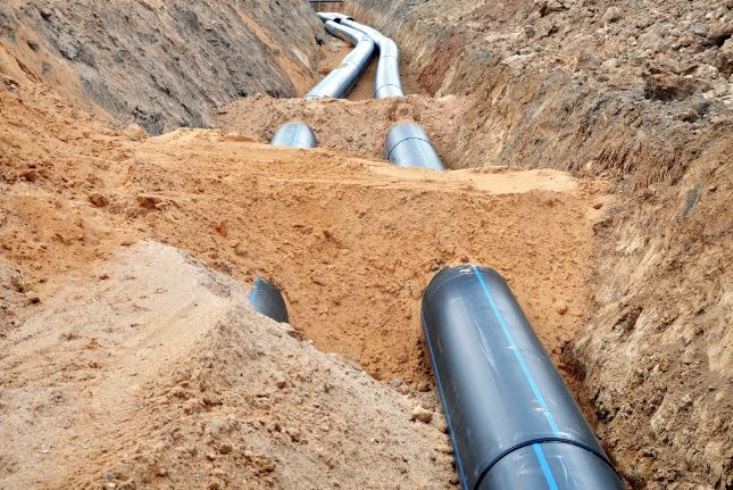
The European Bank for Reconstruction and Development (EBRD) and the Swiss government are helping to address pressing water treatment and environmental issues in Tajikistan by contributing additional funds towards the completion of upgrades to water and wastewater infrastructure in the city of Fayzobod and 14 neighboring communities.
The EBRD Resident Office in Dushanbe says the Bank is organizing a financial package of up to € 2.7 million for a local utility, Khojagii Manziliyu Kommunali (public utilities company), which will be supplying water to more than 30,000 residents of the Fayzobod region, a large, 900km2, administrative district in the Rasht Valley.
It consists of the Bank’s sovereign loan of up to €1.35 million and a capital grant of €1.35 million anticipated from the Swiss government through the State Secretariat for Economic Affairs (SECO).
The funds will complement an original investment made in 2022. The project will help address issues in critical drinking water and wastewater infrastructure and will promote the sustainable use of water by minimizing water losses.
EBRD President Odile Renaud-Basso said: “Our Bank is pledging more resources to strengthen Tajikistan’s resilience to climate change and to reduce water consumption by upgrading water networks and associated infrastructure. Once the project has been completed, the local population will benefit from rehabilitated networks and better sanitation.”
SECO will additionally provide € 200,000 to support the procurement and construction supervision.
The EBRD is a multilateral bank that promotes the development of the private sector and entrepreneurial initiative in 36 economies across three continents. The Bank is owned by 73 countries, as well as the EU and the EIB. EBRD investments are aimed at making the economies in its regions competitive, inclusive, well-governed, green, resilient and integrated.
In 2023, the EBRD marked 30 years since Tajikistan joined the Bank. EBRD activities in Tajikistan cover all sectors, including energy, infrastructure, financial sector, corporates and SMEs, reaching 947 million euros in 168 projects.
The EBRD’s operational and strategic priorities in Tajikistan are based on the following three pillars: 1) strengthening the competitiveness of businesses and improving the business environment; 2) fostering regional integration, energy reform and infrastructure connectivity; and 3) supporting wider access to better infrastructure and business services for women, young people and underdeveloped regions.
The Swiss State Secretariat for Economic Affairs (SECO) is the federal government`s center of excellence for all core issues relating to economic and labor market policy. It aims to contribute to sustained economic growth, high employment and fair working conditions, by creating the necessary regulatory, economic and foreign policy framework.