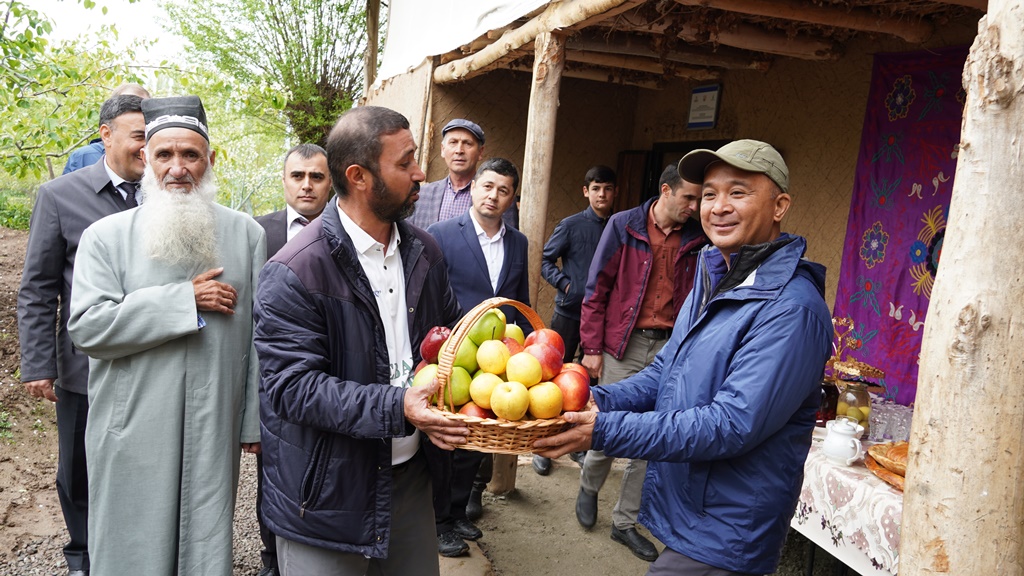
The United States Ambassador to Tajikistan Manuel Micaller and the CEO of Aga Khan Foundation in Tajikistan (AKF Tajikistan) Kishwar Abdulalishoev on April 29 visited one of fifteen Climate Control Facilities located in the Rasht Valley.
Press release issued by AKF Tajikistan says these facilities were established through a collaborative initiative by AKF Tajikistan and the United States Agency for International Development (USAID) using the Human Centered Design (HCD) approach.
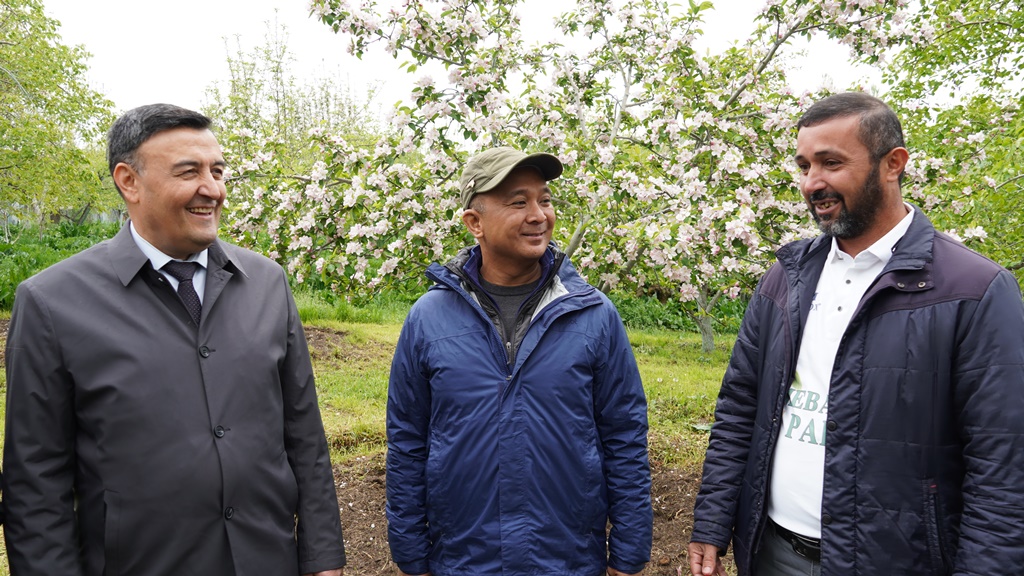
Over a period of 10 months, the HCD process reportedly engaged farmers across Rasht district, Nusratullo Makhsum, Navdi, and Hoyit jamoats, and involved 18 farmers. Among the four prioritized concepts, the Climate Control Storages emerged as the preferred concept among the farmers. Following an open competition, 13 proposals were chosen for implementation. Through a partnership agreement with 13 selected farmers, 15 Climate Control Storages were successfully constructed, with each farmer contributing 50% towards the project costs.
These cutting-edge facilities have been meticulously designed and furnished with advanced technologies, enabling farmers to regulate temperatures as low as +6°C. This innovation plays a crucial role in minimizing post-harvest losses, ensuring fair market prices for agricultural produce, and enhancing the availability of high-quality crops during off-season periods.
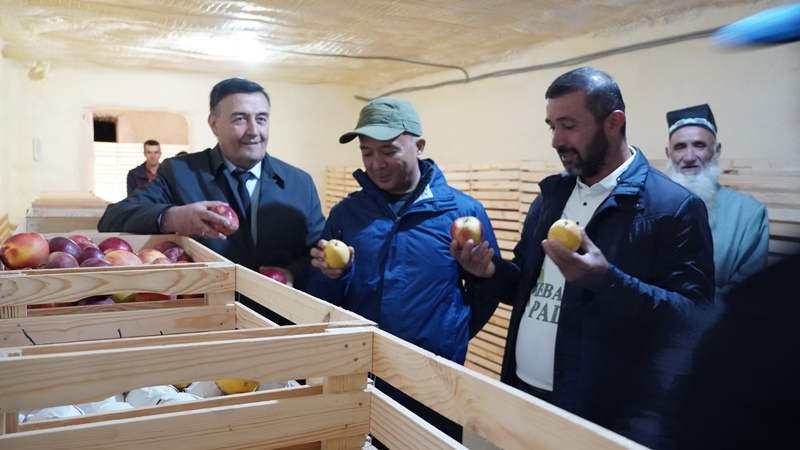
During the visit, Ambassador Micaller toured the climate control storage of one of the beneficiaries, gaining firsthand insight into the practices employed to maintain optimal storage conditions and maintaining the quality of the products.
The project plans to form a group of entrepreneurial farmers to cultivate premium pears and apples, and aims to enhance knowledge exchange, reduce marketing costs, and access larger markets beyond Rasht valley. By focusing on branding, the initiative aims to create a unique identity and provide high-quality storage boxes featuring the Producer Group's branding.
Selected farmers will receive training on cold-storage management, transportation, and marketing to equip them with the necessary skills and resources to succeed in the competitive agricultural market.
Developed under AKF and USAID’s Local Impact project, this initiative adds to the collaborative efforts aimed at fostering sustainable development and empowering local communities.
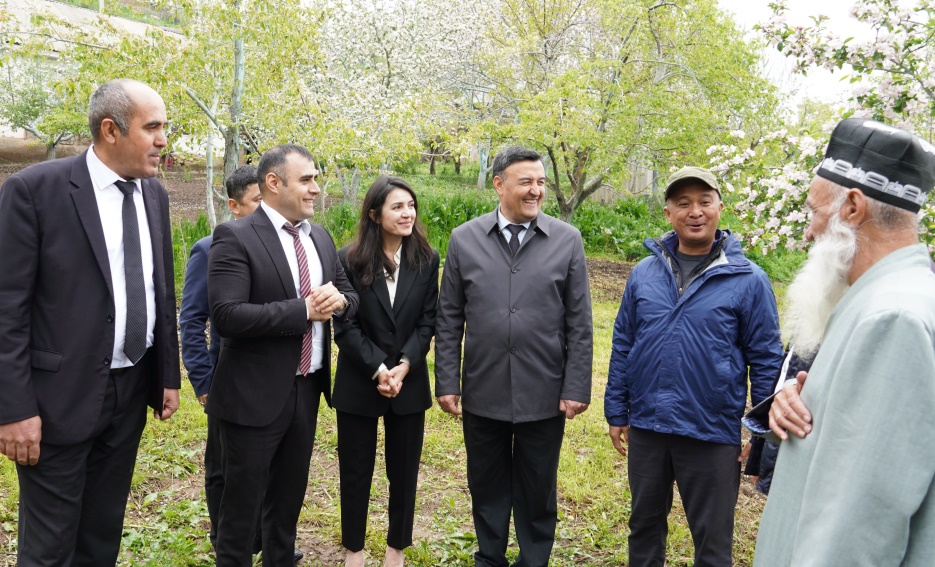
The visit by the U.S. Ambassador underscores the significance of such initiatives of USAID and AKF in promoting economic growth, enhancing food security, and strengthening partnerships.
USAID is the world’s premier international development agency and a lead actor driving development results.
AKF partners with communities, nonprofits, businesses, governments, and local leaders to make long-term investments, build permanent institutions, and cultivate an active civil society with the aim to improve quality of life and break the cycle of poverty.