Swarms of locusts have infested farmlands in Tajikistan, according to the Ministry of Agriculture of Tajikistan (MoA).
An official source at a MoA says “the spread of locusts has bene reported on 44,000 hectares of farmland.”
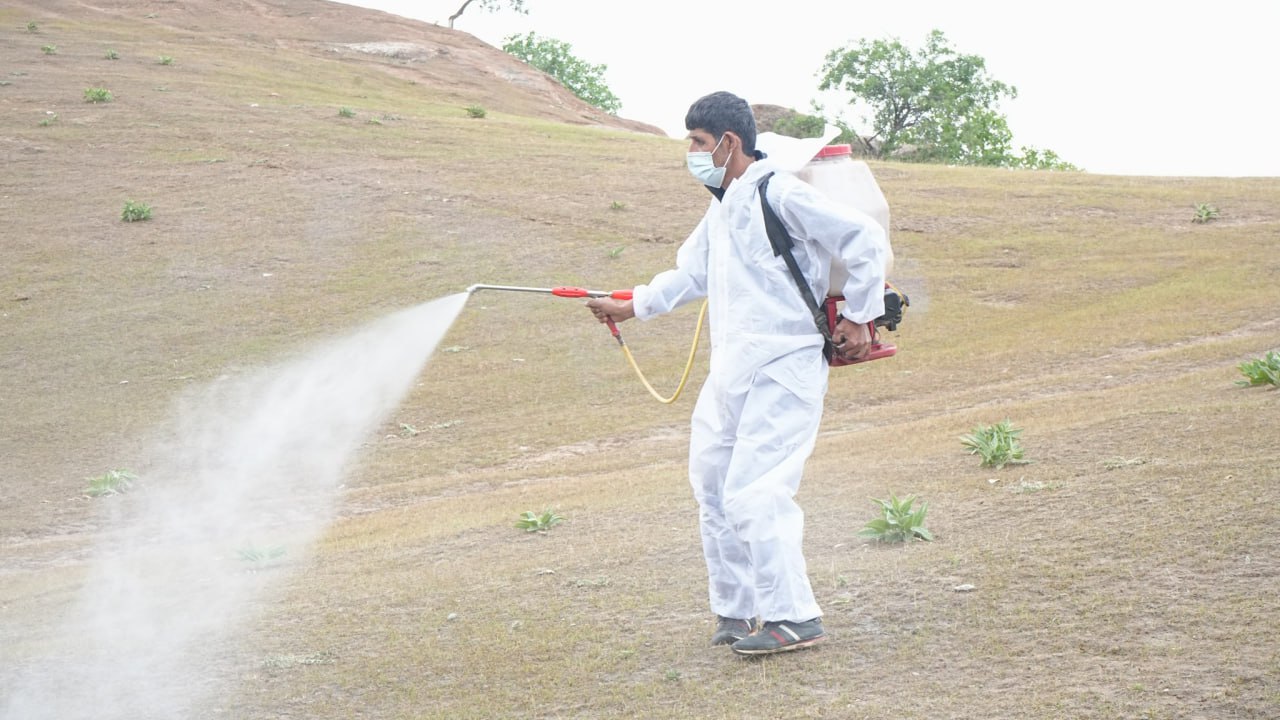
According to him, 37,000 hectares of farmland in 35 districts of the country have been treated to date.
According to data from the State Entity Locust Control Expedition (SE-LCE), more than 124,000 hectares of farmlands will be treated to prevent against locust infestations.
About 1,000 people, 34 tractor-sprayers, 11 vehicles and 645 hand sprayers are reportedly involved in locust control measures.
The worst hit areas are reportedly Panj, Farkhor, Vakhsh, Kushoniyon, Khuroson, Jaloliddin-Balkhim Shahritous and Danghara districts in the southern province of Khatlon.
The spread of locusts has also been reported in some districts subordinate to the center and some districts of the northern province of Sughd
The MoA, however, says the current situation is not particularly worrying, “since locust control measures are being implemented in a timely manner.”
It is to be noted that the Food and Agriculture Organization of the United Nations (FAO) supports Tajikistan in combating locust infestations via regional projects as part of its Program to improve National and Regional Locust Management in Central Asia and Caucasus (CCA).
Thus, the second phase of the regional project “Improvement of Locust Management” financed by the Japan International Cooperation Agency (JICA) aims to bolster national and regional efforts to prevent and combat locust outbreaks. This five-year project is implemented in Afghanistan, Kazakhstan, Kyrgyzstan, Tajikistan, Turkmenistan, and Uzbekistan.
On April 1 this year, the FAO Representation in Tajikistan handed over 10 kilograms of the biopesticide to project’s direct beneficiary organization, SE-LCE, along with 20 protected tablets and accessories for field data collection.
Locust infestations, aggravated by climate change and environmental factors, are a serious problem for agricultural production in Tajikistan, threatening food security and economic stability.
Locusts are migrant pests, able to fly up 150 kilometers daily and settle in new areas, often crossing countries’ political borders. Every year, they put at risk crops and rangelands while threatening food security and the livelihoods of the rural populations living in the affected areas.