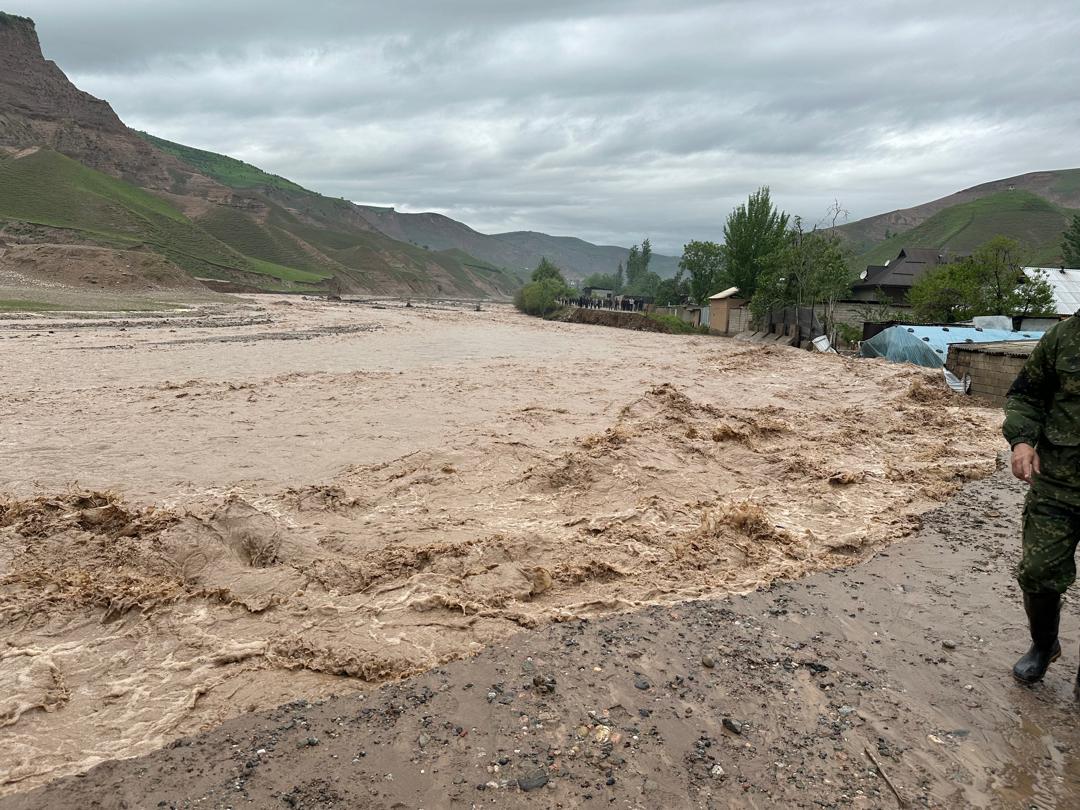
Torrential rain on May 5 caused a series of mudflows practically in all regions of Tajikistan that damaged roads and personal plots, according to the Emergencies Committee under the Government of Tajikistan.
An official source within the Emergencies Committee says the worst hit areas were Varzob district (districts subordinate to the center), Vahdat Township, Roudaki district (districts subordinate to the center), some districts in Khatlon province, Ayni district in Sughd province, some areas in the Rasht Valley (eastern Tajikistan) and some area in the Gorno Badakhshan Autonomous Region (GBAO).
Unfortunately there were some casualties. The mudflows reportedly left dead two women in Varzob district and one woman in the village of Bodomzor, which is subordinate to the northern city of Istaravshan.
Mudflows reportedly damaged bridges, canals, protective dams, sluices, hydraulic facilities and roads in Abdulvosiyev, Numon-Roziq, Juyangron, Cimiganj, Romit, Rohati and K-Ismoilov villages, which are suboridante to Vahdat Toqwnship as well as in the Vahdat downtown.
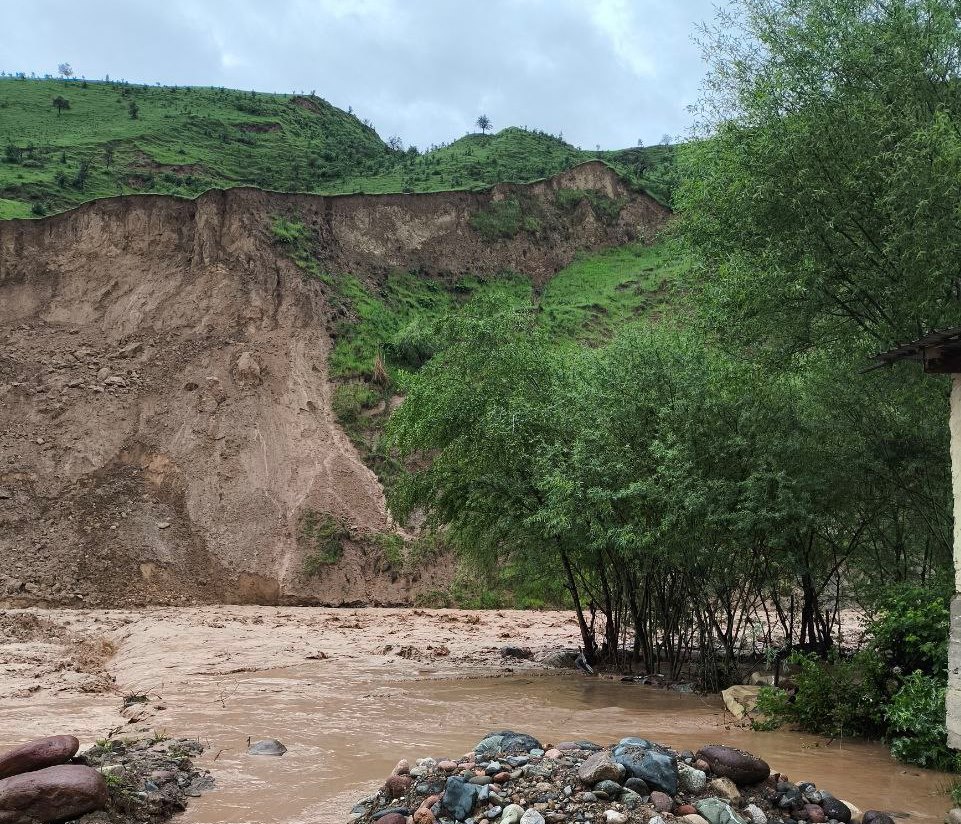
Residents of some of these villages have been evacuated to safe places.

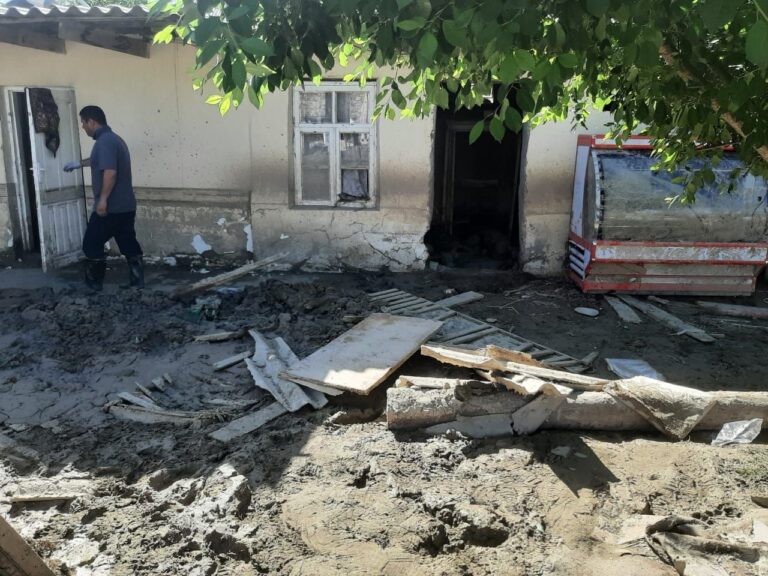
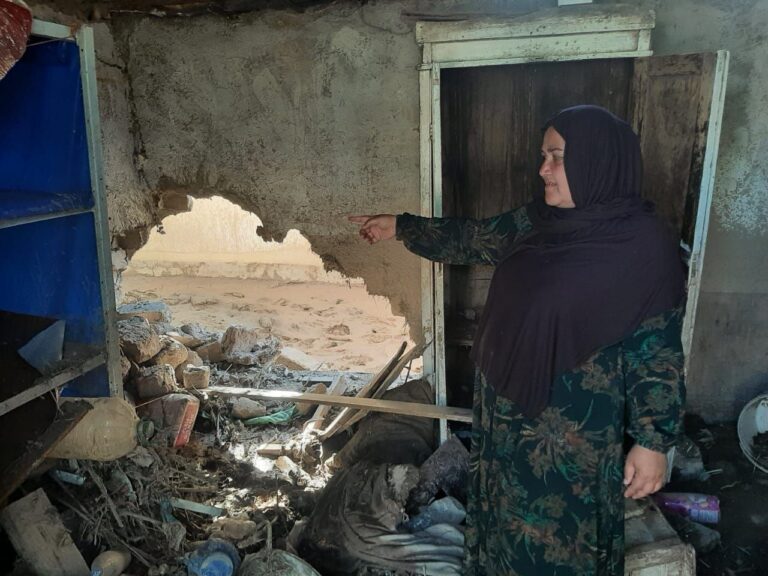
Mudflows also caused damages to Gulbogh jamaot in Varzob district, damaging rural roads, personal plots and some auxiliary structures.
“Unfortunately, 40- and 67-year-old woman of this area died in mudflows in Varzob district,” the press center of the Emergencies Committee said.
On May 5, mudflows also hit Zainabobod and Navobodo villages in Roudaki district, damaging 28 personal plots in the area.
In two villages, subordinate to the city of Hisor, mudflows damaged 72 personal plots.
In the Rasht Valley (eastern Tajikistan), mudflows reportedly destroyed a bridge on the Nourobod-Sangvor road and partially damaged the Labijar-Sangvor section of this road.
In the southern province of Khatlon, mudflows reportedly hit Tiyatoh, Zagertout and Tojikobod and Guliston villages, which are subordinate to Levakant city.
A mudflow carrying the mass of mud and slurry blocked a rural road that runs through the territory of the Zagertout village. The road was reportedly cleared of mud and slurry and was reopened for traffic.
Torrential rain also caused mudflows in Khatlon’s Danghara district. The mudflows partially damaged 1,700 kilometers of the Bokhtar-Danghara highway and the right side of the Danghara Free Economic Zone (FEZ Danghara).
In the northern province of Sughd, mudflows reportedly hit the city of Istaravshan and Ayni district.
In Istaravshan, a 20-year-woman was killed by a mudflow while grazing cattle.
In Ayni district, a mudflow partially damaged one residential building and three auxiliary structuresin Khoushekat village.
Special commissions have been set up to assess the real damage caused by the mudflows to the country’s economy. Representatives of these commissions have visited the mudflow sites to closely monitor the situation, according to the Emergencies Committee.