Tajikistan has become a leader in the CIS in organic farming. Agricultural products grown in Tajikistan are considered the purest from an environmental standpoint among CIS member nations.
According to FAO, 1.4% of arable land in Tajikistan is allocated for organic farming, while in other countries of the region, this figure, except for Moldova, is less than 1%. Moldova uses 1.3% of its arable land for organic farming, while the rates in other countries are even lower: Azerbaijan – 0.8%, Ukraine – 0.6%, Kyrgyzstan – 0.3%, Georgia – 0.2%, Russia and Belarus – 0.1% each, Kazakhstan – 0.05%, Armenia – 0.04%, Uzbekistan – 0.01%.
The 25th edition of The World of Organic Agriculture 2024, published by the Research Institute of Organic Agriculture FiBL and IFOAM – Organics International, offers a comprehensive review of recent developments in global organic agriculture. It presents detailed statistics on organic farming that relate to area under organic management, land use and crops, the number of farms and other operator types, retail sales and international trade data.
The book includes contributions from representatives of the organic sector from around the world about the global market for organic food, organic imports, regulations and policies. It offers insights into current and emerging trends in organic agriculture in Africa, Asia, Europe, Latin America, North America, and Oceania and reports on several countries.
Organic agriculture is practiced in 188 countries, and more than 96 million hectares of agricultural land are managed organically by at least 4.5 million farmers. Global sales of organic food and drink reportedly reached almost 135 billion euros in 2022.
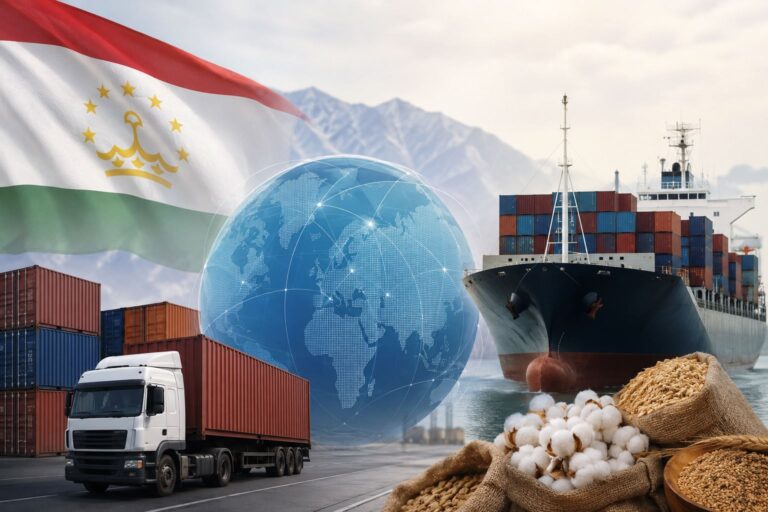
In Tajikistan, organic farming was launched in 2008 with the organic cotton production in northern Tajikistan as part of a project by Helvetas Tajikistan. The estimated share of land for organic products in the total area of farmland in the country increased from 0.07% in 2008 to 1.4% in 2023.
The main organically grown crops are cotton, alfalfa, apricots, peanuts, corn, wheat, and tomatoes. When growing these crops organically, an average of 30% less energy is used, more water is retained in the soil, erosion is reduced, soil quality is maintained, and more biological resources are preserved compared to conventional farming.
The only drawback of organic farming is the higher cost of products labeled “organic.” Despite this, many consumers are willing to pay more for healthy and high-quality food products.
Organic farming, also known as ecological farming or biological farming, is an agricultural system that uses fertilizers of organic origin such as compost manure, green manure, and bone meal and places emphasis on techniques such as crop rotation and companion planting. It originated early in the 20th century in reaction to rapidly changing farming practices. Certified organic agriculture accounts for 70 million hectares globally. Organic standards are designed to allow the use of naturally-occurring substances while prohibiting or strictly limiting synthetic substances.