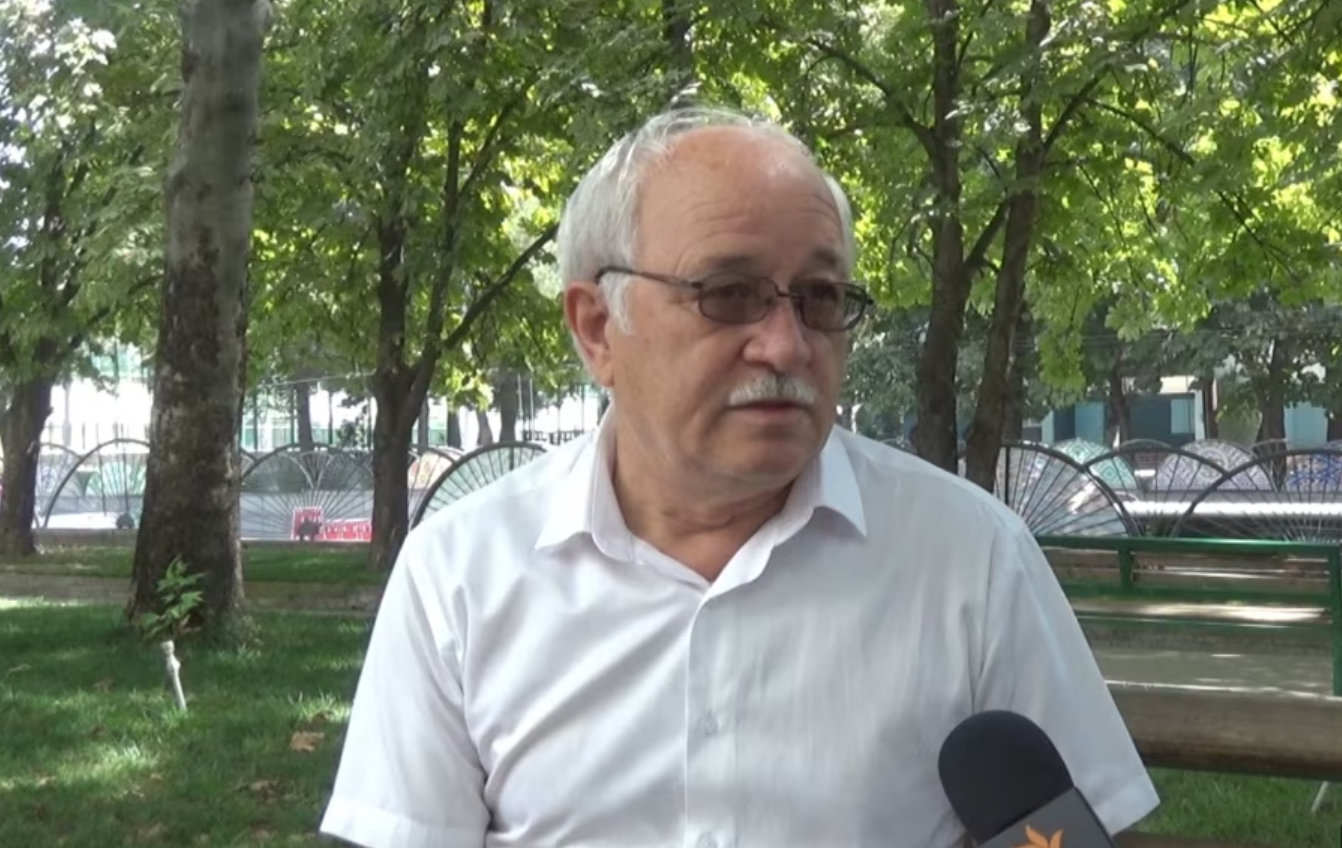
Citing a source within Tajikistan’s law enforcement authorities, Radio Liberty’s Tajik Service, known locally as Radio Ozodi, reported on June 27 that a well-known journalist Ahmadshoh Komilzoda, who is also the first deputy chairman of the Democratic Party of Tajikistan DPT, has been arrested.
The details surrounding his arrest remain murky as law enforcement authorities have not made any official statements and his family members were unavailable for comment.
The source, who spoke with RFE/RL on condition of anonymity, said Komilzoda has been held in the temporary detention center since June 15. The source declined to provide further information.
Another source close to the Tajik Prosecutor-General's Office confirmed the arrest and disclosed that on June 16 Komilzoda's residence was searched, resulting in the confiscation of his computer, notes, and a phone.
According to the source, Komilzoda's arrest is linked to the case of Saidjafar Usmonzoda, a former chairman of the Democratic Party and a member of the Majlisi Namoyandagon (Tajikistan’s lower chamber of parliament). Usmonzoda was arrested on June 12 under suspicion of "attempting to usurp the government."
In early May, a group claiming affiliation with the Democratic Party dismissed Usmonzoda and elected Shahboz Abror, a journalist and owner of several print media outlets, as its leader.
Komilzoda, who previously served as Usmonzoda's deputy, was subsequently elected as the first deputy to Abror. Komilzoda also was expected to replace Usmonzoda as a member of parliament on behalf of the party.
Komilzoda has a background in journalism and politics. He was a board member of the national movement Rastohez and served as a manager at Tajikistan National Television in the late 1990s.
In 1993, he was arrested along with several other journalists and spent time in prison. Following the signing of the Peace Agreement and the establishment of the National Reconciliation Commission, Komilzoda became its spokesman.
Until 2011, he worked as a correspondent for Voice of America (VOA) in Tajikistan.
RFE/RL has reached out to the Prosecutor-General's Office seeking an explanation of the situation but has not received a response.