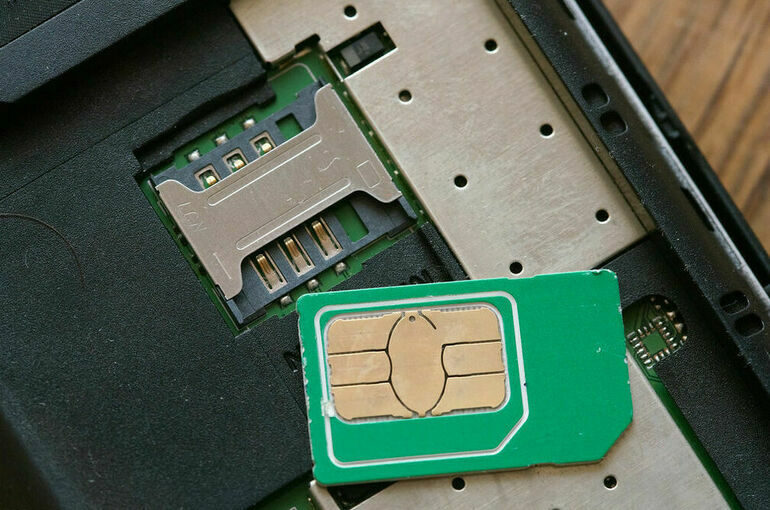
The State Duma (Russia’s lower chamber of parliament) Committee on Information Policy (Committee) has recommended that State Duma members pass the bill aimed at protecting citizen sf the Russian Federation against crime using mobile communications, says Parlamentstskaya Gazeta.
The initiative reportedly introduces notification to subscribers about all numbers registered on them, tightens regulations on SIM card purchases for foreigners as well establishes a procedure for de-anonymizing public channels in instant messengers.
Speaking at the Committee meeting, its head, Alexander Khinshtein, reportedly noted that parliamentarians had finalized the initiative, approving several amendments.
In particular, the limit on the number of SIM cards for citizens of the Russian Federation is set at twenty registered numbers per person.
Besides, the Committee has also approved the amendment requiring owners of messenger channels with more than 10,000 subscribers to provide information about themselves to Roskomnadzor (the Federal Service for Supervision of Communications, Information Technology and Mass Media).
Recall, a bill aimed at tightening regulations on SIM card purchases for foreigners was submitted for consideration to the State Duma last month and was adopted in the first reading.
The bill suggests capping the number of registered numbers at ten per person and limiting purchasing SIM cards to physical telecom locations.
One of the provisions of the bill mandates that foreigners and non-citizens must provide biometric data to the government as a prerequisite for concluding a service contract.
Another notable aspect of the proposed legislation is the inclusion of a unique international identifier (IMEI) tied to each SIM card. This identifier will be associated with the specific device containing the SIM card. If the SIM card is inserted into a different device, service providers will be prompted to deactivate the connection for that subscriber. However, the bill also allows for the issuance of the IMEI code, which can be facilitated at any branch of the respective service provider.
As it had been reported earlier, this bill aimed at tightening regulations surrounding the purchase of SIM cards by foreigners and non-citizens was drafted by Russia’s Ministry for Digital Technology,
TASS reported in late April that if the bill is enacted into law, all foreigners and non-citizens currently holding telecom agreements with service providers will be required to adhere to the new rules. They must be notified of these changes by February 1, 2025 and will need to sign a new contract reflecting the updated regulations by March 1, 2025.
Some experts note that these proposed regulatory changes represent a concerted effort by the Russian government to enhance security measures and ensure greater oversight of telecommunications services utilized by foreigners and non-citizens within the country.