In a report released at a news conference in Dushanbe, the head of the Committee for Local Development under the Government of Tajikistan, Sharifjon Jumazoda, noted on July 29 that names of more than 174 settlements that do not correspond to national traditions have be renamed over the first six months period and more than 300 other settlement will be renamed in the near future.
He further noted that the Committee had received documents for renaming 524 settlements, including 9 settlements in the Gorno Badakhshan Autonomous Region (GBAO), 11 in Sughd province, 496 in Khatlon province, 8 in Faizobod district and one in Nurek.
In this regard, a government regulation has been drafted, which is currently being agreed with relevant ministries and agencies.
“Besides, an appropriate working group has considered names of 7,682 geographic features and 4,911 settlements,” Jumazoda said, noting that 4,833 toponyms (4,031 geographic features and 802 settlements) will be renamed.
According to him, 52 settlements in GBAO, 170 settlements in Sughd province, 342 settlement sin Khatlon province and 238 settlement sin districts subordinate to the center will be renamed.
During the Soviet Era countless towns were renamed in Soviet style. With independence came a wave of new city names as the newly independent states sought to separate themselves from their neighbors physically, historically, and culturally.
In Tajikistan, the process of renaming settlements began in 2015. The new names followed a trend in which anything not distinctly Tajik or Persian in origin was dismissed. For example, the city of Chkalovsk in northern Tajikistan was renamed “Buston,” meaning “Blooming Garden.”
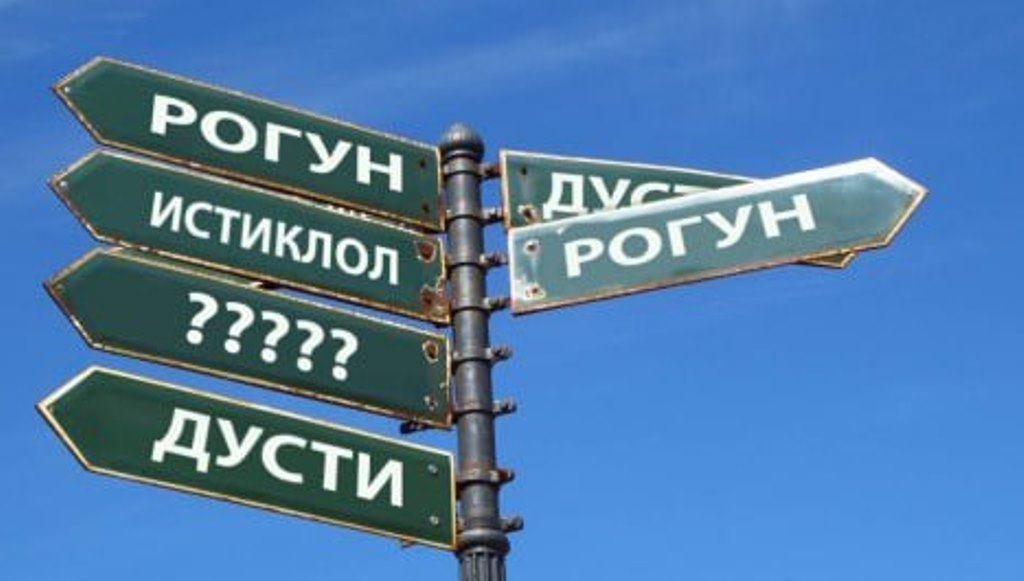
Having purged Tajikistan of most Russian and Soviet labels, the Tajik authorities have begun targeting places with names of Turkic origin. Thus, the city of Qairoqqum, an Uzbek name, for example, was renamed Guliston, or City of Flowers. An artificial lake by the same name was simply called the Tajik Sea. The district of Ghonchi, a name with Turkic roots, was named after Devashtich, a Sogdian ruler of the modern-day Tajik city of Panjakent in pre-Islamic Central Asia. Jillikul district in Khatlon province had its Kyrgyz name replaced with Dousti, which means friendship in Tajik.