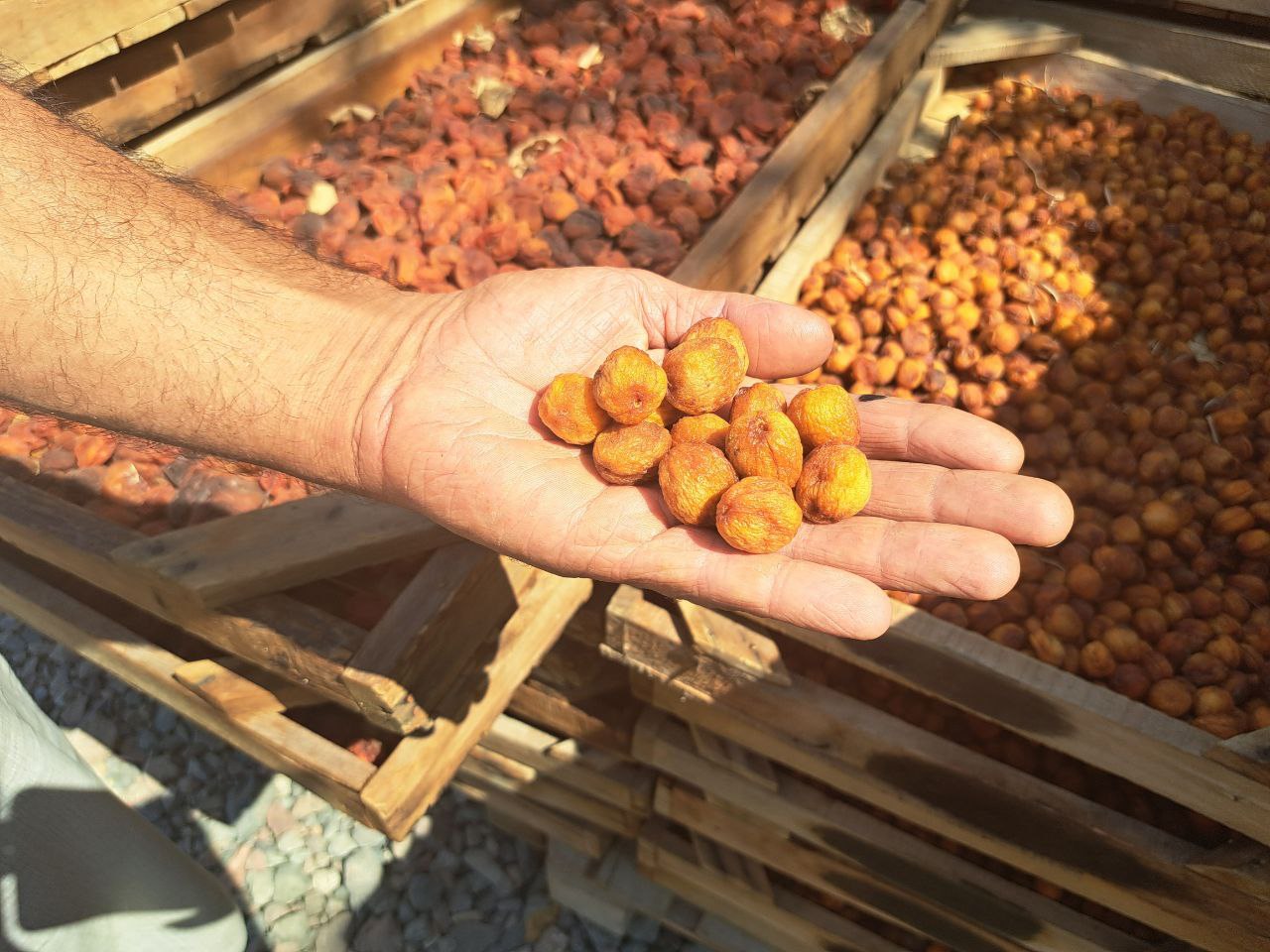
The Asht district of Sughd region is famous not only for its large reserves of rock salt and medicinal mud. Apricots grow here, the taste and sweetness of which have no analogues in the whole world. However, due to the high level of labor migration, there is practically no one to harvest, and wages for hired workers have risen significantly.
Asht district is one of the largest orchards and vineyards in the north of Tajikistan. Their total area covers about 20 thousand hectares, with 90% of these lands falling on apricot orchards.
Kamoliddin (name changed at the request of the hero), a resident of the village of Shaidon (the administrative center of the Asht district), has been growing apricots for more than 20 years. His gardens are spread over 50 hectares of land.
He says that in recent years, due to a shortage of workers, he himself has to participate in the harvest. At the same time, it is no longer necessary to choose among the workers. Not only men, but also entire families began to leave the Asht district for Russia.
"Previously, we chose workers, for example, we could not take women and children, we attracted only physically strong and hardy men," Kamoliddin says. – Now we have a big shortage of workers. If a few years ago, 40-50 people worked for me during the season, today, if you gather 5-10 people, it's already good."
According to the gardener, due to the shortage of workers, wages have risen significantly. Currently, the minimum cost of a worker's services for harvesting starts from 150 somoni per day.
"We do not yet have the ability to automate harvesting, apricot sorting, and seed removal. Therefore, people are needed in all these processes. Now it has really become a huge problem. Some of our employees were from the village of Gudos. Now 80% of the residents have left there, only the elderly are left," our interlocutor shares.
According to the Department of the Migration Service of the Ministry of Labor in Sughd region, as of July 2024, about 24 thousand residents of the Asht district are in labor migration, of which 7 thousand are women.
The figures provided by the department indicate that the trend of outflow of residents is only increasing. At the end of 2023, this figure was 17.5 thousand people, 5 thousand of those who left were women.