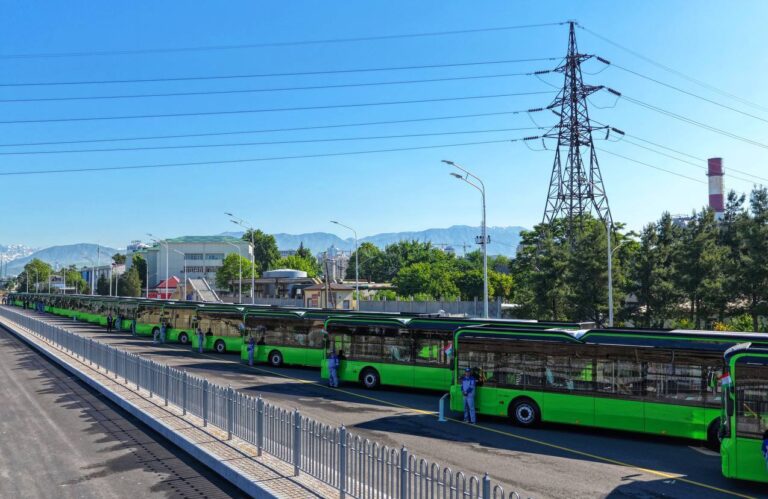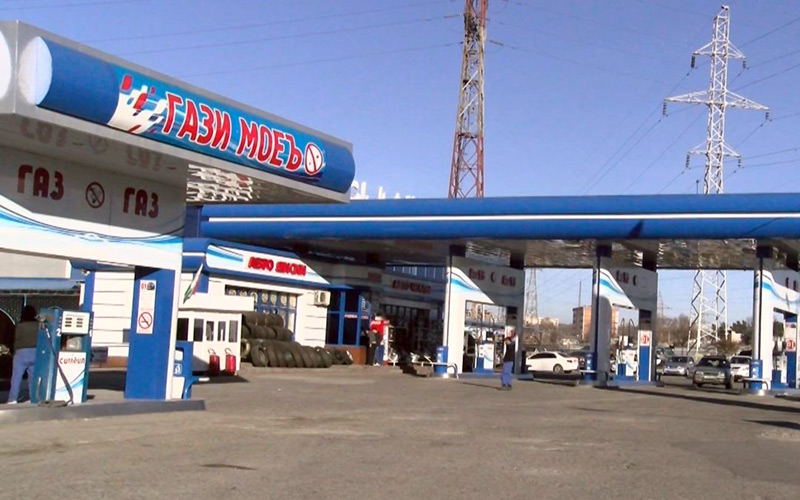
This week, gas stations in Dushanbe have begun round-the-clock sales of liquefied natural gas (LNG), which remains the primary automotive fuel in Tajikistan (it is to be noted that more than 60 percent of motor vehicles in the country use LNG as fuel). Prior to this, retail sales of this fuel were suspended during the day due to high air temperatures, as explained by the Ministry of Energy and Water Resources.
According to the Ministry, in order to comply with the "Safety Regulations for the Use of LNG at Gas Stations," sales were restricted in summer when temperatures exceeded safety limits for stations that did not meet safety requirements.
Since the restrictions were lifted, the price of LNG at Dushanbe’s gas stations has dropped slightly, from 8.20 somonis per liter on September 9 to 8.00–7.80 somonis per liter on September 13.
However, it should be noted that since mid-2024, the price of liquefied gas had risen sharply from 5.8 somonis to 8.30 somonis per liter, marking a 43.1% increase. This price hike occurred amidst a significant shortage of the fuel at most capital gas stations, with some stations selling it at inflated prices.
At the time, the Ministry of Energy and Water Resources clarified that no restrictions had been imposed by exporting countries, and the fuel reserves of importers were sufficient to supply the domestic market. The Ministry also noted that Kazakhstan, the main supplier of liquefied gas to Tajikistan, had announced a price adjustment to support production levels.
In late July, the Antimonopoly Agency under the Government of Tajikistan cited several external factors contributing to the price increase, including higher import prices and repair work at production facilities in exporting countries.
The Agency says that over the first half of 2024, Tajikistan has imported 195,500 tons of liquefied natural gas, which is 12,300 tons less than in the same period last year.
The average import price of liquefied gas over the first six months of this year was US$681 per ton, a 69% increase compared to the same period in 2023, when it was US$403 per ton.
Seventeen companies have been involved in the import of liquefied gas over the first six months of this year.
Among them, the largest shares were held by:
- Temur Oil LLC (21.2%)
- Allat LLC (10.0%)
- Oktan Service LLC (9.9%)
- Iris LLC (8.3%)
- Gazpromneft Tajikistan LLC (8.1%)
- Emom Import Export LLC (8.0%).
It's important to remember that liquefied gas is one of the 19 socially significant goods in Tajikistan, and its price can be regulated by the Antimonopoly Service according to a special government decree.