In mid-September this year, representatives from Central Asian countries met in Almaty, Kazakhstan to discuss strategies for improving school safety and resilience to natural disasters and climate risks.
The meeting participants reportedly analyzed progress in school safety and resilience in the education sector, discussed improvements in legislation and policy, and highlighted the need for training on climate risks and natural disaster risks.
They also called for increased investment in strengthening school infrastructure and for cooperation between Central Asian countries to address common challenges.
The countries reportedly reaffirmed their commitment to the Sendai Framework for Disaster Risk Reduction 2015-2030 and the Sustainable Development Goals by 2030. It was noted that stakeholders will work together to create safer and more resilient educational infrastructure that can withstand natural and man-made disasters.
The Sendai Framework for Disaster Risk Reduction 2015-2030 outlines seven clear targets and four priorities for action to prevent new and reduce existing disaster risks: 1) understanding disaster risk; 2) strengthening disaster risk governance to manage disaster risk; 3) investing in disaster reduction for resilience and; 4) enhancing disaster preparedness for effective response, and to "Build Back Better" in recovery, rehabilitation and reconstruction.
It aims to achieve the substantial reduction of disaster risk and losses in lives, livelihoods and health and in the economic, physical, social, cultural and environmental assets of persons, businesses, communities and countries over the next 15 years.
The Framework was adopted at the Third UN World Conference on Disaster Risk Reduction in Sendai, Japan, on March 18, 2015.
Asia-Plus news agency has investigated the number of schools in Tajikistan at risk.
According to the Emergencies Committee under the Government of Tajikistan, as provided to Asia-Plus, 255 schools located in disaster-prone areas of the country have been inspected.
The highest number of such schools is in Khatlon province — 115, followed by Sughd province – 66, the districts subordinate to the center – 38, the Gorno Badakhshan Autonomous Region (GBAO) – 34, and Dushanbe – 3.
The main threat is mudslides — 159 schools fall into this category. Additionally, 33 schools are at risk due to high water levels in rivers and lakes, and 15 schools are vulnerable to landslides.
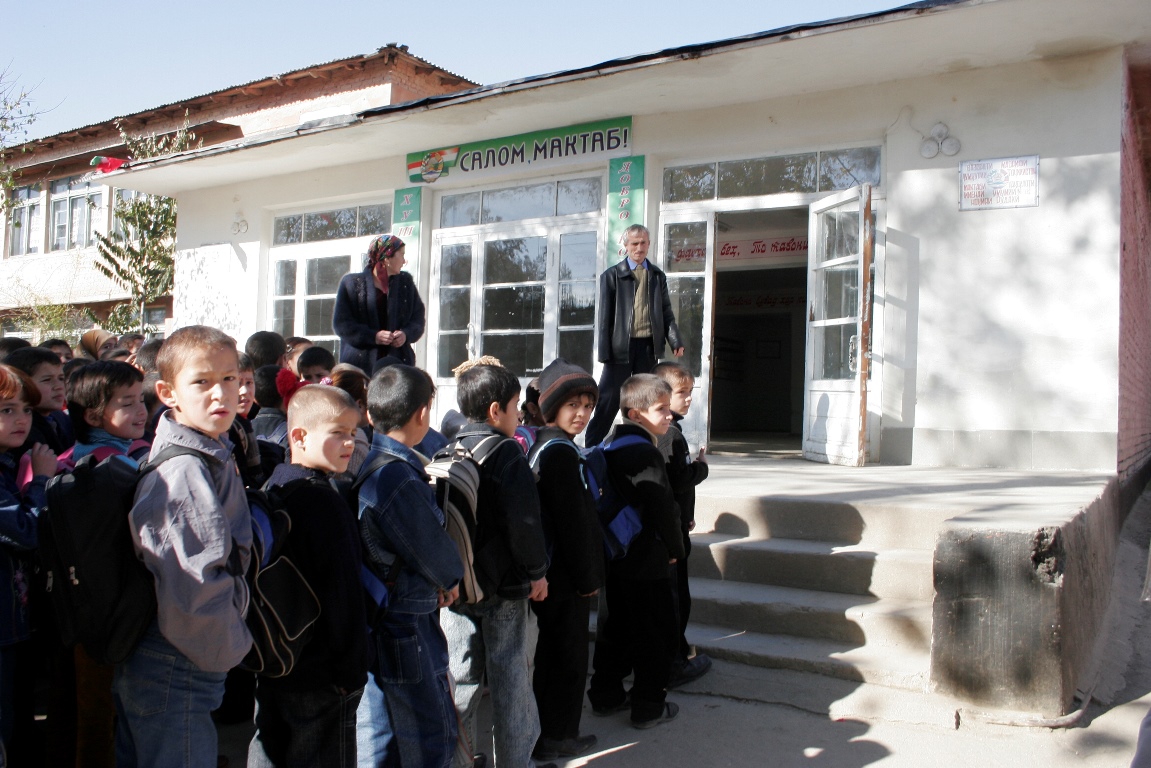
Currently, there are about 4,000 schools operating in Tajikistan, educating 2.28 million students.
What re the authorities planning to do?
It was noted that the Emergencies Committee has completed inspections of schools in risk zones and is developing recommendations for strengthening buildings and implementing flood protection measures.
Attention is also focused on the need for training teachers and students in emergency response actions.