Uzbekistan ranks first in Central Asia for the number of deaths caused by air pollution, followed by Tajikistan.
Air Pollution: A cause of premature death
Premature deaths from air pollution-related diseases in Tashkent amount to 3,042 cases annually, or more than 100 cases per 100,000 people, according to the report "Air Quality Assessment in Tashkent" and the "Roadmap" for improving air quality management in Uzbekistan. Uzbekistan leads Central Asia in this regard.
A report by the World Bank notes that in 2023, air pollution in Tajikistan caused an average of 78 premature deaths per 100,000 people. This places the country second in Central Asia, after Uzbekistan.
The main causes of death in Tajikistan linked to air pollution include diseases such as ischemia, stroke, hypertension, pneumonia, liver diseases, diabetes, lung diseases, Alzheimer's disease and dementia, stomach cancer, and others.
According to the World Health Organization (WHO), exposure to air polluted with particulate matter, ozone, carbon monoxide, and sulfur oxides increases the risk of stroke and myocardial infarction, as well as the development of chronic obstructive pulmonary disease.
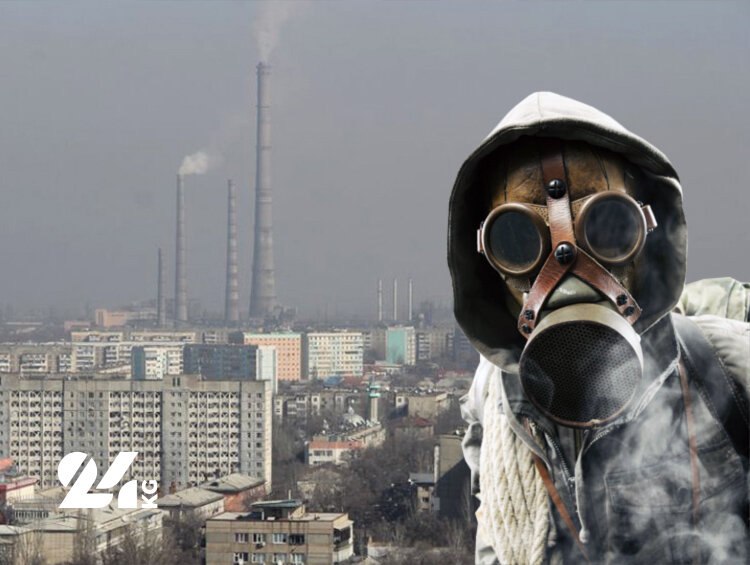
In 2023, the average concentration of suspended particles in the air in Dushanbe, including fine dust with a particle size of 2.5 micrometers or smaller, was about 36 micrograms per cubic meter—nearly seven times higher than the safe level recommended by the World Health Organization.
Experts attribute this to inefficient heating systems in homes, emissions from the energy sector, transportation, and industrial facilities. According to World Bank research, healthcare costs related to this issue account for 4% of Tajikistan's GDP.
The Physical-Technical Institute of the National Academy of Sciences of Tajikistan reports that during intense dust storms from the south and west, the air contains heavy metals such as hexavalent chromium (Cr), arsenic (As), cadmium (Cd), and nickel (Ni), which are classified as hazardous carcinogens.
Heavy metals accumulate in plants and animals and enter the human body through the food chain. Unlike organic pollutants, heavy metals do not break down but transition between different forms, integrating into salts, oxides, and organometallic compounds.
Toxic emissions from transportation, coal-using enterprises, city waste, the lack of wind to disperse pollutants, and the small number of broadleaf trees in Dushanbe that could absorb harmful emissions significantly affect the city's air quality.
Will the environmental program help?
To improve the situation, Tajikistan has adopted a national environmental program designed for 2023-2028. The total funding for the program is set at 204.35 million somonis (about US$19.2 million).
It is planned to be implemented through internal and foreign investment sources, special funds from relevant ministries, and public-private partnership resources.
Currently, the World Bank, Asian Development Bank, European Bank for Reconstruction and Development, United Nations Development Program, Food and Agriculture Organization, World Food Program, European Economic Commission, and other donors are participating in projects and grants related to environmental issues and the development of environmental protection in Tajikistan.
The program emphasizes the need to take measures to improve air quality. These include:
- Monitoring and regulating the amount of pollutants released into the atmosphere from fixed industrial sources in major cities.
- Strict oversight of emissions from vehicles.
- Implementing modern technologies to reduce SO2 (sulfur), dust, and other pollutants in all industrial sectors.
- Transitioning to environmentally friendly fuels, among other initiatives.
Particular attention is given to developing air protection measures in cities and regions where harmful compounds in the air exceed acceptable levels. These areas include Dushanbe, Khujand, Bokhtar, Isfara, Konibodom, Tursunzoda, Levakant, Kulob, and Yovon.