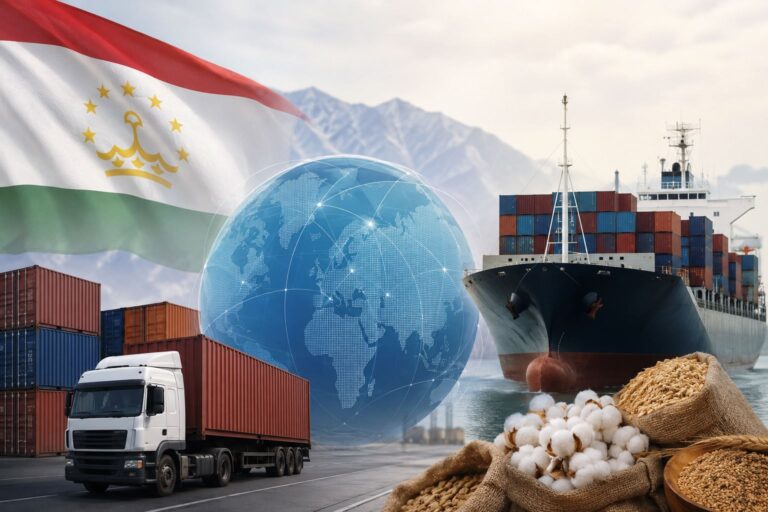
Tajikistan has joined the Rotterdam Convention (formally, the Rotterdam Convention on the Prior Informed Consent Procedure for Certain Hazardous Chemicals and Pesticides in International Trade), which is a multilateral treaty to promote shared responsibilities in relation to importation of hazardous chemicals.
FAO Regional office for Europe and Central Asia says that for more than a year, FAO has been facilitating and supporting the accession process in Tajikistan under an ongoing pesticide management and disposal project from the Food and Agriculture Organization of the United Nations (FAO) and the Global Environment Facility (GEF) in Central Asia and Turkiye.
These efforts have reportedly paid off, with Tajikistan officially ratifying the Rotterdam Convention on October 1, 2024.
One of the four international waste conventions, the Rotterdam Convention regulates the use of pesticides and industrial chemicals that have been banned or severely restricted for health or environmental reasons. It promotes shared responsibility and open exchange of information based on prior informed consent.
The Rotterdam Convention Secretariat is administered jointly by FAO and the United Nations Environment Programme (UNEP). Partners reportedly enjoy heightened efficiency and support based on the individual strengths of FAO and UNEP. Through its decentralized offices, FAO also supports multiple countries in technical matters related to the Rotterdam Convention.
By joining the Rotterdam Convention, Tajikistan benefits from becoming part of an early warning system that apprises Parties of national bans or severe restrictions on hazardous chemicals by other Parties. The country can also receive decision guidance on chemicals, avoid the import of certain unwanted chemicals, receive information on risk management and minimize risks to workers, others and the environment; gain access to a network of experts, and request technical assistance for managing chemicals.
The Rotterdam Convention stimulates information exchange mechanisms for improved decision-making about the trade of hazardous chemicals. With its export notification provisions and by encouraging standardized labelling of chemicals, the Rotterdam Convention reportedly makes international trade in hazardous chemicals more transparent and less vulnerable to misconduct.
Director of the National Stockholm Center under the Committee for Environmental Protection within the Government of Tajikistan, Umed Ulughov noted the importance of Tajikistan’s accession to the treaty.
“Ratification of the Rotterdam Convention by Tajikistan is definitely a big step towards regulating the importation of hazardous chemicals, including pesticides, better environmental management and safety, and protecting human health,” said Mr. Ulughov. “This shows our country’s strong commitment to collaborate with all parties.”
The country received significant technical support from FAO, he added, that was always encouraging and beneficial, facilitating a smoother process.