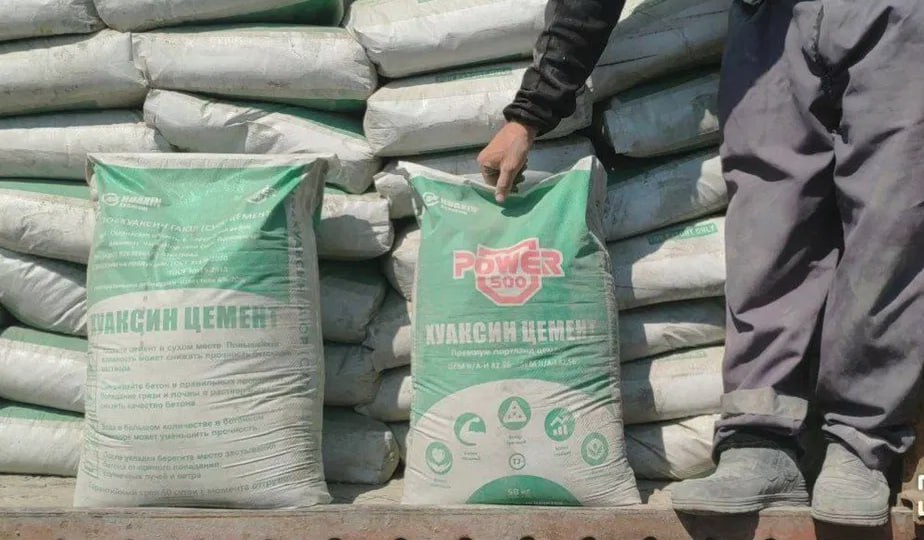
Uzbekistan’s customs authorities have raised the customs clearance fee for Tajik cement imports from US$35.00 to US$300 per ton as of early November, an informed sources involved in the trade told Asia-Plus Wednesday afternoon.
The source speculates that the hike may have been orchestrated by Uzbek cement manufacturers.
“On October 16, a meeting was held in Samarkand involving representatives of several cement production companies, many of which are owned by Chinese investors. They discussed the development of Uzbekistan’s cement industry, pricing policies, and the possibility of forming a cartel,” the source stated.
Tajikistan is Uzbekistan’s primary supplier of cement, with the latter requiring 2.2 million tons annually.
Over the first nine months of this year, Tajikistan has reportedly exported around 532,000 tons of cement worth US$21 million, a decrease of 250,000 tons (US$7.8 million) compared to the same period last year.
Approximately 57% of exports went to Afghanistan (over 300,000 tons), and 43% (over 230,000 tons) to Uzbekistan.
Currently, Uzbekistan reportedly has 30 cement manufacturing enterprises, with additional plants under construction or being modernized. Once operational, these may lead to a complete ban on cement imports.
In 2020, Uzbekistan's government temporarily banned cement imports from May 1 to the end of the year, but the restriction was lifted three weeks later.
Cement remains one of Tajikistan’s main export items. Since 2018, Tajikistan has ranked fifth in Uzbekistan’s foreign trade turnover. Over the past six years, exports of Uzbek goods to Tajikistan have grown from US$132 million in 2018 to US$353.4 million in 2023.
According to the Tajik president’s official website, there are 15 cement plants with a total capacity of 5.5 million tons operating in the country, including five located in Khatlon province, six located in Sughd province, three located in districts subordinate to the center, and one located in Dushanbe.
However, such achievements of Tajikistan’s industry evoke concern of ecologists, who consider that excessive increase in cement production may cause irreparable harm to the country’s environment.