The Government of Tajikistan has issued a decree lowering electricity tariff for the fertilizers plant, JSC Azot. According to a document published on the Ministry of Justice’s legal information portal, the tariff for the company will be reduced from 46.40 dirams per kilowatt-hour to 30.75 dirams.
This reduction aligns the cost of electricity for Azot with that of second-category consumers, which include public institutions, municipal services, sports complexes, transport tunnels, and electrified transport. The same rate applies to residential consumers.
Electricity consumers in Tajikistan are divided into nine categories:
- Industrial and non-industrial consumers – 70.35 dirams;
- Public institutions, municipal services, sports complexes, transport tunnels, and electrified transport – 30.75 dirams;
- Water pumps and irrigation stations (April 1–September 30) – 10.67 dirams; (October 1–March 31) – 30.75 dirams;
- Melioration wells and stations – 10.67 dirams;
- Drinking water pumps (excluding private pumps) and sewage systems – 14.62 dirams;
- Tajik Metallurgical Plant (May 1–September 30) – 12.34 dirams; (October 1–April 30) – 70.35 dirams;
- Tajik Aluminum Company (TALCO) – 18.06 dirams;
- Private educational institutions, gyms, and lyceums outside public funding – 52.79 dirams;
- Residential customers – 30.75 dirams.
Fertilizer production and import trends
According to the Ministry of Agriculture, Azot produced over 36,000 tons of nitrogen fertilizers last year, while the Yovon chemical plant produced 1,100 tons of phosphorus fertilizers. However, the country requires approximately 600,000 tons of mineral fertilizers annually.
In 2023, Tajikistan imported 175,500 tons of fertilizers worth US$63 million, compared to 199,200 tons (US$80 million) in 2022.
If Azot operates at full capacity, it could produce 123,600 tons of ammonia and 180,000 tons of urea annually. Meanwhile, TALCO Chemical in Yovon is expected to produce up to 75,000 tons of phosphorus-based fertilizers per year, potentially eliminating the need for imports.
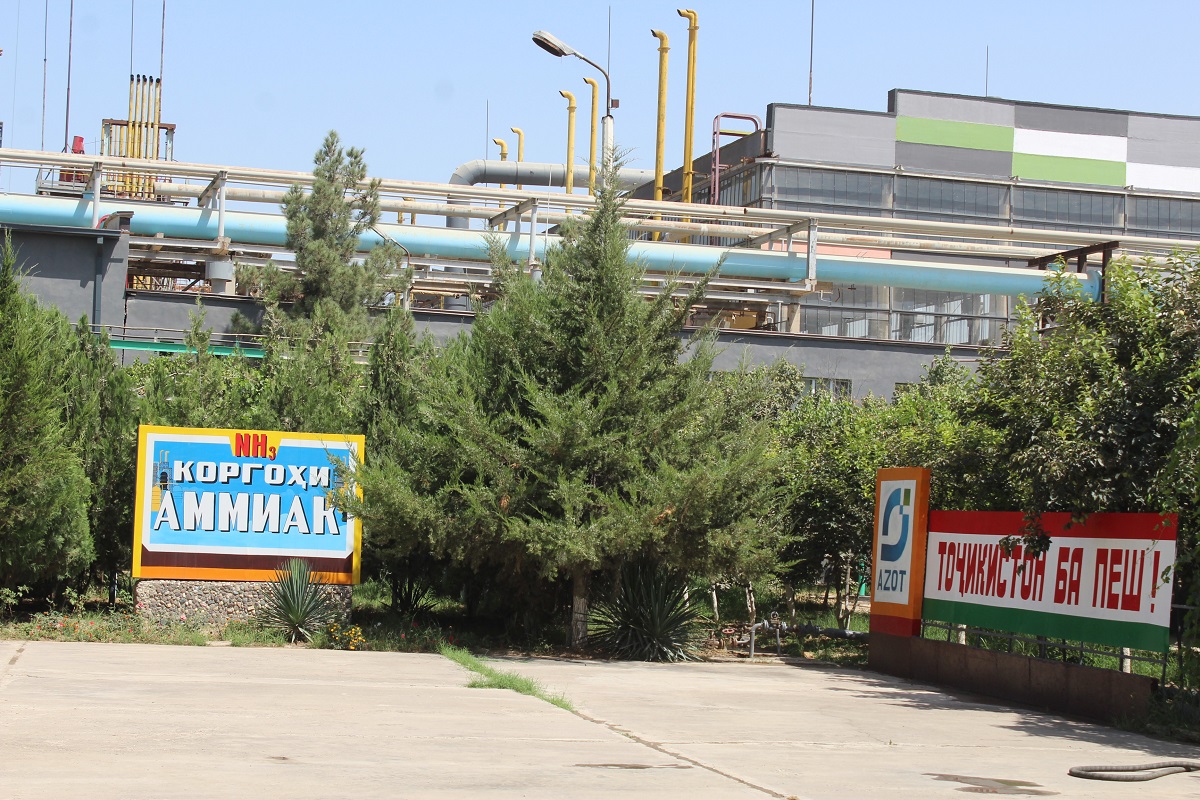
Located in Levakant, Khatlon province, the debt-ridden and loss-making fertilizers plant was not in operation from 2008 until April 2022 due to lack of natural gas supplies. The facility underwent significant restoration and modernization under the management of Osiyo Chemical and was reintroduced into operation in April 2022. Initially estimated at 200 million somonis, investments reportedly exceeded 400 million somonis.