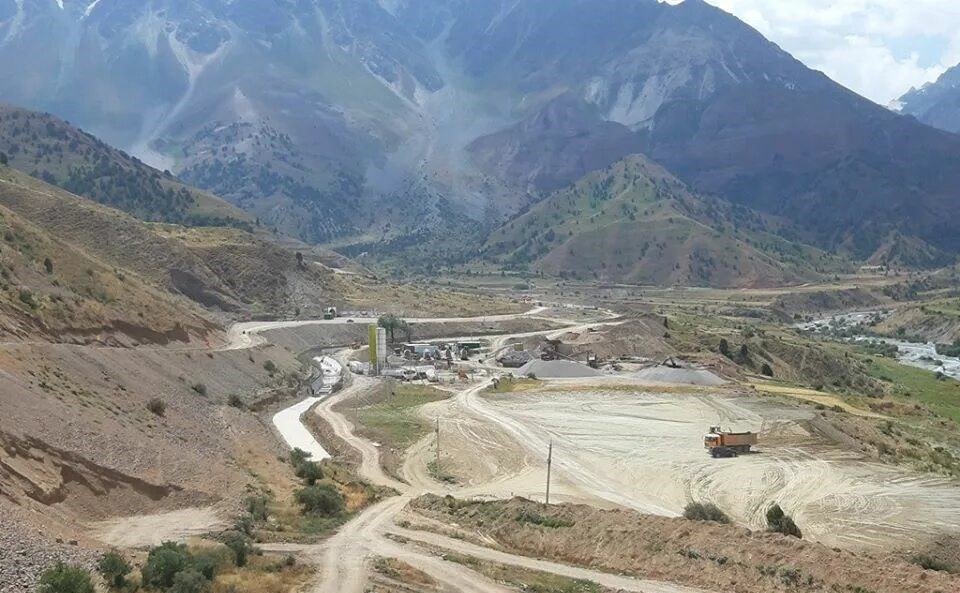
According to customs statistics, Tajikistan has exported over 4,300 tons of antimony ore and concentrates over the first nine months of this year, valued at approximately US$14 million. This achievement has positioned the country as the world's second-largest exporter after China. With China imposing restrictions on antimony exports, Tajikistan has emerged as a key supplier in the global market.
On September 15, China introduced export controls on antimony and related products, citing the need to protect national security. As a result, prices for this strategic metal, crucial to the defense industry, skyrocketed from US$12,000 to US$20,000 per ton.
China's decision is expected to exacerbate supply shortages, particularly in the United States, which sources 63% of its antimony imports from China. The U.S. is now seeking alternative suppliers, including Tajikistan and Australia, to meet its needs.
According to the U.S. Geological Survey (USGS), Tajikistan became the world's second-largest antimony producer in 2023, following China. Tajikistan mined 21,000 tons of the semi-metal, compared to China's 40,000 tons, as reported by Forbes.ru.
Significant reserves of antimony ores in Tajikistan are concentrated in the Jijikrut and Konchoch ore fields in Sughd province, the northern part of the country. Ores of these deposits reportedly contain more than 15 percent of this semi-metal.
Based on these stocks, the Anzob ore refinery has operated since the late 1940s.
In recent years, exploration at deeper levels of the Jijikrut deposit has uncovered rich antimony ores containing over 15% metal, along with industrial concentrations of gold and other valuable elements.
To ensure the plant's supply, Tajikistan’s Main Geology Directorate plans to increase production capacity at Jijikrut to process 700,000 tons of ore annually.
The country’s antimony resource base could further expand with increased geological exploration in other ore regions where promising areas have been identified.
Customs data indicates that Tajikistan exported 9,300 tons of antimony in 2022, worth US$102.3 million, and over 10,600 tons in 2023, valued at approximately US$107 million.
President Emomali Rahmon has emphasized the importance of focusing on processing antimony into finished products, setting this as a priority for the industry’s development.
Antimony, used in defense manufacturing and battery production, is a strategically important resource. Experts believe current global trends, including China’s export restrictions, present new opportunities for Tajikistan to establish itself as a key antimony supplier in the global market.