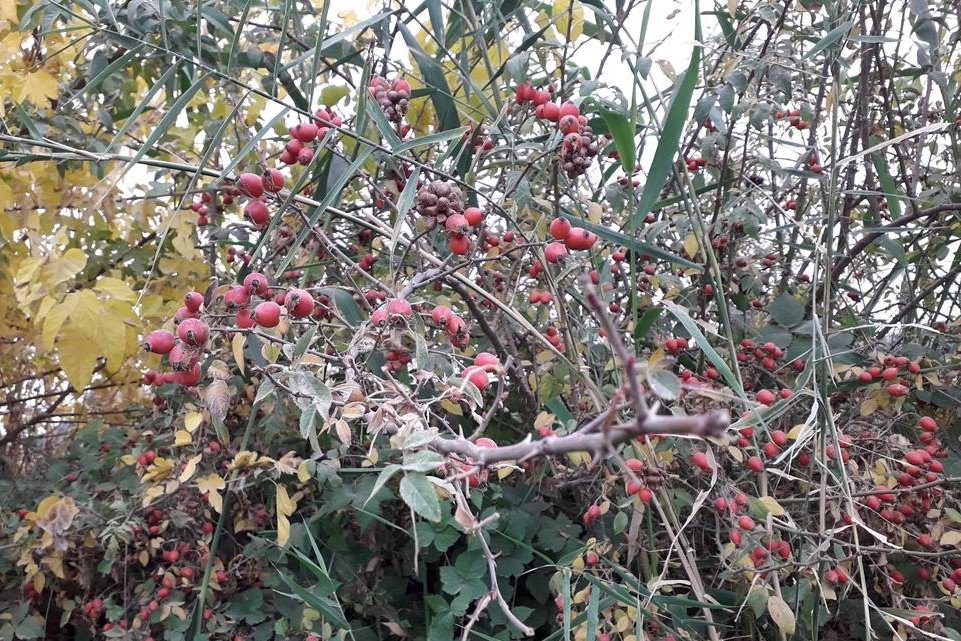
In 2024, Tajikistan significantly increased its rosehip exports, delivering around 1,300 tons of these fruits abroad over the first eight months of the year, which is 97 tons more than in the same period last year, according to the Ministry of Agriculture (MoA).
An official source at a MoA says Tajikistan is actively developing plantations specializing in rosehips. In 2023, the Forestry Agency under the Government of Tajikistan reportedly created 150 hectares of new rosehip orchards, which annually yield 4 to 8 tons of crops per hectare. This marks only the beginning of a large-scale program to expand rosehip plantations.
As part of the National "Green Country" Program, designed for 2023-2027, the creation of additional plantations in various regions of the country is planned. According to the program, over 400 hectares of rosehips will be planted across Tajikistan. It is expected that this expansion will not only boost the country’s export potential but also improve the environmental situation.
Additionally, specialized tree nurseries continue to be established in Tajikistan, where various types of rosehip seedlings will be grown alongside plants like pistachios, saxaul, poplar, and sea buckthorn. These nurseries will be organized in the Panj, Farkhor, Khuroson, and Danghara districts, where 250,000 seedlings are planned to be grown annually.
This year, work began in rosehip nurseries in the Vahdat, Varzob, Rasht, Zafarobod, and Ramit forest enterprises, where breeding and product quality improvement work will continue. In recent years, new varieties of rosehips resistant to diseases and pests have been introduced in Tajikistan, contributing to the stabilization of yields.
These measures are aimed at strengthening Tajikistan’s agricultural sector, improving ecology, and increasing the country’s forest resources, which in turn will contribute to expanding exports and creating new jobs.
It should be noted that planting rosehips on 1 hectare requires between 2,300 to 6,000 seedlings. With good agricultural practices, the average yield of fresh rosehip fruits in the main growing areas is 50-60 quintals per hectare, which translates to about 15-20 quintals per hectare in dry raw material.