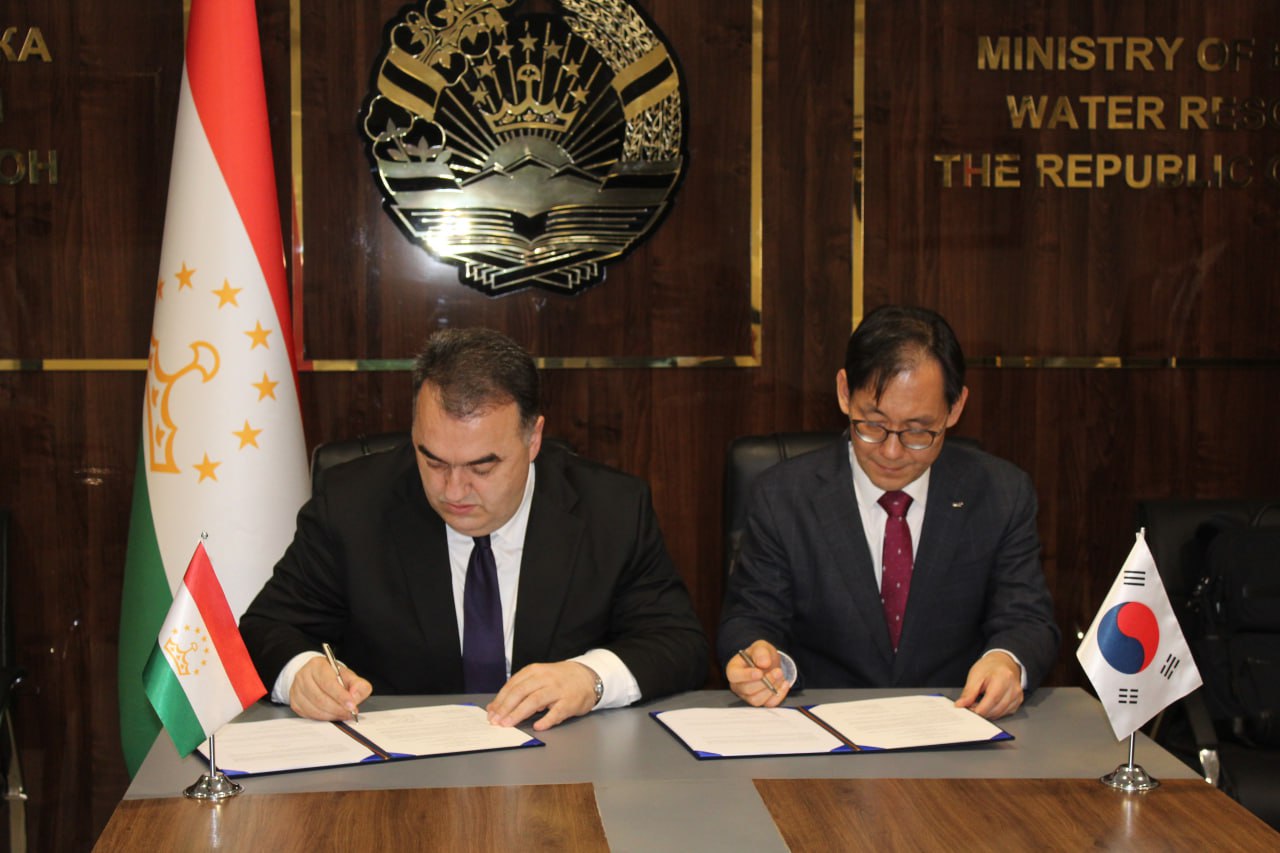
Tajikistan and South Korea have signed a protocol to construct solar power plants and energy storage systems.
The document was inked by Daler Juma, Tajikistan's Minister of Energy, and Lim Byung-Hyuk, Director-General of the Industrial Technology Division at the Korea Institute for Advancement of Technology (KIAT), in Dushanbe on December 9.
The project includes the construction of solar power plants with a combined capacity of 6 MW and energy storage systems with a capacity of 1 MWh in two regions: Sughd Province and the Gorno-Badakhshan Autonomous Region (GBAO).
This initiative reportedly aims to improve electricity supply in remote areas where access to stable energy sources is crucial. Modern solar technologies are expected to enhance living conditions and support the development of environmentally friendly energy.
In Sughd Province, a 3 MW solar plant with a 0.5 MWh storage system is planned, and a similar project will be implemented in GBAO.
The partnership with the Korea Institute for Advancement of Technology provides opportunities for innovative energy solutions.
This project marks a significant step towards sustainable energy infrastructure, reducing dependence on fossil fuels, and improving the environmental situation, the Ministry of Energy noted.
Both parties reportedly expressed confidence that their collaboration would succeed and serve as an example of effective international cooperation.
It is worth noting that cooperation between Tajikistan and South Korea in the energy sector includes a grant agreement signed in 2023 between the Korea International Cooperation Agency (KOICA) and the Ministry of Energy and Water Resources of the Republic of Tajikistan.
Under this agreement, the government of South Korea allocated US$14 million through KOICA for the second phase of the Power Supply Project, scheduled for implementation from 2023 to 2026.
Additionally, a "Business Dialogue" between Tajikistan and South Korean companies was held in Dushanbe in 2023. During the event, new cooperation agreements were negotiated and signed, including agreements related to the energy sector.
It is to be noted that the potential of solar energy in Tajikistan is reportedly quite high. The country is located between 36°40′ and 41°05′ north latitude. Meteorologists call this zone a “golden belt” of sunshine. According to the Agency of Hydrometeorology of Tajikistan (Hydromet), the duration of sunshine in the country is 2100-3166 hours per year, and the number of sunny days per year ranges from 260 to 300. This provides great opportunities for the use of solar power as an alternative. The estimated potential of solar energy in Tajikistan is about 25 billion kWh / year. This potential is not used, if not to take into account some of its use for water heating. In Tajikistan, the share of solar energy is less than one percent
Meanwhile, the potential for wind is relatively unknown, but some sources’ estimates of its energy production are promising, with the forecasted figure standing at 30 billion-100 billion kWh per year, effectively rivaling the production of some hydropower plants.
Adopted on September 30, 2022, the Green Economy Strategy (Strategy) highlights effective use of green energy and ensuring energy efficiency as one of its 12 priority areas. The Strategy aims to increase the country's renewable energy production capacity (solar, wind, and bioenergy) by 10% by the end of its implementation. By 2037, the share of facilities, built in accordance with green construction principles, should be 80% of the total volume of construction.
Currently, about 98% of generated electric power in Tajikistan comes from hydropower plants. Along with the positive environmental and financial aspects of this indicator, it significantly increases the energy sector’s dependence on the volume of water flow in rivers and weather conditions in the face of climate change.