The inflation rate in Tajikistan for the first eleven months of this year was 3.4%, according to Agency for Statistics under the President of Tajikistan.
Specifically, foodstuffs rose in cost by 2.7%, non-foodstuffs rose in cost by 3.9%, and prices and rates for services rendered to the population increased by 4.7% over the reporting period.
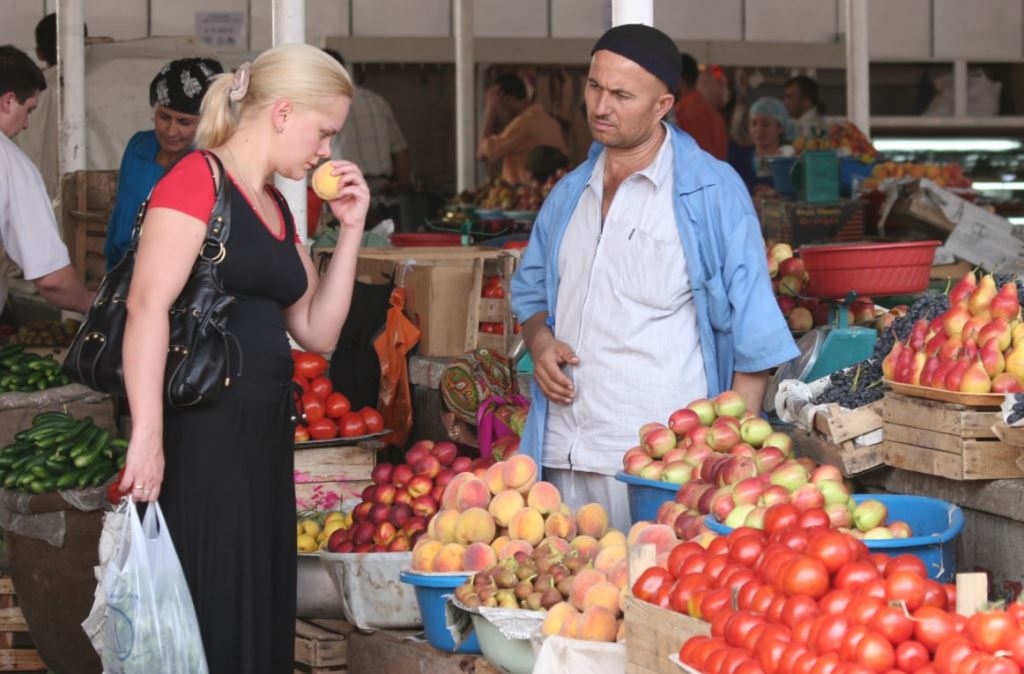
Authorities attribute the low inflation rate to a decrease in the prices of fruits (-10.8%), flour (-7.9%), sugar (-6.7%), vegetables (-4%), and some other goods and products (to a lesser extent).
The Agency for Statistics has reported a record-low inflation rate for the third consecutive year. According to the Agency, prices and tariffs increased by just 4.2% in 2022 and 3.8% in 2023. The only lower inflation rate recorded since the country's independence was in 2013, at 3.7%.
Meanwhile, high consumer price growth has been observed in Tajikistan's major trading partner countries. Official data shows that inflation in Russia exceeded 9% over the first 11 months of this year, while in Kazakhstan, it was 8.4%, and in Uzbekistan, 8.7%.
If prices and tariffs have continued rising at the same modest pace in December, the annual inflation rate will be around 3.7%.
The National Bank of Tajikistan (NBT), responsible for maintaining internal price stability, has set a target inflation rate within 6.0% (±2 percentage points).
The country’s financial regulator can influence pricing through changes in the refinancing rate and/or the money supply in circulation. Raising the refinancing rate and reducing the money supply slows inflation, while the opposite accelerates it. Central banks in market economies generally aim to keep inflation at 5–6% annually, a level considered ideal by economists for fostering economic growth. Very low inflation—or worse, deflation (price decreases)—is viewed as more dangerous than high inflation.