In his address to a joint meeting of both chambers of parliament, President Emomali Rahmon stated on December 28 that inflation in 2024 stood at 3.6%, the lowest rate since the country’s independence.
This is the lowest inflation rate since 2013 when it was recorded at 3.7%. In comparison, inflation was 4.2% in 2022 and 3.8% in 2023.
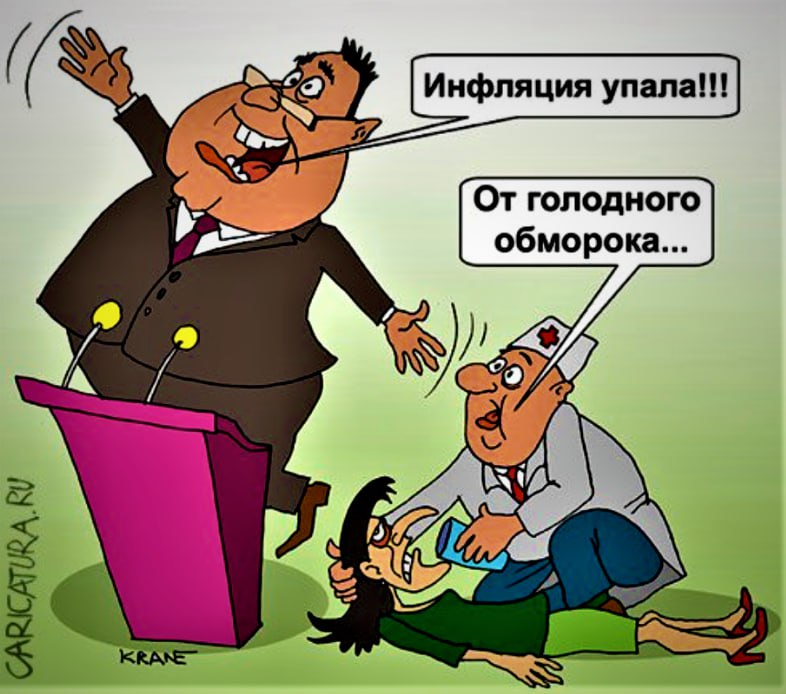
However, many citizens express skepticism about these figures, asserting that prices have risen significantly in recent years.
Previously, the National Bank of Tajikistan (NBT) had explained to Asia-Plus the reasons for public mistrust of official inflation data.
“The country’s consumer basket includes a wide range of goods, products, and services. On the markets, you only see the price increase for specific items. Evaluating the overall consumer basket based on the significant rise in the prices of a few goods is inaccurate,” an official source with the country’s financial regulators told Asia-Plus in an interview.
A similar explanation was earlier provided by the Agency for Statistics under the President of Tajikistan, which noted the difference between official and personal statistics. Official inflation calculations are reportedly based on the cost of a comprehensive set of goods and services, encompassing virtually everything consumers might need.
The relatively smaller set of goods and products specific to individual consumers differs from the statistical agency’s basket, making it inappropriate to assess overall inflation based on changes in the prices of certain items.
Meanwhile, the target inflation rate set by the NBT, which is responsible for maintaining price stability, remains within 6.0% (±2 percentage points).
According to data from the Agency for Statistics, foodstuffs rose in cost by 2.7%, non-foodstuffs rose in cost by 3.9%, and prices and rates for services rendered to the population increased by 4.7% over the first eleven months of this year.
At the same time, a high consumer price growth has been observed in Tajikistan's major trading partner countries. Official data shows that inflation in Russia exceeded 9% over the first eleven months of this year, while in Kazakhstan, it was 8.4%, and in Uzbekistan, 8.7%.