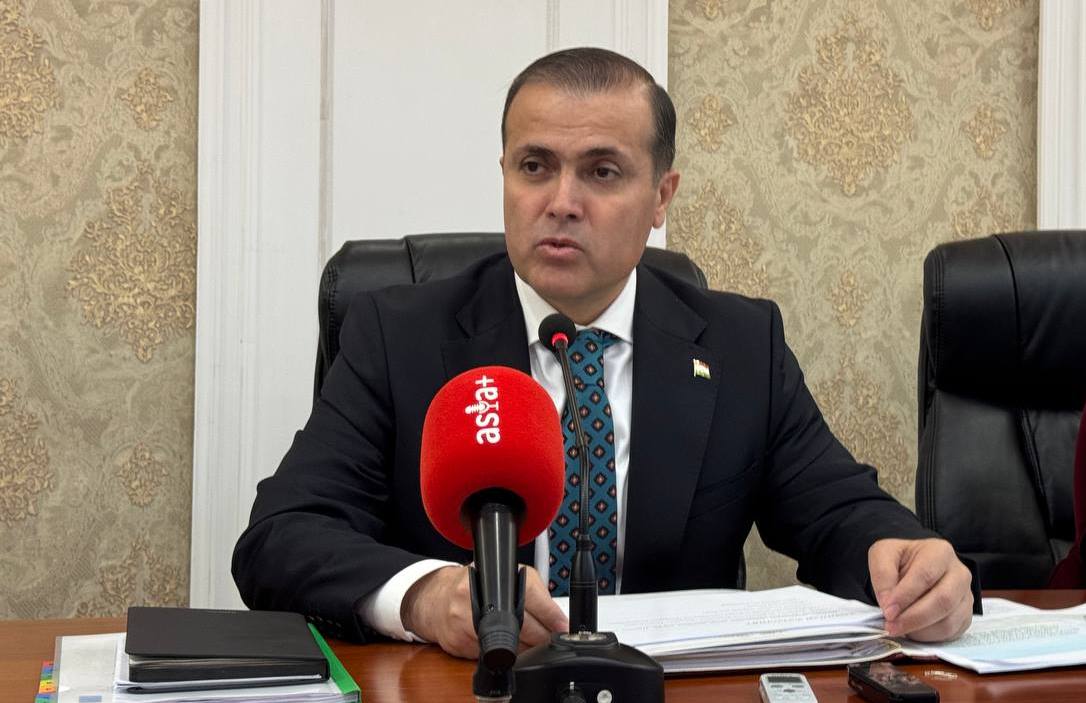
Representatives of the United States of America have sent a letter to the Government of Tajikistan regarding the enforcement of sanctions against a number of Russian companies, Sulton Rahimzoda, the head of the State Committee on Investment and State-owned Property Management (GosKomInvest), told reporters in Dushanbe on February 11.
According to him, the U.S. letter requests information on Tajikistan's future actions regarding this matter.
“This is a sensitive issue, and it is currently under review,” he noted.
Rahimzoda believes that this is not the first time Russian companies have faced sanctions and that these companies should already have mechanisms in place to adapt.
“Of course, any sanctions affect companies' activities to some extent, but I believe these companies have already developed mechanisms to operate under restrictions. These issues are also being addressed in negotiations with the government,” he said.
He clarified that GosKomInvest is not responsible for this sector, but the relevant authorities in Tajikistan are handling the matter.
After the start of the war in Ukraine, the U.S. and the European Union imposed harsh sanctions on Russian companies.
On January 10, the U.S. Department of the Treasury announced new sanctions against Russia’s energy sector, including Gazprom Neft and its subsidiaries, among them Jamiyati Doroi Masouliyati Mahdud (LLC) Gazpromneft-Tajikistan, a Tajikistan-based Gazprom Neft subsidiary Gazpromneft-Tajikistan.
The U.S. Government has identified Russia's energy sector as a critical source of revenue used to finance the conflict in Ukraine. Following the U.S. decision, the UK also imposed sanctions on Russia’s energy sector, specifically targeting Gazprom Neft.
Gazpromneft-Tajikistan is the dominant supplier of petroleum products in Tajikistan and is listed in the country’s antimonopoly registry. The company, as an official dealer of Russia’s Gazprom Neft, supplies fuel and petroleum products from the Omsk Oil Refinery and liquefied natural gas (in smaller volumes).
Additionally, the company sells fuel both wholesale and retail to businesses and consumers across 43 gas stations throughout Tajikistan.
Although Tajik authorities assert that these sanctions will not affect the import of petroleum products into the country, experts believe that, in the future, companies cooperating with Gazpromneft Tajikistan may also face sanctions.
However, independent legal experts argue that Tajikistan as a state is not at risk of secondary sanctions for allowing Gazpromneft-Tajikistan to continue operations. Secondary sanctions target specific individuals and businesses, not entire countries. They note that companies cooperating with Gazprom Neft could be subject to secondary sanctions and banks processing transactions in U.S. dollars or euros for Gazpromneft-Tajikistan could also be at risk.