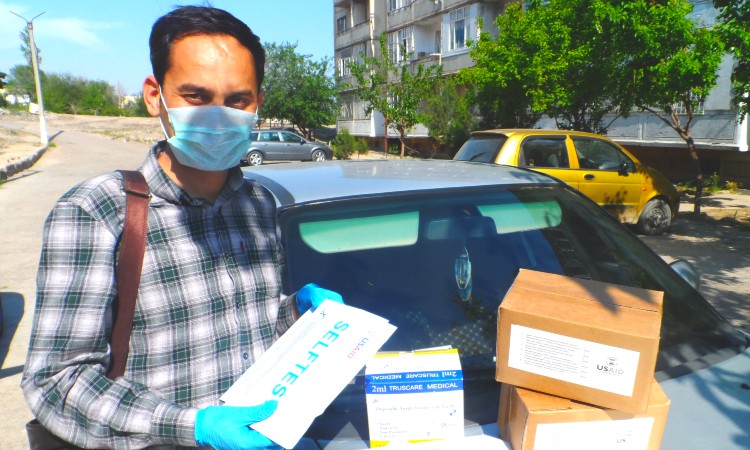
Since President Donald Trump announced the freeze of U.S. foreign aid, the United States Agency for International Development (USAID) has been in turmoil: its website is inaccessible, its X account has been suspended, the agency's headquarters was closed and employees told to stay home. Elon Musk, whom Trump chose to lead the quasi-official Department of Government Efficiency, called USAID a “criminal organization” and said, “We’re shutting down.” Later that day, Secretary of State Marco Rubio announced that he was named acting director of the agency, suggesting its operations were being moved to the State Department.
A report released by Reporters Without Borders (RSF) notes that the global freeze imposed on all USAID and State Department foreign assistance includes at least $268.4 million allocated by Congress to support independent media and the free flow of information.
The funding freeze, which went into effect on January 26, is stoking “chaotic uncertainty” for independent journalists, the report says, noting that it is especially damaging for non-state media organizations covering events in authoritarian-minded countries in regions such as Eurasia.
The report cited Clayton Weimers, Executive Director, RSF USA, as saying: “The American aid funding freeze is sowing chaos around the world, including in journalism. The programs that have been frozen provide vital support to projects that strengthen media, transparency, and democracy. The programs that have been frozen provide vital support to projects that strengthen media, transparency, and democracy.”
“The tragic irony is that this measure will create a vacuum that plays into the hands of propagandists and authoritarian states. RSF is appealing to the international public and private funders to commit to the sustainability of independent media.” Weimers noted.
The report notes that according to a USAID fact sheet which has since been taken offline, in 2023, the agency funded training and support for 6,200 journalists, assisted 707 non-state news outlets, and supported 279 media-sector civil society organizations dedicated to strengthening independent media. The 2025 foreign aid budget reportedly included US$268,376,000 allocated by Congress to support “independent media and the free flow of information.”
By abruptly suspending American aid, the United States has reportedly made many media outlets and journalists vulnerable, dealing a significant blow to press freedom. For all the media outlets interviewed by RSF, the priority is to recover and urgently find alternative funding.