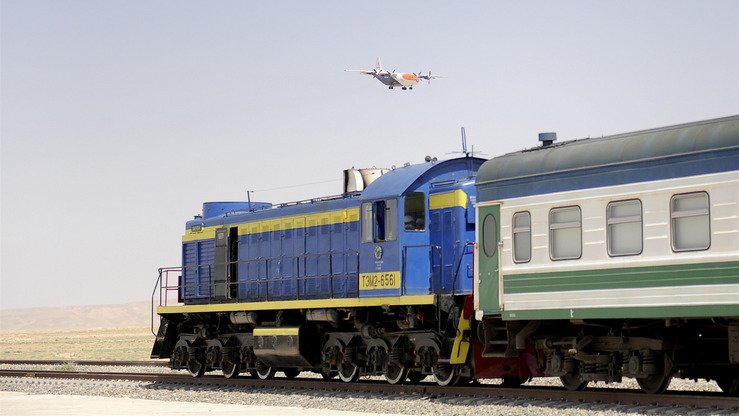
On February 23, Taliban Deputy Prime Minister Abdul Ghani Baradar announced that an agreement had been reached with Uzbekistan on the construction of the Hairatan–Herat railway. The Uzbek side will send a team to prepare a feasibility study (FS) for the project, Azattyk reports.
Following a two-day visit to Uzbekistan, Baradar told journalists that construction is expected to begin within 10 days after the FS is completed.
Uzbekistan will cover the costs of the project's initial technical assessment.
The railway project aims to extend the existing line from Hairatan—a key port city on the Uzbekistan-Afghanistan border—through Mazar-i-Sharif and further to Herat, located in western Afghanistan.
In 2010, as part of the project's first phase, a 75-kilometer railway linking Hairatan and Mazar-i-Sharif was built with financial support from the Asian Development Bank. This section has played a crucial role in strengthening trade ties between Afghanistan and Central Asian countries.
The planned expansion will connect Mazar-i-Sharif to Herat via several provinces. This project is expected to establish a strategically significant transport corridor linking Central Asia with the Middle East, thereby stimulating regional trade and economic integration.
In 2018, Uzbekistan expressed its willingness to partially finance the construction of a 657-kilometer section, according to Afghan sources.
Baradar was accompanied on his trip by Taliban Minister of Commerce Nuruddin Azizi and Minister of Mines and Petroleum Hedayatullah Badri. According to Azizi, Badri extended his stay in Uzbekistan for two more days to continue negotiations.
During the visit, the Taliban delegation held meetings with Uzbekistan’s Prime Minister Abdulla Aripov and his deputy Jamshid Khodjaev. The discussions primarily focused on trade, energy, aviation, agriculture, and infrastructure.
According to Baradar, one of the key achievements was reducing the cost of a 500-kilovolt power transmission project from Uzbekistan to Dasht-i-Alwan in Afghanistan—from $252 million to $222 million.
Baradar also stated that Uzbekistan had agreed to increase electricity exports to Afghanistan during the summer months while simultaneously reducing tariffs. Minister of Commerce Azizi added that discussions covered seven key areas, including trade facilitation and banking operations.
Azizi emphasized that the Taliban's goal in these negotiations was to achieve a balance between exports and imports between Afghanistan and Uzbekistan. As part of the agreements reached, Uzbekistan will lift restrictions on Afghan agricultural exports and open four trade centers in major cities of both countries.