



Tajikistan launches a Korean language teacher training program

The program will be implemented at the International University of Foreign Languages with the support of the Embassy of the Republic of Korea. Interest in the Korean language and culture is growing in Tajikistan, especially among young people. Additionally, with the launch of the Employment Permit System (EPS) in the country, which allows Tajik citizens […]

The program will be implemented at the International University of Foreign Languages with the support of the Embassy of the Republic of Korea.
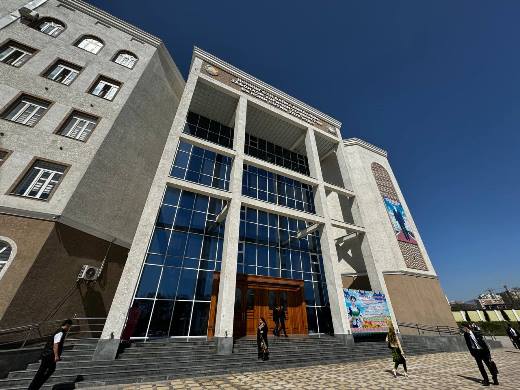
Interest in the Korean language and culture is growing in Tajikistan, especially among young people. Additionally, with the launch of the Employment Permit System (EPS) in the country, which allows Tajik citizens to work in South Korea, the demand for learning Korean has become even more relevant.

In response to this, a new Korean language teacher training program has been established at the International University of Foreign Languages in Tajikistan with the support of the Embassy of the Republic of Korea.
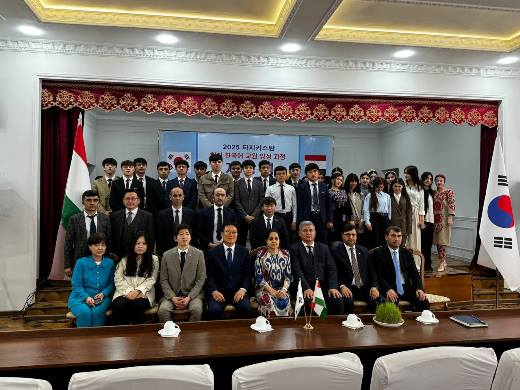
The International University of Foreign Languages, located in Dushanbe, plays a significant role in promoting the Korean language.  Since 2009, when the university graduated its first students specializing in Korean, it has trained more than 400 professionals, strengthening its role as a center for Korean language education in Tajikistan.

To mark the launch of the new program, a ceremonial event was held at the International University of Foreign Languages, featuring a presentation of the program and creative performances by students that showcased the cultural heritage of both countries.
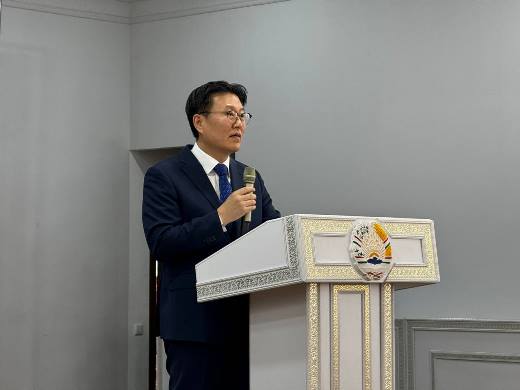
“Thanks to this initiative, more Tajik students will have the opportunity to study Korean, and program graduates will actively work as teachers across the country, contributing to the development of bilateral cooperation,” said Jeon Sung Sik, Ambassador of the Republic of Korea.

The launch of the Korean language teacher training program is an important step in developing educational and cultural ties between Tajikistan and South Korea. Now, more students will be able to study the language, and graduates of the program will pass on their knowledge to the next generation. This will create new opportunities for young people and strengthen cooperation between the two countries.

Join us on social media!

Article translations:

Related Article

Tenisi
Оби зулол
Оби зулол

Most Read

Коммерсбонк Точикистон

Recent Articles

After a three-month break, flights between Tehran and Dushanbe resume

The aircraft of the Iranian airline "Vorish" delivered over 90 passengers to Dushanbe.

Dances, contests, and vitamins. Tajikistanis celebrate spring at the festival “Salom, Tobiston!”

On May 29, the "Gods of Iram" park transformed into the center of a large children's celebration, where every child could have fun, enjoy treats, and find entertainment to their liking.

By 2050, Tajikistan’s population expected to reach 14.5 Million: what lies ahead?

Tajikistan's population is growing rapidly, while productivity in key...

EAEU countries urge Armenia to hold a referendum on joining the European Union

The presidents of Russia, Belarus, Kazakhstan, and Kyrgyzstan made a joint statement at the EAEU summit in Astana.

RZD announces the restoration of passenger services between Moscow and Dushanbe

Direct rail services between the capitals of Russia and Tajikistan were suspended in March 2020 due to the COVID-19 pandemic.

#AP30/Stories. “Selam! Heller nichek?” How Tatars live today in Sughd province

On the 30th anniversary of "Asia-Plus," we continue to publish reports that remain relevant even after years. This story was told in 2021, and since then, little has changed in the life of the Tatar community in Tajikistan.

15,000 cameras, drones, and robots: how technology monitors pilgrims in Mecca and Medina

During Hajj 2026, Mecca and Medina were under unprecedented digital control.

Another child in Dushanbe removed from family and sent to boarding school

The Ministry of Internal Affairs reports that the parents did not pay adequate attention to the child.



