In Afghanistan, the filming and broadcasting of images of living beings have been banned

In Afghanistan, the number of provinces where the filming and broadcasting of images of living beings has been banned has reached 15, Fergana news agency reports, citing the Afghan Journalists' Center (AFJC). The ban was introduced in accordance with Article 17, Section 3 of the Law on Promoting Virtue and Preventing Vice. Local authorities are […]

Asia-Plus

In Afghanistan, the number of provinces where the filming and broadcasting of images of living beings has been banned has reached 15, Fergana news agency reports, citing the Afghan Journalists' Center (AFJC).

The ban was introduced in accordance with Article 17, Section 3 of the Law on Promoting Virtue and Preventing Vice. Local authorities are instructed not to allow journalists and private individuals to take photos or videos of meetings and events under any circumstances.

"The directive clearly states that any violations will lead to lawsuits," noted the AFJC.

Local media outlets have also received verbal instructions from the authorities to ensure compliance with the law.

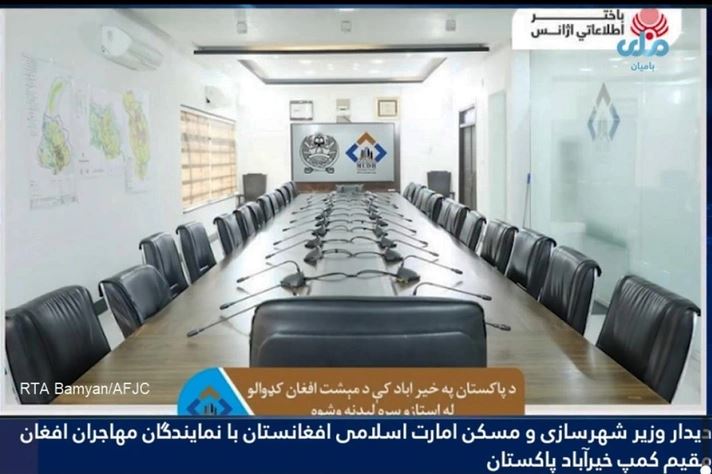
Television channels now broadcast reports exclusively in audio format, supplementing them with images of inanimate objects, landscapes, buildings, and interiors.

Since the passage of the Law on Promoting Virtue and Preventing Vice in August 2024, the ban has been implemented in 15 of Afghanistan's 34 provinces.

The list includes Kandahar, Takhar, Badghis, Helmand, Nangarhar, Nuristan, Farah, Badakhshan, Baghlan, Nimroz, Jawzjan, Zabul, Parwan, Bamyan, and Kunduz.

The AFJC condemned the ban on showing living beings, stating that such restrictions violate the principles of freedom of speech and access to information, contradict Afghan media laws, and threaten the work of journalists.

"It is extremely important to support media freedom and guarantee journalists the ability to carry out their duties without fear and without being put in danger," emphasized the AFJC.

According to the AFJC, as of March this year, there are 470 media outlets operating in Afghanistan, including 84 television stations, 273 radio stations, 57 news agencies, and 52 print publications.

Join us on social media!

Article translations:

Related Article

Оби зулол
Оби зулол

Most Read

Recent Articles

The only GPW veteran in Dushanbe allocated more than 80,000 somoni

The mayor's office of Dushanbe allocated him 25,000 somoni.

GITEX AI Kazakhstan 2026: how Almaty became the main AI hub of Central Asia

More than 300 companies and startups, over 200 speakers and 100 investors from 50 countries — the region is entering the global stage.

A trade and economic park to be built at the border junction of Tajikistan, Kyrgyzstan, and Uzbekistan

President of the Kyrgyz Republic Sadyr Japarov familiarized himself with the project.

A project to protect soil from degradation to be developed in Central Asia

The initiative is of great significance for the mountainous countries of the region, including Tajikistan.

Mudslide, death, and destroyed homes: hundreds of families in Tajikistan left homeless

A correspondent from "Asia-Plus" visited Kulob and spoke with the families of those who died and were affected by the disaster.

Spring 2026 bright event: new issue of VIPzone now on sale

This issue is about people and ideas that change everything: from business and investments to fashion, food, and urban environment.

Godfrey Sullivan: “Tajikistan is a promising market for Visa to develop digital payments”

The Vice President of Visa explained why Tajikistan is becoming a promising market for digital payments and how artificial intelligence is influencing the future of finance.

Seven students in Dushanbe were threatened with expulsion for arriving at universities in personal cars

The materials for each case have been sent to the Ministry of Education and Science for appropriate actions.

India’s blockchain push and lessons for the global south

The Indian Government has started pushing aggressively its agenda...

India’s blockchain push and lessons for the global south

The Indian Government has started pushing aggressively its agenda...