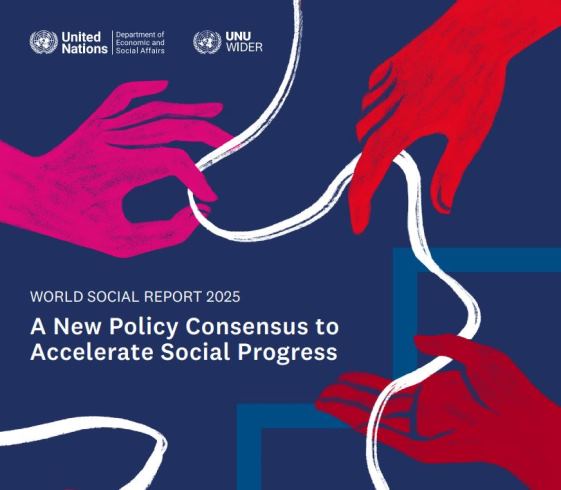
The world is facing a worsening crisis of institutional trust and today, over half of the global population has little or no trust in their government and 57 percent of people claim their level of trust in government is low, the UN report states, citing survey data collected between 1995 and 2022.
WORLD SOCIAL REPORT 2025: A New Policy Consensus to Accelerate Social Progress notes that each consecutive cohort, from those born in the 1930s to those born in the 1990s, has been less trusting of government than the one before.
According to the report, political polarization and antagonism between groups of people last year seem to be growing, while social cohesion – a society’s internal bonds, what it shares, and its capacity to operate together for a common good – is faltering.
Although it is hard to measure social cohesion with precision, the signs of concern are clear, according to the United Nations findings.
Support for extreme political positions is reportedly increasing in countries across the world, public dialogue is deteriorating, especially online, and distrust in institutions is growing.
Trust in institutions is likely to continue declining in the future.
According the report, tensions and mistrust in others are escalating. Less than 30 percent of the global population thinks most people can be trusted
The UN report lists the “rise of political extremism and populism” around the world, a phenomenon abetted by social media, as another contributor to the decline in institutional trust.
Affective polarization is reportedly rising in many countries. Increasingly, people express positive feelings towards those who think or believe similarly and negative feelings towards those who do not. The coupling between differences in opinion and animosity or mistrust is carving new fault lines in societies across the globe. Differences of opinion, preferences, values and beliefs – such as religious beliefs, political affiliation, or the right measures to face a global pandemic – are attached more and more to perceptions of another’s moral value, their trustworthiness, and their character. As such, differences become drivers of negative emotions and mistrust. Negative affect leads people to believe that views are more polarized than they actually are, a misconception that further reinforces polarization.