Following the tightening of penalties for illegal use of electricity, in the past week, the Interior Ministry has reported opening administrative and criminal cases against at least six individuals suspected of "stealing" electricity. Authorities have stated that they caused hundreds of thousands of somonis in damage to the state budget.
For example, on May 1, authorities reported opening an administrative case against two individuals suspected of "stealing" electricity. They had bypassed the meter to supply electricity to their homes and kitchen.
The Dushanbe Police Directorate identified one of them as Nourullo Rajabov, who “connected electricity to his residence on Qarategin Street without a meter and used electricity for some time.”
According to sources, the damage caused by him was more than 1,400 somonis.
Authorities have opened a case against him for violating the rules of electricity and heating use (Article 382 of the Administrative Code), which provides penalties ranging from 1,500 to 2,250 somonis (20 to 30 calculation units).
Another case of “electricity theft” was reportedly revealed in Roudaki district. The Interior Ministry reported that a 54-year-old resident of this district illegally connected electricity from a power line outside the meter to his public catering enterprise, “Shomi Dushanbe.”
The ministry stated that the suspect caused 6,696 somonis in damage to Barqi Tojik (the state-owned electricity company).
Authorities said that based on this case, the Roudaki District Electricity Network has issued a fine against the suspect, but the amount of the fine has not been specified.
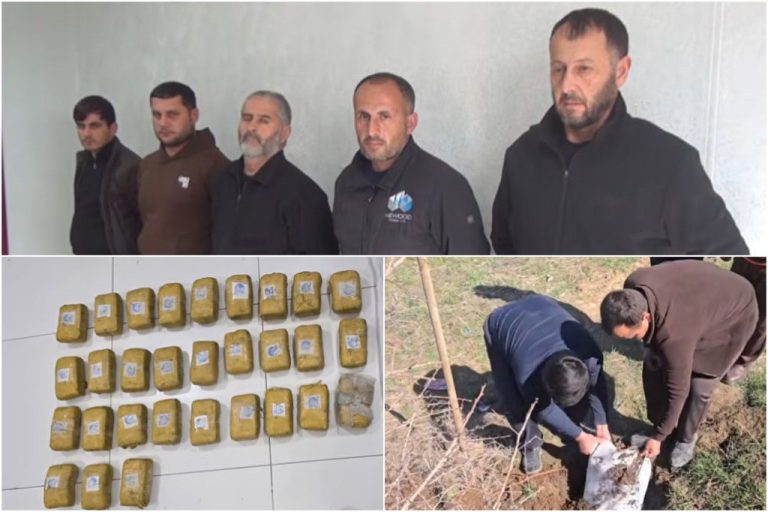
Previously, the Dushanbe Police Directorate reported instituting criminal proceedings against four capital residents for "electricity theft." They reportedly caused more than 200,000 somonis in damage to the state budget.
Criminal proceedings have been instituted against them under Article 253 of Tajikistan’s Penal Code — causing property damage by fraud or abuse of trust. Their cases are currently under judicial review, and they remain free.
The capital police directorate also stated that criminal proceedings had been instituted against those four individuals before the amendments were made to the country’s Administrative and Criminal Codes, which toughened penalties for “electricity theft.”
The opinion of the detainees or their relatives regarding the "electricity theft" is not known.
Earlier, authorities had detained four electricity inspectors in Khatlon province on suspicion of stealing electricity money.
After the introduction of criminal penalties for electricity theft in the Criminal Code, amendments were also made to the Code of Administrative Offenses.
According to these changes, citizens, including public officials and business owners, can be fined between 1,500 somonis and 22,500 somonis for the improper use of electricity and heat.
Previously, the draft law on amendments to the Code of Administrative Offenses was approved by the lower house of parliament, but there was no information about its approval by the upper house or the signing by President of Tajikistan Emomali Rahmon.
The amendments to the penal code followed a March 27 closed government meeting. The bill, drafted by the Ministry of Justice and approved by the country’s parliament, included new article, Article 2531 , in the country’s Penal Code – causing property damage through deception or abuse of trust. This article stipulates that altering electricity meter readings or bypassing the meter to avoid payment, if committed within one year of an administrative penalty, will result in a fine of 365 to 547 calculation units or imprisonment of up to three years (one calculation unit currently equals 75.00 somonis). If the offense is committed on a large scale, by a person using their official government position, or by a group acting in conspiracy, the punishment is a fine of 800 to 1,000 calculation units or imprisonment of three to six years, with an additional ban on holding certain government positions or engaging in certain activities for up to three years.
Offenses committed on an especially large scale or by an organized group or criminal organization are punishable by six to 10 years of imprisonment and a ban on holding certain government positions or engaging in certain activities for up to 5 years.