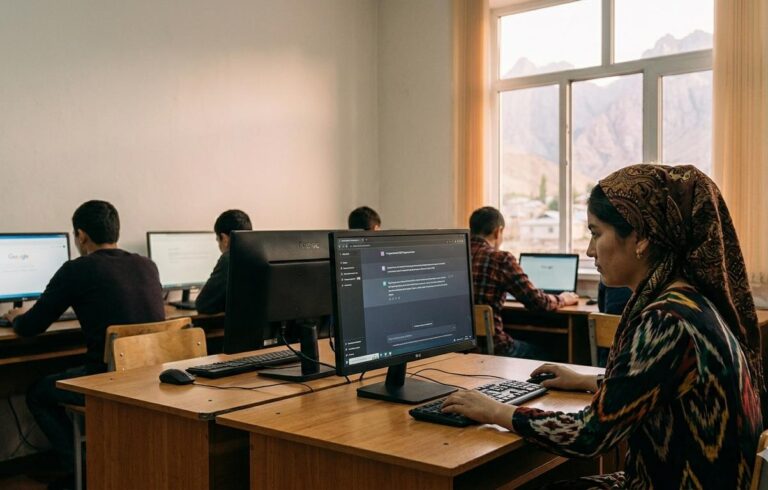
81% of migrant children in Russia denied participation in Russian language testing

Russian authorities have rejected the majority of applications for participation in Russian language testing for children of migrants, Rospotrebnadzor  (the Federal Service for the Oversight of Consumer Protection and Welfare) reported on May 13. “As of the start of the testing period, 1,762 applications had been submitted.  81% of them were rejected.  Reasons for rejection included incomplete […]

Russian authorities have rejected the majority of applications for participation in Russian language testing for children of migrants, Rospotrebnadzor  (the Federal Service for the Oversight of Consumer Protection and Welfare) reported on May 13.

“As of the start of the testing period, 1,762 applications had been submitted.  81% of them were rejected.  Reasons for rejection included incomplete documentation, lack of available spots in educational institutions, and inaccurate information in the submitted forms,” the agency stated.

According to the agency, 335 children were allowed to take the test, 44 of whom have already participated.  Of them, 27 students (or 61%) passed, while the rest did not.

Currently, testing is being held in 2,356 educational institutions, and it has already taken place in ten regions of Russia.

Rejections were most often due to missing documents, no available places in schools, or inaccurate data, Meduza reported.

Vyacheslav Volodin, Speaker of the State Duma (Russia’s lower chamber of parliament), commented on the figures on May 14, stating that “lawmakers made the right decision” by supporting amendments introducing Russian language testing for migrant children.

Following the Crocus City Hall terrorist attack in 2024, Russia introduced stricter measures targeting migrants, including:

  • Restrictions on obtaining residence permits through marriage
  • New rules for deportation
  • A ban on registering more than ten SIM cards for non-residents
  • Limitations on enrolling migrant children in schools unless they know Russian.

Since February 5, Russia has also maintained a registry of "controlled persons", which includes foreigners staying in the country illegally. Individuals added to this list lose access to a range of rights.

Join us on social media!

Article translations:

Related Article

Оби зулол
Tenisi
Оби зулол

Most Read

Коммерсбонк Точикистон

Recent Articles

RZD announces the restoration of passenger services between Moscow and Dushanbe

Direct rail services between the capitals of Russia and Tajikistan were suspended in March 2020 due to the COVID-19 pandemic.

#AP30/Stories. “Selam! Heller nichek?” How Tatars live today in Sughd province

On the 30th anniversary of "Asia-Plus," we continue to publish reports that remain relevant even after years. This story was told in 2021, and since then, little has changed in the life of the Tatar community in Tajikistan.

15,000 cameras, drones, and robots: how technology monitors pilgrims in Mecca and Medina

During Hajj 2026, Mecca and Medina were under unprecedented digital control.

Another child in Dushanbe removed from family and sent to boarding school

The Ministry of Internal Affairs reports that the parents did not pay adequate attention to the child.

Emomali Rahmon instructs to address issues in seed production following criticism of the industry

Issues have been noted with certification, seed quality, and the material and technical base of the industry.

Water, climate, and a $130 billion deficit: seven key outcomes of the Water Conference in Dushanbe

At the forum, countries and international organizations discussed new mechanisms for cooperation, investments, and technologies that are essential for addressing the global water crisis.

Eskhata Bank introduces a new generation children’s wallet

"Eshkata Bank" has created a full-fledged digital platform that helps children aged 7 to 16 learn how to manage money.