Cash still dominates: Tajikistan’s payment tools primarily used for withdrawals

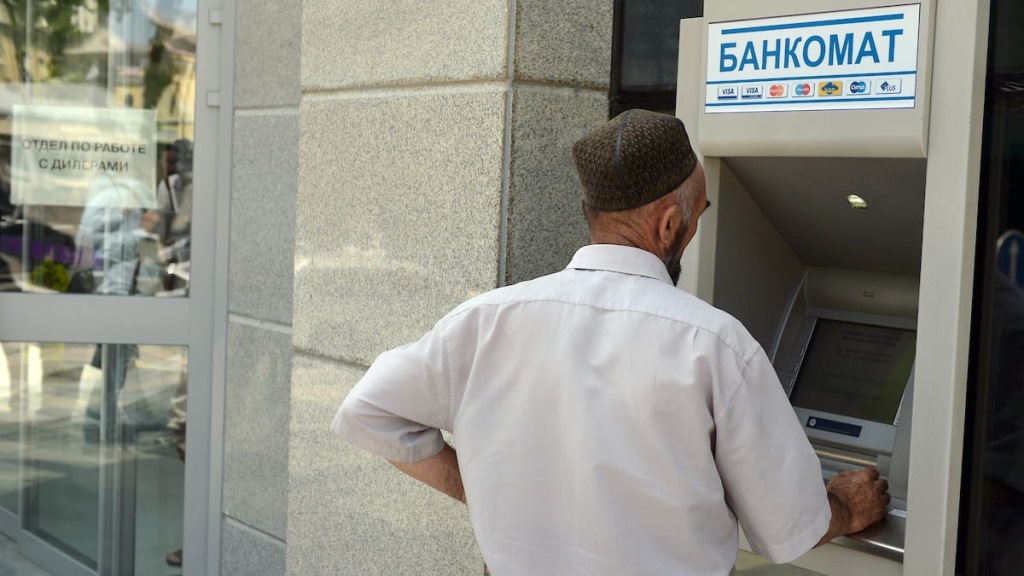
Over the first quarter of this year, the ratio of cash withdrawals to cashless payments using electronic payment tools in Tajikistan was 69.4% to 30.6%, according to the National Bank of Tajikistan (NBT). This marks a 4.6 percentage point increase in the share of cash withdrawals compared to the same period in 2024. “Cashless transactions […]

Asia-Plus

Over the first quarter of this year, the ratio of cash withdrawals to cashless payments using electronic payment tools in Tajikistan was 69.4% to 30.6%, according to the National Bank of Tajikistan (NBT).

This marks a 4.6 percentage point increase in the share of cash withdrawals compared to the same period in 2024.

“Cashless transactions using electronic payment tools — such as bank cards and e-wallets — increased by 40.7% in volume and 76.4% in value,” the financial regulator noted.

As of March 31, the number of bank cards in circulation in Tajikistan reached 8.6 million, which is 21.3% more than on the same date in 2024.

More than half (54.1%) of these cards belong to the national payment system "Korti Milli", while the rest are distributed among:

  • International systems: VISA, Mastercard, ExpressPay, and UnionPay — 21.5%
  • Co-branded cards (ExpressPay + Korti Milli, UnionPay + Korti Milli) — 21.6%
  • Local cards issued by domestic credit institutions — 2.8%

The total number of e-wallets issued by Tajik financial institutions reached approximately 12.7 million by the end of March, representing a 32.8% year-on-year increase.

Join us on social media!

Article translations:

Related Article

Оби зулол
Оби зулол

Most Read

Акика Алиф

Recent Articles

In Tajikistan, the workforce has increased, but not everyone is employed

Statistics show a significant gap between men and women in the labor market.

Amin Qobilov and Marvori Nasriddinzoda become chess champions of Tajikistan

The national chess tournament, which brought together the strongest players, has concluded in Dushanbe.

How to tame snow avalanches: how many houses and roads in Tajikistan are at risk?

Large avalanches can occur on average once every 40 years, causing residents to eventually consider dangerous areas safe and build houses on them.

Emomali Nourali and Muhiddin Asadulloyev became No. 1: Tajik judokas in the world ranking

After the "Grand Slam" in Dushanbe, the IJF ranking was updated, recording a historic result.

Media: the US struck Iranian ports but denies resuming war

Iran's military opened fire on forces that attempted to attack a pier on Qeshm Island.

Uzbekistan implements digital residency registration system

It will be possible to process it online through Face-ID.