Azim Ibrohim, the Minister of Transport of Tajikistan, has emphasized the need to digitize transit documents among the member nations of the Economic Cooperation Organization (ECO) to enhance the efficiency and transparency of transport operations.
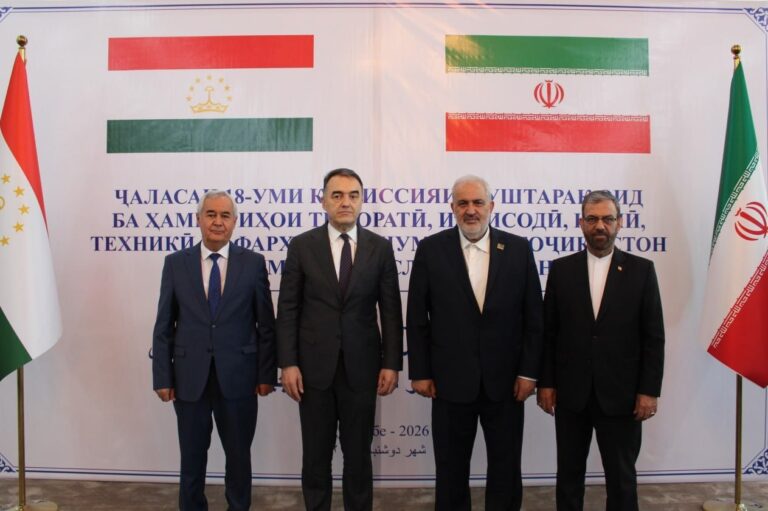
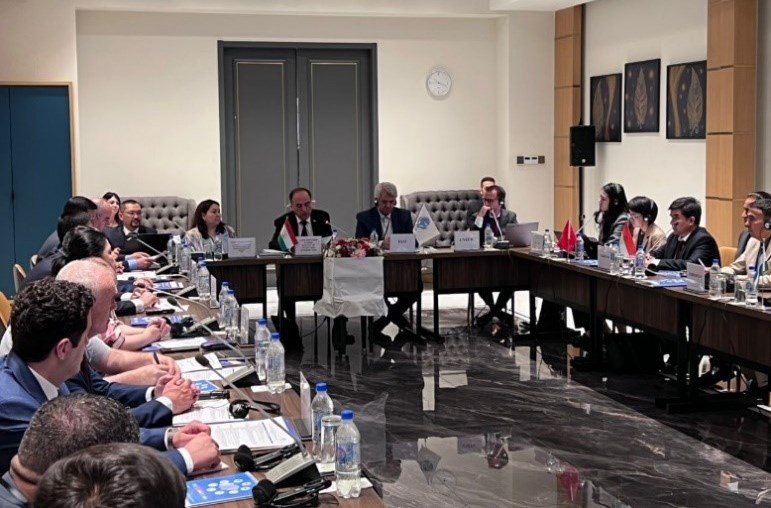
The Ministry of Transport press center says he made this statement at the high-level working group meeting on the multimodal corridor Tajikistan – Uzbekistan – Turkmenistan – Iran – Turkey (TUTIT) + China, held in Dushanbe on May 26–27.
Azim Ibrohim highlighted that transport and logistics play a key role in ensuring sustainable trade and economic integration among the countries of the region. He stated that the development of intermodal and multimodal transport corridors, as well as cross-border and transit transport services, forms the basis for stable economic growth and expansion of logistics chains.
The Minister noted the importance of harmonizing customs and border procedures to simplify the movement of goods and people across borders. As one of the measures, he proposed digitizing transit documents and introducing TIR-EPD “green lanes” at checkpoints. These steps would reduce transit time, increase the safety of international road transport, reduce the transportation burden on local areas, and lower carbon dioxide emissions.
The meeting, organized under the auspices of ECO, was attended by representatives from Azerbaijan, Iran, Kazakhstan, Kyrgyzstan, Pakistan, Turkmenistan, Turkiye, and Uzbekistan. The event was dedicated to the development and promotion of the TUTIT international transit corridor to increase freight traffic and simplify trade procedures, especially for landlocked countries.
The Economic Cooperation Organization was established in 1985 by Iran, Pakistan, and Turkey to promote economic, technical, and cultural cooperation. In 1992, seven more countries, including Tajikistan, joined the organization.
The decision for the establishment of the Tajikistan-Uzbekistan-Turkmenistan-Iran-Turkiye Corridor was adopted by the 11th ECO Ministerial Meeting on Transport (2 February 2022) at the proposal of Turkmenistan.
According to Tajikistan’s Ministry of Transport, the TUTIT+China multimodal corridor is a proposed international transit route connecting China to Turkiye through Tajikistan, Uzbekistan, Turkmenistan, and Iran. It aims to increase cargo transportation and simplify trade procedures, potentially reviving the Great Silk Road and promoting regional economic integration. The corridor is reportedly designed to utilize various modes of transport, including trains, trucks, ships, and aircraft