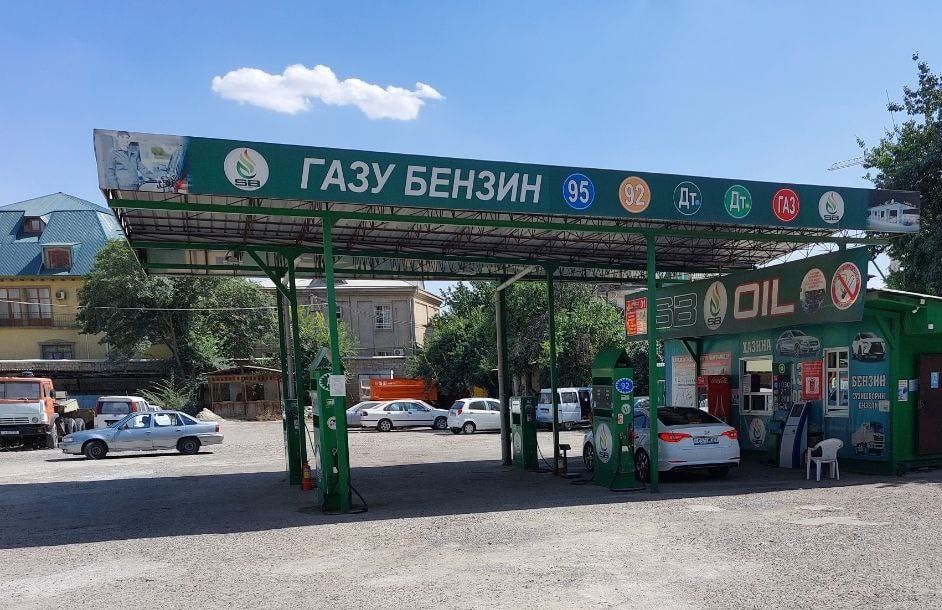
In recent days, Tajikistan has seen a noticeable decline in fuel prices. Thus, the price for one liter of 92-octane gasoline, which is the most sought-after grade of automobile gas in the country, is now 9.5 somonis, down from 10.5 somonis – 11 somonis just a month ago — a decrease of 1.00 somoni to 1.50 somonis. Premium 95-octane gasoline has also dropped in price, now selling at 9.90 somonis, compared to 11.00 somonis previously.
Why are prices falling?
Experts attribute the price drop to the weakening of the U.S. dollar against the Tajik somoni. Currently, US$100 is officially valued at around 1,012 somoni.
Tajikistan relies heavily on fuel imports from Russia and Kazakhstan, and currency fluctuations directly impact import costs. However, economists warn that a stronger Russian ruble against the somoni could push gasoline prices back up in the near future.
Another contributing factor is seasonal: fuel demand tends to decline after the end of agricultural and fieldwork seasons.
Fuel import figures
According to the Customs Service of Tajikistan, the country imported over 154,000 tons of 92-octane gasoline over the first five months of 2025, valued at US$117.4 million.
In 2024, total imports of oil products reached 1.05 million tons, worth US$829.4 million.
Tajikistan remains highly dependent on fuel imports, with 86% of all petroleum products coming from Russia and nearly 90% of liquefied petroleum gas supplied by Kazakhstan. This high concentration of suppliers makes the economy vulnerable to international market volatility.
Market share breakdown
The dominant player in Tajikistan’s fuel market is Gazpromneft-Tajikistan, which, according to the Antimonopoly Service, controls around 45% of the fuel market. In 2024 alone, the company was responsible for 45.8% of imported gasoline and 45.3% of imported diesel fuel.
Other key market players include: State Agency for Material Reserves – 10%; Se Ganj – 9.0%; Temur Oil – 7.0%; Habib Oil – 6.0%; Allat – 3.0%; Bahor – just over 2.0%; and other companies – ~18%
Liquefied petroleum gas prices also down
Earlier reports confirmed that the price of liquefied petroleum gas (LPG) in Tajikistan also fell by nearly 1.00 somoni, offering further relief to drivers and businesses.