Russia bans gelatin imports from Tajikistan over safety concerns

Russia has imposed a ban on the import of beef-derived gelatin from Tajikistan, effective July 1, citing major concerns over product safety and quality control. The Federal Service for Veterinary and Phytosanitary Surveillance of Russia (Rosselkhoznadzor) requested that Tajikistan’s veterinary authorities suspend the issuance of export certificates for edible bovine gelatin intended for the Russian […]

Asia-Plus

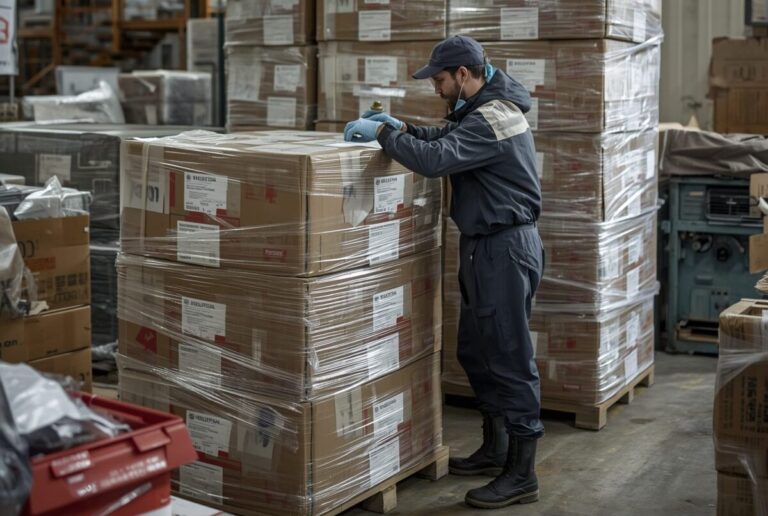
Russia has imposed a ban on the import of beef-derived gelatin from Tajikistan, effective July 1, citing major concerns over product safety and quality control.

The Federal Service for Veterinary and Phytosanitary Surveillance of Russia (Rosselkhoznadzor) requested that Tajikistan’s veterinary authorities suspend the issuance of export certificates for edible bovine gelatin intended for the Russian market.  The suspension applies to all Tajik producers.

This decision follows an inspection of the “Tillo Zhelo” gelatin factory conducted by Rosselkhoznadzor experts from June 18 to 20.  Inspectors also visited Tajikistan’s National Diagnostic Center under the Food Safety Committee.

According to Rosselkhoznadzor, the factory and the national veterinary service failed to ensure adequate oversight of the production process.  The inspection revealed that several product safety and quality indicators do not meet the standards of the Eurasian Economic Union (EAEU).

“The analysis revealed a complete lack of control from both the veterinary service and the manufacturer over the production and distribution of this product,” the agency stated.  “The quality and safety indicators of the exported gelatin are not properly monitored, and some do not comply with EAEU regulations.”

The agency also noted the absence of a traceability system for raw materials and ingredients.  On-site inspectors were unable to identify the suppliers or the origins of the animal-based raw materials.

Additional violations included poor sanitary conditions within the production facilities and breaches of storage and temperature requirements for finished products.

According to the Tajik Customs Service, Tajikistan exported 183.4 tons of gelatin worth over US$943,000 in the first five months of 2025.

This is not the first time Russia has imposed restrictions on imports from Tajikistan.  Last year, a temporary ban was introduced on live animals and animal products following an outbreak of lumpy skin disease.  The restriction affected cattle and other susceptible animals, as well as meat, milk, hides, feed, hunting trophies, and livestock transport equipment that had not been properly disinfected.  Transit of such goods through Russian territory was also prohibited.
Join us on social media!

Article translations:

Related Article

Оби зулол
Оби зулол

Most Read

Recent Articles

The only GPW veteran in Dushanbe allocated more than 80,000 somoni

The mayor's office of Dushanbe allocated him 25,000 somoni.

GITEX AI Kazakhstan 2026: how Almaty became the main AI hub of Central Asia

More than 300 companies and startups, over 200 speakers and 100 investors from 50 countries — the region is entering the global stage.

A trade and economic park to be built at the border junction of Tajikistan, Kyrgyzstan, and Uzbekistan

President of the Kyrgyz Republic Sadyr Japarov familiarized himself with the project.

A project to protect soil from degradation to be developed in Central Asia

The initiative is of great significance for the mountainous countries of the region, including Tajikistan.

Mudslide, death, and destroyed homes: hundreds of families in Tajikistan left homeless

A correspondent from "Asia-Plus" visited Kulob and spoke with the families of those who died and were affected by the disaster.

Spring 2026 bright event: new issue of VIPzone now on sale

This issue is about people and ideas that change everything: from business and investments to fashion, food, and urban environment.

Godfrey Sullivan: “Tajikistan is a promising market for Visa to develop digital payments”

The Vice President of Visa explained why Tajikistan is becoming a promising market for digital payments and how artificial intelligence is influencing the future of finance.

Seven students in Dushanbe were threatened with expulsion for arriving at universities in personal cars

The materials for each case have been sent to the Ministry of Education and Science for appropriate actions.

India’s blockchain push and lessons for the global south

The Indian Government has started pushing aggressively its agenda...

India’s blockchain push and lessons for the global south

The Indian Government has started pushing aggressively its agenda...