Tajik energy minister criticizes electricity distribution company over high losses and poor performance

Tajikistan's Minister of Energy and Water Resources, Daler Juma, has expressed dissatisfaction with the poor performance of the national electricity distribution company, OJSC “Distribution Electric Networks,” over the first half of the year. The press center of the Ministry of Energy and Water Resources (MoEWR) reports that during a meeting on July 14, the minister described […]

Tajikistan's Minister of Energy and Water Resources, Daler Juma, has expressed dissatisfaction with the poor performance of the national electricity distribution company, OJSC “Distribution Electric Networks,” over the first half of the year.

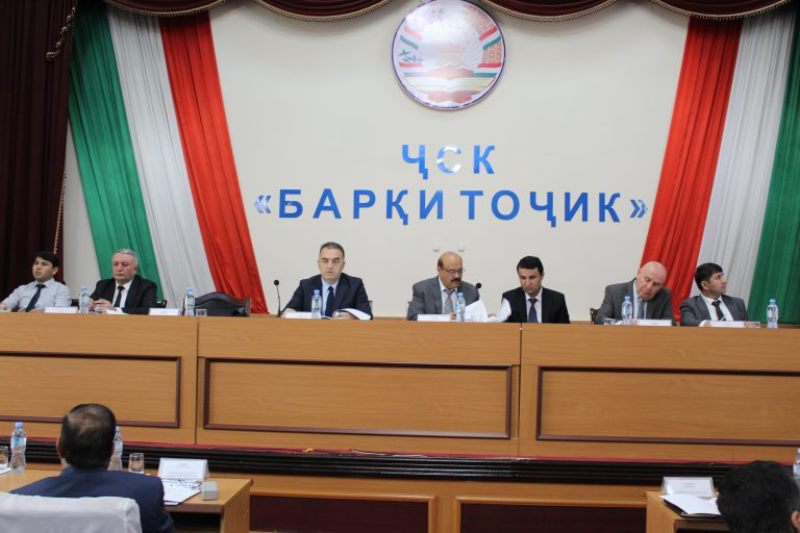
The press center of the Ministry of Energy and Water Resources (MoEWR) reports that during a meeting on July 14, the minister described the company's activities as unsatisfactory and issued direct orders to address existing shortcomings.  These reportedly included instructions to reduce electricity losses, prevent data manipulation, enhance staff accountability, improve customer service, and ensure proper preparation for the upcoming 2025–2026 autumn-winter period.

Despite these criticisms, the company’s leadership emphasized efforts to cut electricity losses, implement modern monitoring technologies, secure stable power supply to consumers, and collect full payments for consumed electricity.

Electricity losses in Tajikistan remain alarmingly high, despite significant investments in the power sector. According to the country’s energy companies, roughly 25% of generated electricity is lost during production, transmission, and distribution.

Official data shows that technical losses at hydropower and thermal power plants accounted for just 0.42% of total output in 2024, while losses on high-voltage transmission lines and substations were 3.31%.  However, the bulk of losses occur at the distribution stage and are categorized as commercial losses—often equated with theft.  In 2024, OJSC “Distribution Electric Networks” reported that these losses reached 21.6%.

Independent experts believe the real figure may be much higher—possibly exceeding 40%.

OJSC “Distribution Electric Networks” was established by a government decree in June 2019.  Its core mission is to ensure the reliable operation of the country’s electricity distribution infrastructure, maintain equipment, guarantee quality energy supply, and collect payments.  The company operates through seven regional branches in Dushanbe, Khujand, Guliston, Istaravshan, Bokhtar, Kulob, and districts subordinate to the center (RRP).

 

Join us on social media!

Article translations:

Related Article

Tenisi
Оби зулол
Оби зулол

Most Read

Коммерсбонк Точикистон

Recent Articles

RZD announces the restoration of passenger services between Moscow and Dushanbe

Direct rail services between the capitals of Russia and Tajikistan were suspended in March 2020 due to the COVID-19 pandemic.

#AP30/Stories. “Selam! Heller nichek?” How Tatars live today in Sughd province

On the 30th anniversary of "Asia-Plus," we continue to publish reports that remain relevant even after years. This story was told in 2021, and since then, little has changed in the life of the Tatar community in Tajikistan.

15,000 cameras, drones, and robots: how technology monitors pilgrims in Mecca and Medina

During Hajj 2026, Mecca and Medina were under unprecedented digital control.

Another child in Dushanbe removed from family and sent to boarding school

The Ministry of Internal Affairs reports that the parents did not pay adequate attention to the child.

Emomali Rahmon instructs to address issues in seed production following criticism of the industry

Issues have been noted with certification, seed quality, and the material and technical base of the industry.

Water, climate, and a $130 billion deficit: seven key outcomes of the Water Conference in Dushanbe

At the forum, countries and international organizations discussed new mechanisms for cooperation, investments, and technologies that are essential for addressing the global water crisis.

Eskhata Bank introduces a new generation children’s wallet

"Eshkata Bank" has created a full-fledged digital platform that helps children aged 7 to 16 learn how to manage money.