The Eurasian Fund for Stabilization and Development (EFSD) predicts a gradual decline in remittance inflows to Tajikistan over the next three years, posing a serious risk to the country’s economic stability.
In its latest Regional Economic Outlook (REO), the EFSD warns that Tajikistan's balance of payments remains vulnerable due to expected reductions in labor migrant remittances and potential drops in raw material exports amid worsening global market conditions.
The report notes that increasing difficulties with the legal status of Tajik migrant workers abroad, particularly in Russia, could lead to a decline in remittance flows by 2%–4% of GDP. Such a drop would directly impact household incomes across Tajikistan.
Earlier this year, Russian authorities launched a registry of controlled individuals—foreign citizens who have committed offenses or lack legal residency. This new measure is expected to further limit the ability of many Tajik migrants to remain in Russia and send money home.
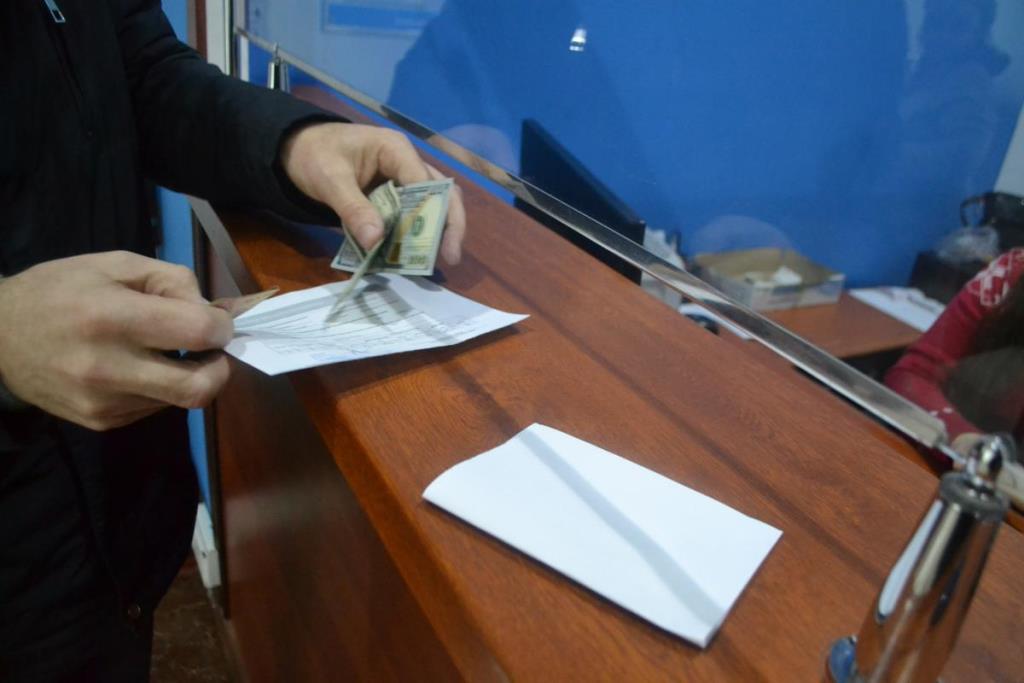
EFSD analysts estimate that remittance inflows in 2025 will fall to 40 billion somonis, down from 44.7 billion somonis in 2024. Projections for 2026 and 2027 foresee further declines to 37 billion and 35 billion somonis, respectively.
Regarding the national currency, the EFSD forecasts the average exchange rate of the somoni to the US dollar to be 10.2:1 in 2025, 10.7:1 in 2026, and 11.3:1 in 2027. For comparison, the official rate set by the National Bank of Tajikistan (NBT) on July 15, 2025, stands at 9.66 somonis per dollar.
Citing World Bank data, the International Organization for Migration (IOM), says remittance inflows to Tajikistan reached US$5.8 billion in 2024—27% more than in 2023. That figure represented a staggering 45% of Tajikistan’s GDP, making the country the global leader in remittance dependency.
Over the past 17 years, the remittance-to-GDP ratio has dipped below 30% only three times—during 2015, 2016, and 2020. Since the onset of the Russia-Ukraine conflict, the share of remittances has soared to nearly half of the nation’s GDP, approaching levels previously seen in 2008 and from 2011 to 2013.