



Tajikistan’s Ombudsman calls for creation of “protective environment for children” after Farkhor tragedy

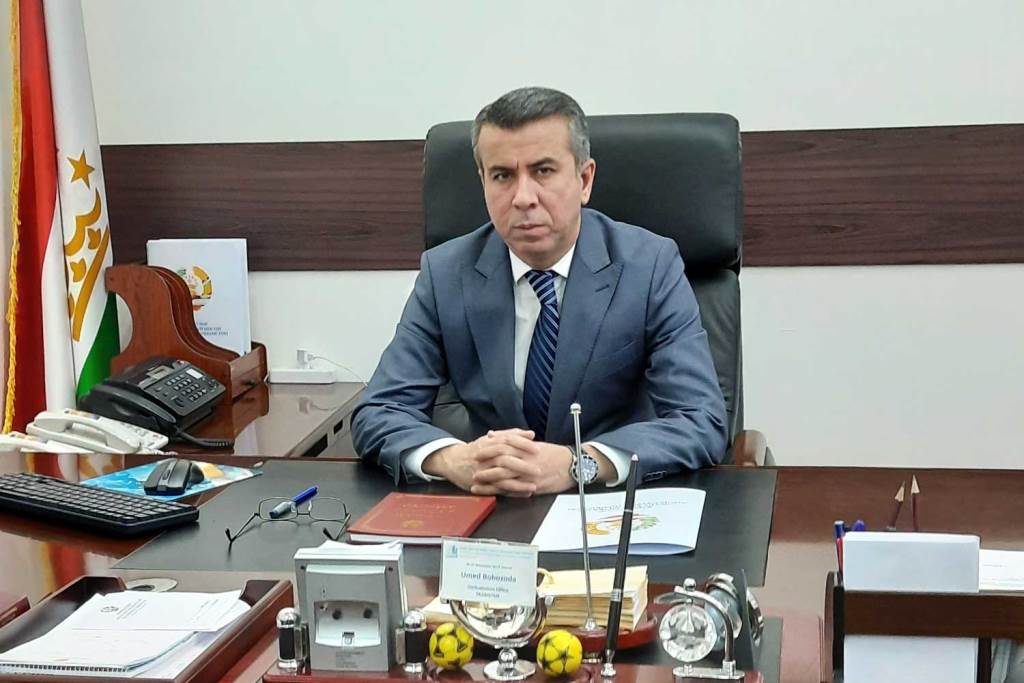
Tajikistan’s Human Rights Ombudsman, Umed Bobozoda, has called for urgent measures to protect children's rights in the wake of a tragic incident in Farkhor district of Khatlon province, where a mother allegedly threw herself and her four children into the Surkhob River. The event occurred during the night of June 29–30. In a public statement […]

Tajikistan’s Human Rights Ombudsman, Umed Bobozoda, has called for urgent measures to protect children's rights in the wake of a tragic incident in Farkhor district of Khatlon province, where a mother allegedly threw herself and her four children into the Surkhob River. The event occurred during the night of June 29–30.

In a public statement released on his official website, Bobozoda described the death of four young children as an “alarming event” and expressed deep concern over violence against minors.  He emphasized that the tragedy underscores the urgent need to safeguard the rights and well-being of children across the country.

The Ombudsman’s statement highlighted a troubling pattern: in many cases, children's rights are violated by their own parents or close family members.  “Analysis of child rights violations shows that in most instances, the perpetrators are parents, legal guardians, or individuals whom the child loves and trusts,” said Bobozoda.

To prevent such tragedies, he urged Tajik society—including parents, communities, and government institutions—to create a “protective environment for children” and to intensify awareness-raising efforts around children's rights, education, care, and supervision.

The case that sparked the statement involved the 27-year-old Madina Halimova, a resident of Safarov village in Khatlon’s Farkhor district.  In a shocking act of violence, she threw her four young children into the Surkhob River before attempting to take her own life.  Halimova survived, but all four children — the five-year-old Latofat, the tree-year-old Zainab, the two-year-old Yosamin, and the two-month-old Muhammad — perished.

Authorities are continuing to investigate the incident, and it has reignited public debate over mental health, family welfare, and child protection systems in Tajikistan.


Join us on social media!

Article translations:

Related Article

Tenisi
Оби зулол
Оби зулол

Most Read

Коммерсбонк Точикистон

Recent Articles

RZD announces the restoration of passenger services between Moscow and Dushanbe

Direct rail services between the capitals of Russia and Tajikistan were suspended in March 2020 due to the COVID-19 pandemic.

#AP30/Stories. “Selam! Heller nichek?” How Tatars live today in Sughd province

On the 30th anniversary of "Asia-Plus," we continue to publish reports that remain relevant even after years. This story was told in 2021, and since then, little has changed in the life of the Tatar community in Tajikistan.

15,000 cameras, drones, and robots: how technology monitors pilgrims in Mecca and Medina

During Hajj 2026, Mecca and Medina were under unprecedented digital control.

Another child in Dushanbe removed from family and sent to boarding school

The Ministry of Internal Affairs reports that the parents did not pay adequate attention to the child.

Emomali Rahmon instructs to address issues in seed production following criticism of the industry

Issues have been noted with certification, seed quality, and the material and technical base of the industry.

Water, climate, and a $130 billion deficit: seven key outcomes of the Water Conference in Dushanbe

At the forum, countries and international organizations discussed new mechanisms for cooperation, investments, and technologies that are essential for addressing the global water crisis.

Eskhata Bank introduces a new generation children’s wallet

"Eshkata Bank" has created a full-fledged digital platform that helps children aged 7 to 16 learn how to manage money.





