Dollar exchange rate in Tajikistan drops to six-year low

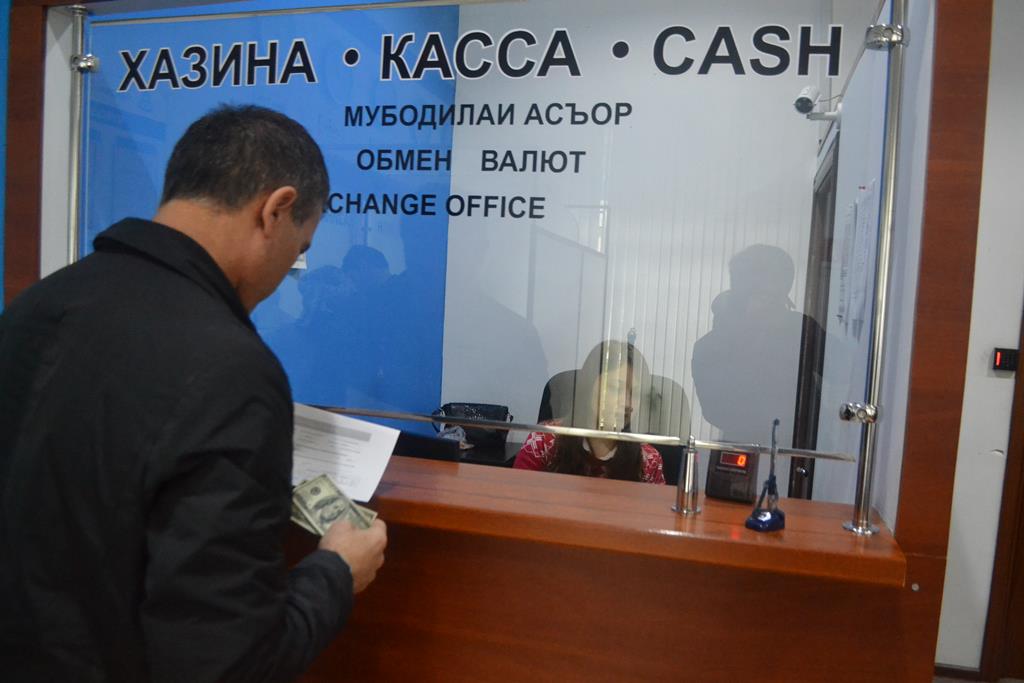
The official exchange rate of the U.S. dollar (USD) to the Tajik somoni (TJS), set daily by the National Bank of Tajikistan (NBT), has fallen by 1.2% this week, from 1:9.69 on July 14 to 1:9.57 on July 18.  The noticeable depreciation of the US dollar against the Tajik somoni, with brief pauses, has been […]

Asia-Plus

The official exchange rate of the U.S. dollar (USD) to the Tajik somoni (TJS), set daily by the National Bank of Tajikistan (NBT), has fallen by 1.2% this week, from 1:9.69 on July 14 to 1:9.57 on July 18. 

The noticeable depreciation of the US dollar against the Tajik somoni, with brief pauses, has been ongoing since mid-April, when the USD/TJS exchange rate was 1:10.9.  Since then, the U.S. dollar has decreased by 12.2%.

Overall, since the beginning of 2025, the dollar has depreciated by 12.4% against the local currency, from 1:10.93 to 1:9.57.

Notably, the last time the exchange rate at this level was in mid-August 2019.

The NBT previously attributed the decrease in the dollar exchange rate to "a combination of external and internal factors."

"External factors include the volume of foreign currency inflows into the republic, global geopolitical and economic events, and the monetary policy adjustments made by the central banks of leading world economies," an official source within the country’s financial regulator told Asia-Plus.

According to NBT specialists, "the dynamics of the Russian ruble against the U.S. dollar, influenced by fluctuations in energy prices, trade disputes, and instability in regional and global financial markets," is particularly significant.

"Among the internal factors, trends in the demand for foreign currency in the domestic market and the efficiency of the banking system in meeting the foreign currency needs of legal entities and individuals should be highlighted," the NBT emphasized.

The National Bank also noted that both external and internal factors are subject to seasonal fluctuations, which, in turn, affect their impact on the somoni exchange rate at different times.

According to the "Main Directions of Monetary and Credit Policy of the Republic of Tajikistan for 2025 and the Medium-Term Period," the NBT’s exchange rate policy is based on a managed floating exchange rate regime, without setting fixed limits for fluctuations.

The official exchange rate of the somoni to foreign currencies is formed based on market supply and demand in the domestic currency market. Interventions by the regulator in this regime are exceptional and occur only when there is an objective need.

Join us on social media!

Article translations:

Related Article

Оби зулол
Оби зулол

Most Read

Recent Articles

The only GPW veteran in Dushanbe allocated more than 80,000 somoni

The mayor's office of Dushanbe allocated him 25,000 somoni.

GITEX AI Kazakhstan 2026: how Almaty became the main AI hub of Central Asia

More than 300 companies and startups, over 200 speakers and 100 investors from 50 countries — the region is entering the global stage.

A trade and economic park to be built at the border junction of Tajikistan, Kyrgyzstan, and Uzbekistan

President of the Kyrgyz Republic Sadyr Japarov familiarized himself with the project.

A project to protect soil from degradation to be developed in Central Asia

The initiative is of great significance for the mountainous countries of the region, including Tajikistan.

Mudslide, death, and destroyed homes: hundreds of families in Tajikistan left homeless

A correspondent from "Asia-Plus" visited Kulob and spoke with the families of those who died and were affected by the disaster.

Spring 2026 bright event: new issue of VIPzone now on sale

This issue is about people and ideas that change everything: from business and investments to fashion, food, and urban environment.

Godfrey Sullivan: “Tajikistan is a promising market for Visa to develop digital payments”

The Vice President of Visa explained why Tajikistan is becoming a promising market for digital payments and how artificial intelligence is influencing the future of finance.

Seven students in Dushanbe were threatened with expulsion for arriving at universities in personal cars

The materials for each case have been sent to the Ministry of Education and Science for appropriate actions.

India’s blockchain push and lessons for the global south

The Indian Government has started pushing aggressively its agenda...

India’s blockchain push and lessons for the global south

The Indian Government has started pushing aggressively its agenda...