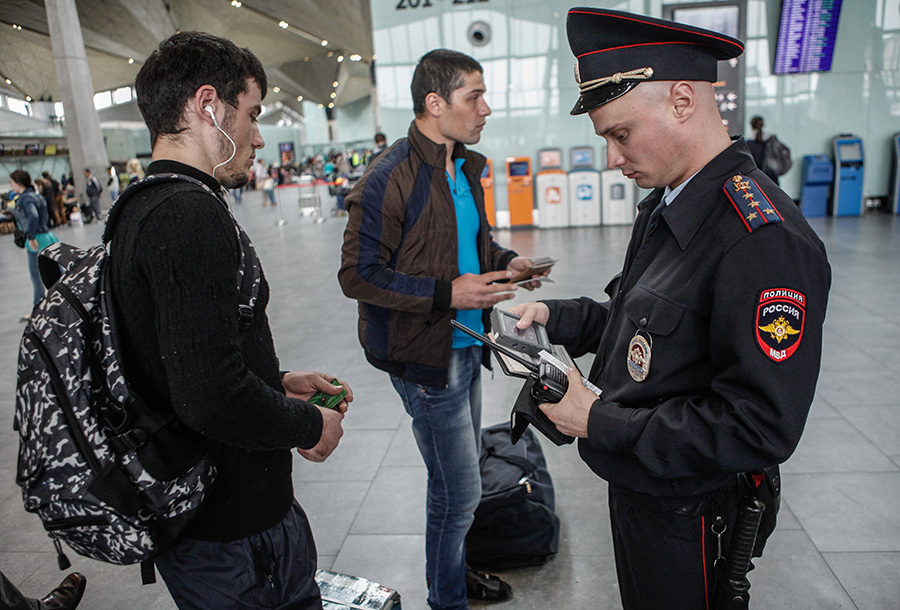
Russian border authorities are increasingly denying entry to citizens of Tajikistan and Uzbekistan if their mobile devices show subscriptions to online channels linked to extremist organizations or radical religious bloggers. This trend has emerged from more than 20 court cases reviewed by Russia’s TASS news agency.
In one case, a Tajik national, Dilshod A., was refused entry after border guards found he was subscribed to several YouTube channels broadcasting sermons by Islamic radicals banned in Russia. The court decision stated: “The inspection of a voluntarily submitted mobile phone revealed subscriptions to Islamic channels hosting content from radical preachers, as well as videos spreading anti-Russian propaganda.”
A similar incident involved an Uzbek citizen, Akmaljon B., who was barred from entering after authorities discovered he had watched videos by radical religious bloggers and content linked to terrorist activities. The court deemed his interests a potential threat to Russia’s national security.
Other cases involved individuals subscribed to pro-Ukrainian channels or messaging apps containing conversations critical of Russian security services. One Tajik man had viewed videos with religious themes, content from Ukrainian news outlets, and footage related to Ukrainian intelligence agencies. Some travelers attempted to delete sensitive content from their devices before crossing the border, but were not always successful.
These incidents indicate that the content on personal devices is now a significant factor in determining whether a foreign national is granted entry into Russia.
Why are border checks getting stricter?
The crackdown follows the March 22, 2024, terrorist attack at Crocus City Hall near Moscow, which left about 150 people dead and 550 injured. Russian authorities blamed the attack on Tajik nationals, and the Islamic State claimed responsibility. In response, the Russian government dramatically tightened security, especially at border checkpoints and for migrants from Tajikistan.
Authorities are no longer focusing solely on personal identification but are also scrutinizing individuals’ “digital footprint,” including phone content, subscriptions, saved videos, and messaging app conversations. What was once a selective procedure has now become standard practice at many entry points.
TASS reports that in the past 18 months, at least 20 citizens from Tajikistan and Uzbekistan have challenged entry bans in court, all unsuccessfully. Judges upheld the border service’s decisions, citing security risks—even in cases where individuals had family in Russia or sought employment.
This shift signals a new era of migration control based on digital behavior, contributing to a notable rise in entry refusals for citizens of Central Asia.