Tajikistan's public service sector is facing several key issues, including the question of government employees performing the Hajj pilgrimage, the shortage of personnel in state institutions, and the ongoing delay in the publication of income declarations by officials. These issues were raised during a news conference held on July 21 at the State Service Agency under the President of Tajikistan.
Hajj and government employees
One of the key topics discussed at the news conference was whether state employees are permitted to perform the Hajj pilgrimage and whether they risk dismissal for doing so. In response, Ilyas Idrisov, the Director of the State Service Agency, clarified that while the law does not prohibit government employees from going on Hajj, it is his personal belief that it is better for civil servants to undertake this religious duty after retiring from their roles.
"A government employee must fulfill their duties first and foremost. When you work in public service, you are expected to serve the state and the people with honesty, transparency, and dedication. Once someone retires and is no longer part of public service, they are free to go," said Idrisov. He emphasized that there have been no reports of officials being dismissed following their pilgrimage.
Staff shortages in government agencies
Addressing the ongoing staff shortages in public institutions, Idrisov revealed that as of the first half of 2025, Tajikistan will face a shortage of 4,102 public servants. "On average, there is only 0.6 candidate per open position," he noted. As of July 1, 2024, there are 22,711 positions in government agencies and local authorities, but only 18,609 are currently filled.
State employees are hired through competitive exams and must meet specific criteria, including proficiency in foreign languages, computer skills, and knowledge of the country’s history and culture. The Agency regularly evaluates the qualifications of public servants, and those who fail to meet standards are dismissed.
According to Hilolbi Qurbonzoda, Deputy Director of the Agency, 12 central and 30 local government bodies have been assessed over the first half of 2024, resulting in the dismissal of 16 employees for failing to meet the necessary qualifications. The dismissed officials reportedly came from cities and districts, including Shugnan (1), Guliston (2), Zafarobod (5), Jaloliddini-Balkhi (1), Baljuvon (5), Muminobod (1), and Vanj (1).
The delayed publication of income declarations
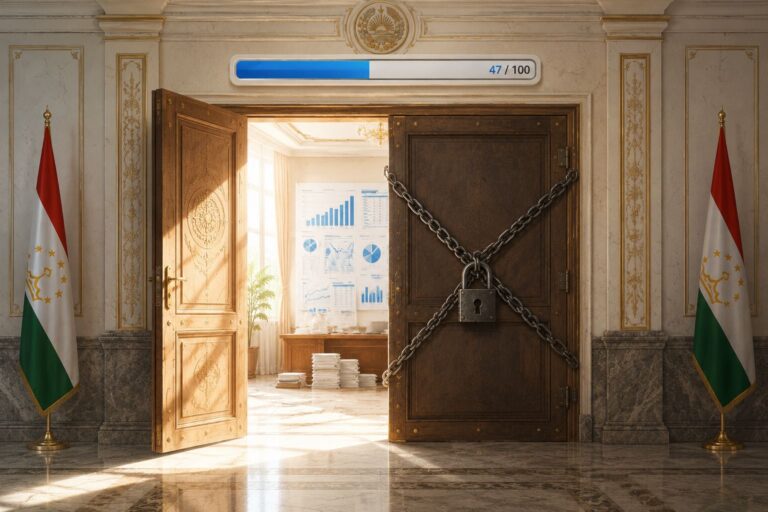
Another pressing issue discussed at the press conference was the ongoing delay in the publication of income declarations by government officials. Despite legislation requiring civil servants to disclose their assets annually, these declarations have not been made public, even though such assurances have been made by government representatives in the past.
Idrisov explained that the matter is still under review, with national security and interests being considered in the process. "There have been proposals to introduce digitalization into some areas, and changes to legislation are necessary. Once these aspects are finalized, we will inform the public about the results," he said.
Under a government decree from July 24, 2020, state servants are obligated to submit declarations of their assets to the State Service Agency, which include properties, vehicles, livestock, and financial assets. However, these declarations have not been published to date.
Former head of the Agency, Juma Davlat, previously commented that a working group comprising representatives from various ministries was examining the feasibility of making income declarations public. "This issue is still under consideration. Once the draft publication is ready, all media outlets will be informed," Davlat stated. However, the publication of such declarations remains unresolved, and officials in Tajikistan have yet to disclose their income information publicly.
In 2019, Davlat noted that "society in Tajikistan is not yet ready for this," explaining that such transparency would come only when societal awareness reaches the level seen in Western countries.
Since 2004, all Tajikistan’s civil servants have been required to submit declarations of income and assets. The format for submitting these declarations has been amended twice by government decrees—once in 2005 and again in 2020.