Russia to shift migration policy toward “Came, Worked, Left” model

Russia is moving toward a new approach to labor migration in which foreign workers will be hired only temporarily and on a situational basis, according to Economic Development Minister Maksim Reshetnikov. TASS reports that speaking at the All-Russian Occupational Safety and Health Week, he stressed that the country does not intend to rely on migrants […]

Asia-Plus

Russia is moving toward a new approach to labor migration in which foreign workers will be hired only temporarily and on a situational basis, according to Economic Development Minister Maksim Reshetnikov.

TASS reports that speaking at the All-Russian Occupational Safety and Health Week, he stressed that the country does not intend to rely on migrants in the long term.

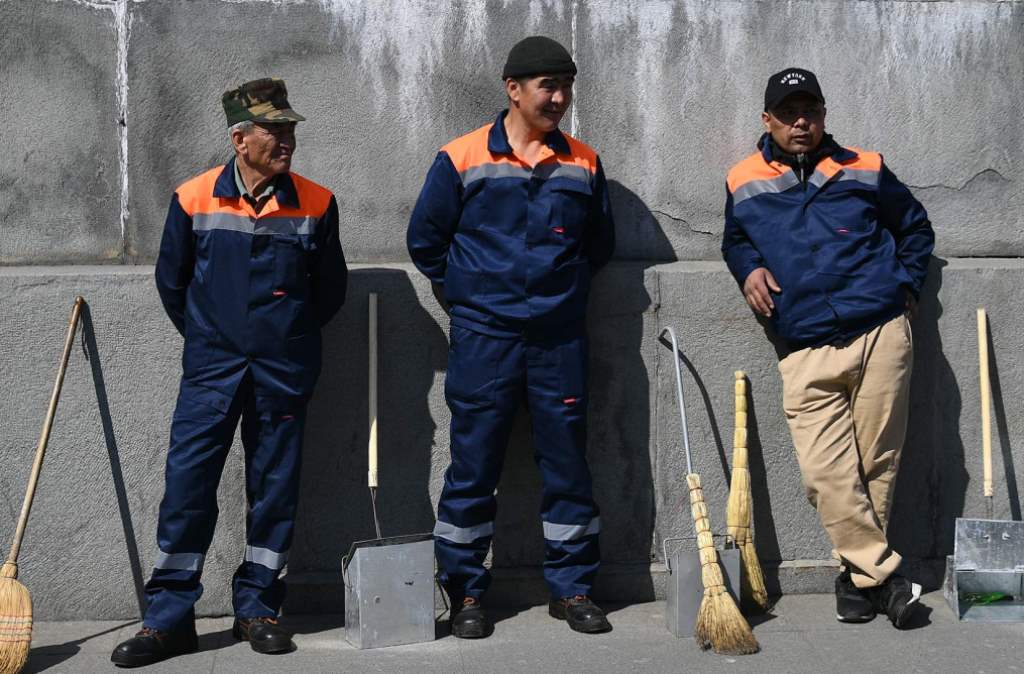
“If we develop under labor shortages, of course, we will need to attract migrants in certain cases.  But the principle must be simple: came, worked, left.  People come, earn money, and return home. We don’t need families here, nor are we obliged to provide schooling for non-citizens,” Reshetnikov said, adding that the government’s main goal is to raise the productivity of Russian workers, with special programs designed around the platform economy.

The statement comes amid tighter state control over migrant workers in Russia. On September 1, Moscow and the Moscow region launched a pilot registration system for migrants from visa-free countries using a mobile app called Amina.  Migrants must now install the app, register their address, and share geolocation data.  Failure to comply can result in removal from the registration system or placement on a “controlled persons” list, potentially leading to expulsion from the country.

In addition, regional governments across Russia are implementing their own restrictions on certain types of employment for migrants, adjusting labor access based on local market needs. Officials say the measures are intended to balance the interests of residents and employers while reducing social tensions over competition for jobs.

Join us on social media!

Article translations:

Related Article

Оби зулол
Оби зулол

Most Read

Recent Articles

GITEX AI Kazakhstan 2026: how Almaty became the main AI hub of Central Asia

More than 300 companies and startups, over 200 speakers and 100 investors from 50 countries — the region is entering the global stage.

A trade and economic park to be built at the border junction of Tajikistan, Kyrgyzstan, and Uzbekistan

President of the Kyrgyz Republic Sadyr Japarov familiarized himself with the project.

A project to protect soil from degradation to be developed in Central Asia

The initiative is of great significance for the mountainous countries of the region, including Tajikistan.

Mudslide, death, and destroyed homes: hundreds of families in Tajikistan left homeless

A correspondent from "Asia-Plus" visited Kulob and spoke with the families of those who died and were affected by the disaster.

Spring 2026 bright event: new issue of VIPzone now on sale

This issue is about people and ideas that change everything: from business and investments to fashion, food, and urban environment.

Godfrey Sullivan: “Tajikistan is a promising market for Visa to develop digital payments”

The Vice President of Visa explained why Tajikistan is becoming a promising market for digital payments and how artificial intelligence is influencing the future of finance.

Seven students in Dushanbe were threatened with expulsion for arriving at universities in personal cars

The materials for each case have been sent to the Ministry of Education and Science for appropriate actions.

India’s blockchain push and lessons for the global south

The Indian Government has started pushing aggressively its agenda...

India’s blockchain push and lessons for the global south

The Indian Government has started pushing aggressively its agenda...

25 Years in Touch: On Generation Change, “Digital” and “Invisible” Work

In its 25th anniversary year, "MegaFon Tajikistan" summarizes its...