More than half of Tajikistan’s pastures are degraded, posing a serious threat to agriculture and food security, according to the Global Land Outlook Thematic Report on Rangelands and Pastoralists, published under the auspices of the UN Environment Program (UNEP) and partner organizations.
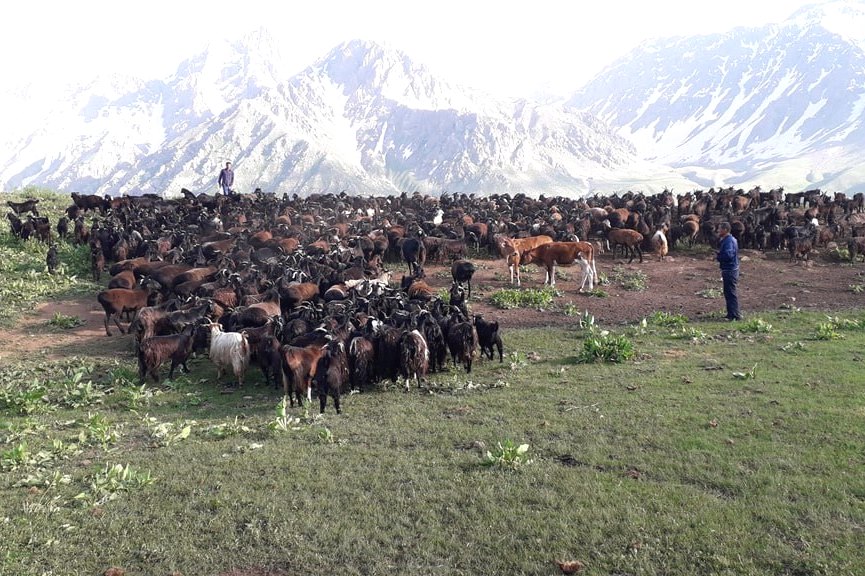
The report notes that Tajikistan’s most accessible grazing lands are overused, while remote pastures remain underutilized due to poor infrastructure, limited road access, and lack of water sources.
Pastures play a central role in Tajikistan’s rural economy, covering about 3.1 million hectares and supplying up to 70% of livestock feed. Around 60% of rural households depend on livestock as their main source of income.
Experts behind the report argue that rotational grazing and better infrastructure could boost pasture productivity by 20–30% and strengthen food security.
Specialists from the National Academy of Sciences of Tajikistan, Tajik Agrarian University named after Shirinsho Shotemur, and the Ministry of Agriculture contributed data and analysis for the report, alongside NGOs from Khatlon province and the Gorno-Badakhshan Autonomous Region (GBAO).
Overgrazing and rural decline
After the collapse of Soviet-era collective and state farms, Tajikistan — like other countries in the region — lost its centralized pasture management system. The absence of planning and rotational grazing has since led to overuse of nearby pastures, while remote rangelands remain largely neglected due to lack of roads and water supply.
This imbalance is accelerating soil degradation and vegetation loss, particularly in foothill regions where erosion is widespread. Experts warn that the process increases the risk of desertification, reduces productivity, and worsens the quality of grazing land.
Today, more than 50% of Tajikistan’s pastures are degraded to varying degrees, undermining the country’s food security. The report emphasizes that unsustainable land management and overgrazing are common not only in Tajikistan but also across Central Asia and Mongolia, creating severe environmental and economic consequences.
For rural households, the social and economic fallout is already significant. With reduced access to quality forage, livestock productivity is declining, cutting household incomes and pushing families to spend more on feed. This drives many deeper into poverty, especially those who rely almost entirely on livestock for survival.
As livelihoods deteriorate, migration pressures are growing. Increasing numbers of rural residents, particularly young people, leave for cities or abroad in search of work. This exacerbates Tajikistan’s labor migration problem and further weakens rural communities, especially in highland areas where alternative livelihoods are scarce.