Tajikistan’s food industry is showing robust growth, with production volumes—including food, beverages, and tobacco—reaching 8.1 billion somonis in the first nine months of 2025. According to the Agency for Statistics under the President of Tajikistan, this marks a 12.3% increase compared to the same period last year.
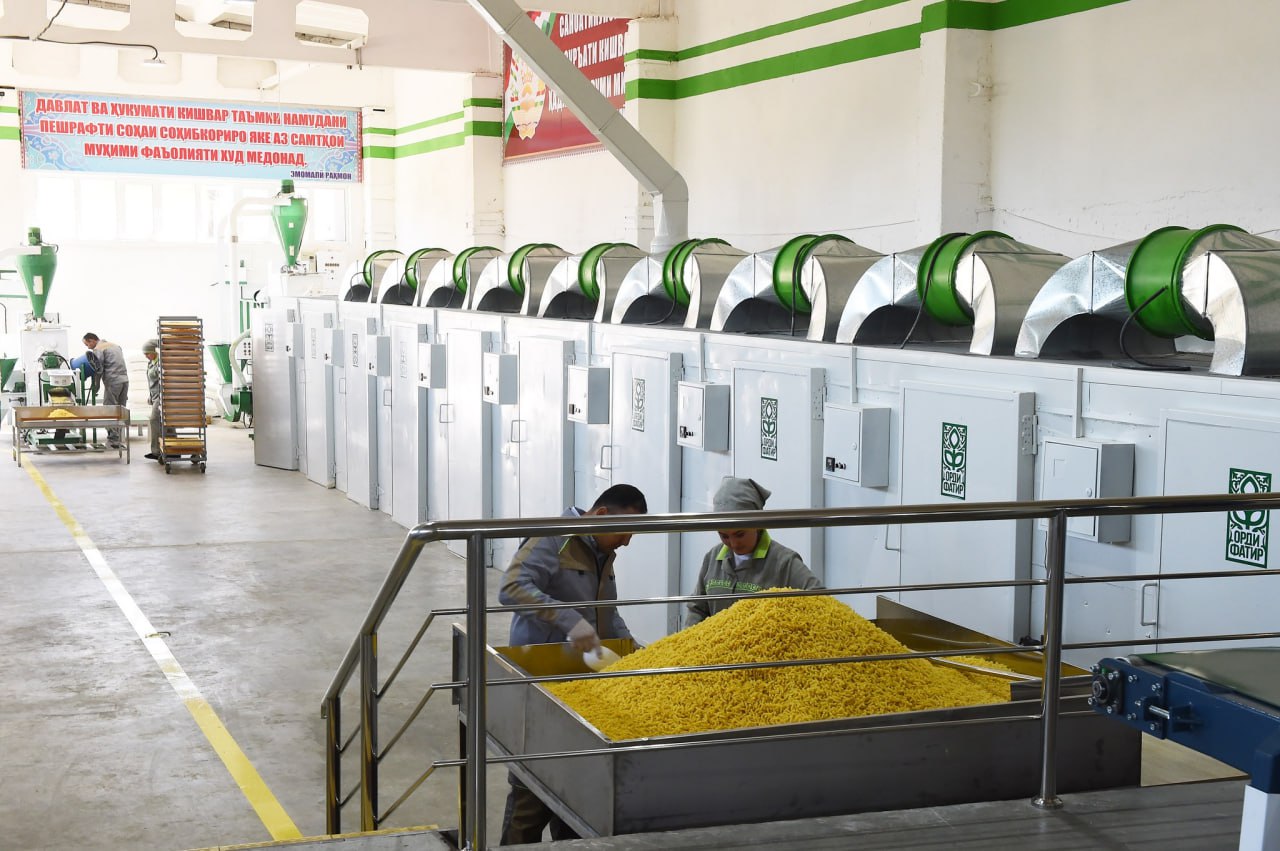
Key sectors driving this growth include pasta production, which rose by 26.3%, non-alcoholic beverages by 22.7%, dairy products by 18.5%, confectionery by 10.1%, meat and meat products by 7.1%, flour by 7.5%, and vodka and spirits by 13.5%.
Meanwhile, output of sausages, canned goods, and vegetable oil remained steady year-on-year, while mineral water production saw a decline of 11.6%.
Compared to other industrial sectors, the food industry stands out with some of the highest growth rates. For instance, building materials production grew by 5.5%, metallurgy by 7.5%, textile and garment industries by 9.1%, and chemicals by 12%. The pharmaceutical sector posted the highest growth at 39.5%, although its overall share in industrial output remains relatively small.

The rise in food production comes as Tajikistan approaches the end of its 2020–2025 National Food Industry Development Program. The initiative has focused on modernizing production facilities, increasing the processing of agricultural raw materials, improving logistics, and exploring new export markets.
Priority areas of the program included processing of grains, oilseeds, fruits and vegetables, dairy, meat, and developing the confectionery sector. More than 568.8 million somonis were allocated for implementation, sourced from both domestic and foreign investment, bank loans, and industry funds.
The second phase of the program (2023–2025) emphasized sustainable growth, targeting a 7% annual increase—equivalent to an additional 500 million somonis in food production each year.
As the program wraps up, the government will assess its outcomes and decide whether to extend or complete the initiative. Experts note that the program’s long-term success will depend on how effectively Tajikistan can introduce high-tech production and develop deeper agricultural processing capacities within the country.