Moscow to raise work permit fees for migrants starting 2026

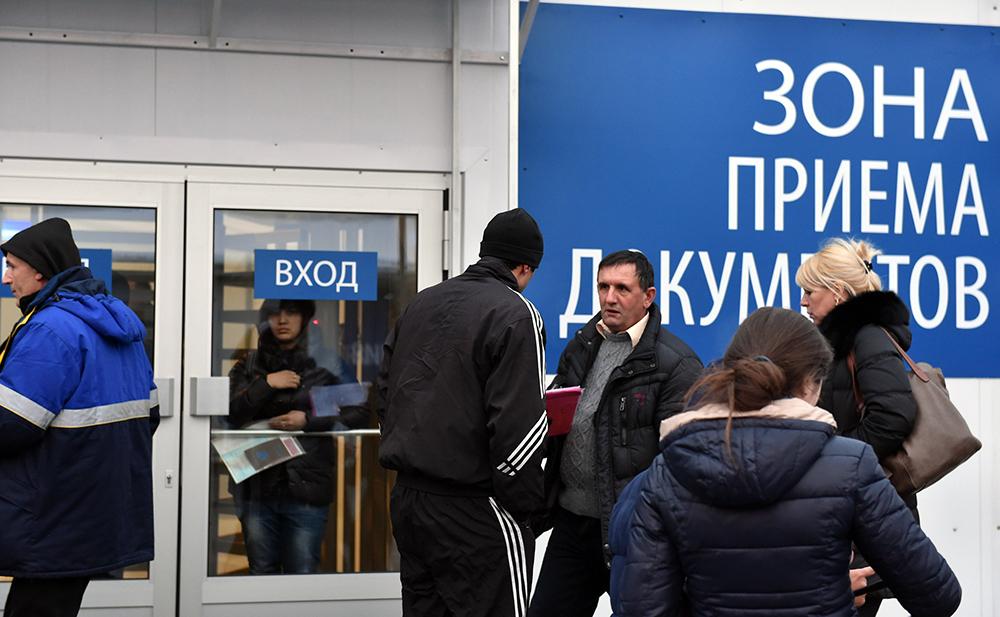
Moscow Mayor Sergey Sobyanin has approved a significant increase in the monthly fee for work patents — mandatory permits allowing migrants to work legally in the capital. Starting January 1, 2026, the cost will rise to 10,000 rubles per month. This change comes as part of a new regional law, which includes an updated labor […]

Asia-Plus

Moscow Mayor Sergey Sobyanin has approved a significant increase in the monthly fee for work patents — mandatory permits allowing migrants to work legally in the capital. Starting January 1, 2026, the cost will rise to 10,000 rubles per month.

This change comes as part of a new regional law, which includes an updated labor market coefficient for Moscow — a factor that adjusts the cost of the patent based on local economic conditions. In 2026, this coefficient will increase from 2.8592 to 2.9323.

The proposal to raise the patent fee was reviewed and approved in late October by the Moscow City Duma’s Committee on Economic and Social Policy.

Moscow is not alone in implementing higher fees. Other Russian regions are also set to increase the cost of work permits for migrants next year. The annual patent fee is subject to regional adjustments and varies significantly across the country.

For example, in the Tyumen region, the monthly fee will jump from 9,385 to 11,471 rubles. In Kamchatka, the cost will rise from 9,000 to 13,800 rubles, while in the Irkutsk region, it will reach 12,000 rubles.

Saint Petersburg and the Leningrad region will see an increase from 6,000 to 8,000 rubles.

Meanwhile, in Novosibirsk, the fee will rise to 10,860 rubles — an 11% increase compared to 2025.

Work patents grant foreign nationals the right to be employed in a specific region and occupation. The monthly fee is set by local authorities and must be paid regularly to maintain legal employment status.


Join us on social media!

Article translations:

Related Article

Оби зулол
Оби зулол

Most Read

Recent Articles

The only GPW veteran in Dushanbe allocated more than 80,000 somoni

The mayor's office of Dushanbe allocated him 25,000 somoni.

GITEX AI Kazakhstan 2026: how Almaty became the main AI hub of Central Asia

More than 300 companies and startups, over 200 speakers and 100 investors from 50 countries — the region is entering the global stage.

A trade and economic park to be built at the border junction of Tajikistan, Kyrgyzstan, and Uzbekistan

President of the Kyrgyz Republic Sadyr Japarov familiarized himself with the project.

A project to protect soil from degradation to be developed in Central Asia

The initiative is of great significance for the mountainous countries of the region, including Tajikistan.

Mudslide, death, and destroyed homes: hundreds of families in Tajikistan left homeless

A correspondent from "Asia-Plus" visited Kulob and spoke with the families of those who died and were affected by the disaster.

Spring 2026 bright event: new issue of VIPzone now on sale

This issue is about people and ideas that change everything: from business and investments to fashion, food, and urban environment.

Godfrey Sullivan: “Tajikistan is a promising market for Visa to develop digital payments”

The Vice President of Visa explained why Tajikistan is becoming a promising market for digital payments and how artificial intelligence is influencing the future of finance.

Seven students in Dushanbe were threatened with expulsion for arriving at universities in personal cars

The materials for each case have been sent to the Ministry of Education and Science for appropriate actions.

India’s blockchain push and lessons for the global south

The Indian Government has started pushing aggressively its agenda...

India’s blockchain push and lessons for the global south

The Indian Government has started pushing aggressively its agenda...