
Tajikistan has introduced its first artificial intelligence tool specializing in local legislation. The AI legal assistant, named Moni, is a free public resource designed to help users better understand the country’s laws and regulations — from taxation to land rights.
The platform aims to improve legal literacy, facilitate access to legislation, and assist citizens in navigating their rights. However, Moni is not a legal service provider, does not offer legal interpretations, and is not a substitute for professional legal advice, its developers emphasize.
Moni currently supports multiple languages, including Tajik, Russian, English, and Kazakh. Users can submit questions from any area of law — labor rights, inheritance, tenancy, business registration, and more. Responses are based on publicly available legal documents of Tajikistan.
A Telegram channel for Moni, which has already gained 52 subscribers, offers guidance on how to properly phrase questions. Recommended prompts include:
· “What does the law say…”
· “What rights/responsibilities…”
· “What is stipulated in the code…”
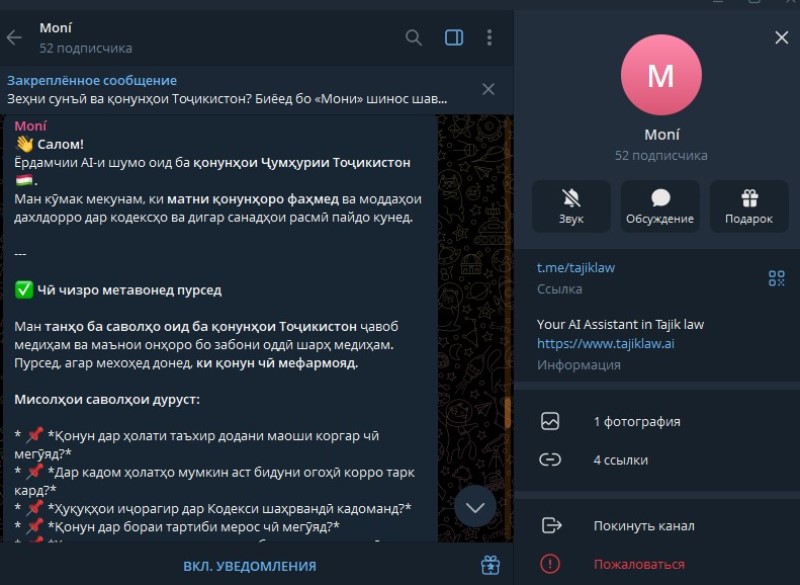
Examples include:
· What does the law say if an employer delays salary payments?
· What rights does a tenant have under the Civil Code?
· What documents are required to register as an individual entrepreneur?
The platform’s creators note that Moni is a learning system — user feedback will help improve its functionality. They also acknowledge that the platform may not yet reflect the most recent legal updates, but efforts are underway to address this.
Moni does not generate or verify legal documents, does not work with foreign law, and does not offer opinions — it only explains legal norms based on Tajikistan’s legislation.