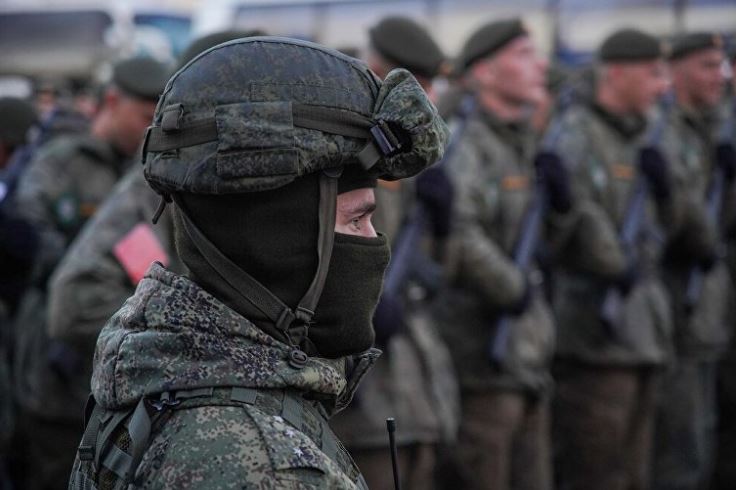
The Russian government has submitted a legislative package to the State Duma (Russia’s lower chamber of parliament) aimed at redefining the legal status of foreign citizens and stateless persons who have served under contract in the Russian Armed Forces and participated in combat operations. The proposed amendments prohibit their deportation or extradition and lift restrictions on their entry and residence in Russia.
As explained by Igor Cherepanov, deputy chairman of the Russian Lawyers' Association, the changes would replace administrative expulsion with fines ranging from 1,000 to 50,000 rubles, or up to 200 hours of mandatory community service. In cases of criminal prosecution by other countries, such individuals would not be extradited if they fought for Russia.
Another draft law prohibits declaring such individuals undesirable residents in Russia. According to Cherepanov, the intent is to “preserve military secrecy” and prevent potential intelligence leaks by keeping foreign soldiers on Russian territory.
Experts warn: new laws may lead to exploitation of migrants
Central Asian experts have raised serious concerns about the proposed Russian laws. They warn that the amendments could encourage increased recruitment of migrant workers into the Russian military — lured by promises of high payments, fast-tracked citizenship, and immunity from deportation.
Legal experts emphasize that such measures may push migrants to join the war effort in violation of their home countries' laws, potentially exposing them to prosecution upon return.
According to the Ukrainian-run “I Want to Live” project, as of April 2025, 931 Tajik nationals had signed contracts with the Russian army — 196 of whom have reportedly died. The same list includes 661 Kazakh, 360 Kyrgyz, and 1,110 Uzbek citizens currently fighting for Russia in the war against Ukraine.
Former Kyrgyz intelligence official Artur Medetbekov said the proposed laws would complicate efforts to repatriate these citizens or hold them accountable.
Erlan Toktosunov, a Kyrgyz lawyer based in Moscow, called the initiative a “trap” for migrants: “Russia does not care about foreign soldiers — it's a way to get cannon fodder.”
He added that many are sent to the frontlines without knowing their rights or fully understanding the contracts they sign.
Experts stress that hundreds of Central Asians are already entangled in the war, while regional governments have so far failed to respond to Russia’s legislative moves — likely due to political pressure and economic dependence on Moscow.