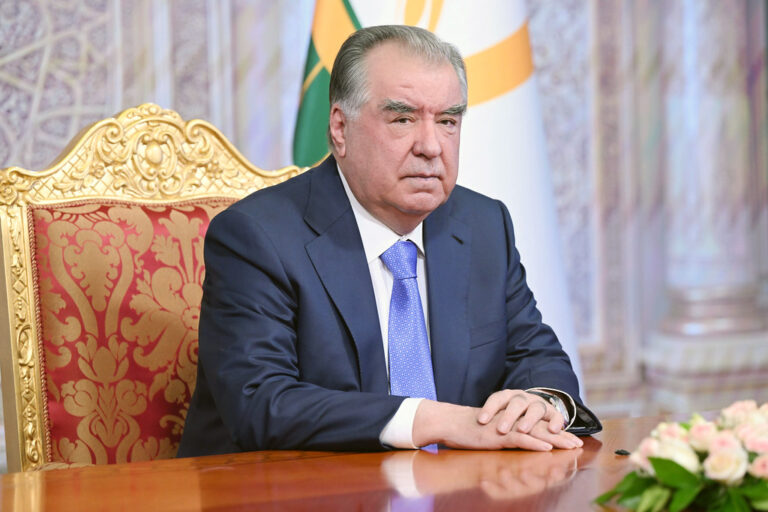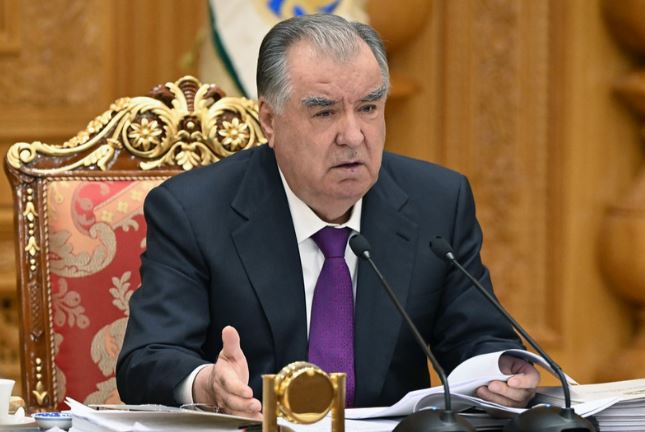
On November 25, under the chairmanship of President Emomali Rahmon, the Government of Tajikistan held a meeting to define the country's development priorities for the next five years, according to the Tajik president’s official website.
The session began with a presentation by Minister of Energy and Water Resources Daler Juma, who introduced the 2026–2030 Development Program for the Energy Sector. The program reportedly aims to strengthen energy security and improve the efficiency of electricity usage — a key pillar of the National Development Strategy.
The program outlines several targets: commissioning 2,680 MW of new capacity through the construction of hydropower plants; adding 253 MW by modernizing existing facilities; restoring 440 MW through equipment upgrades; and generating 1,500 MW from solar energy sources.
It also sets goals to reduce energy losses to 3% in transmission networks and 9% in distribution networks, and to boost electricity exports to 5 billion kWh.
President Rahmon instructed ministries, agencies, and local authorities to ensure the program’s effective implementation and to submit annual reports on progress. He also called for an assessment of the feasibility of installing solar panels on residential buildings and integrating them into the national grid.
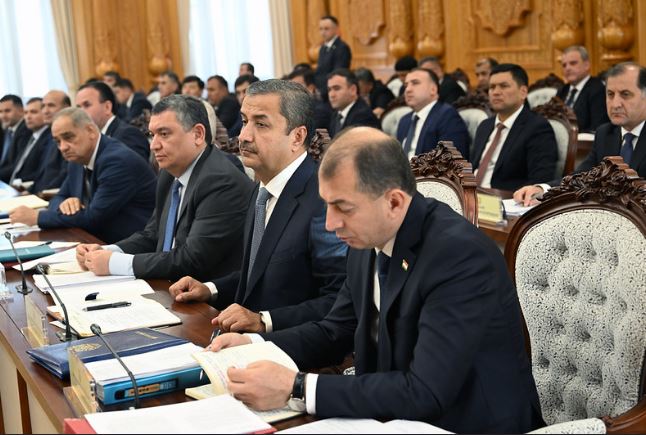
Particular emphasis was placed on promoting a culture of energy efficiency and responsible electricity consumption among the population.
The meeting also reviewed a draft law proposing amendments to the Criminal Code of the Republic of Tajikistan aimed at addressing violations in the energy sector and increasing liability for illegal electricity use, including for cryptocurrency mining.
Following the discussion, this draft law and amendments to the Law “On Other Mandatory Budget Payments” were approved and forwarded to the lower house of parliament — the Majlisi Namoyandagon of the Majlisi Oli.
The agenda further included state programs for the 2026–2030 period in the following areas: development of culture and the arts, support for exports, protection of specially protected natural areas, digitalization of public administration, and prevention of HIV and viral hepatitis epidemics.
All programs received approval and were submitted to parliament for further consideration.
In closing, the president issued directives to the relevant authorities on the matters discussed, along with additional instructions concerning food security, preparations for the winter season, compliance with agro-technical standards in agricultural activities, and expansion of infrastructure and beautification efforts ahead of the 35th anniversary of Tajikistan’s independence.